

7 Best Klaviyo Alternatives in 2025: Features, Pricing, and Comparisons

Sid Chaudhary

Sid Chaudhary

Founder & CEO

Share:

Klaviyo is a proven email and SMS marketing platform - especially for ecommerce brands that live and breathe segmentation, product feeds, and multi-step flows. But many teams tell us they can't justify the cost, don't need the full power, or struggle with the learning curve. If you're wondering whether there are competitors with similar capabilities for less money or tools that feel faster and simpler to run day-to-day, the short answer is yes.

A quick primer before you compare: Klaviyo's strengths are its ecommerce DNA and advanced automation. The common friction points are pricing (which can climb quickly as your list and sends grow), time-to-learn, and uneven support experiences. Recent billing changes based on "active profiles" have also created uncertainty for some customers evaluating total cost of ownership in 2025.

If you're feeling these pains already or you're new to email and Klaviyo is on your shortlist - you're in the right place. Below, we outline why many businesses seriously consider alternatives in 2025, plus how to choose the best-fit platform for your stage and stack.

Why consider Klaviyo alternatives?

Cost that scales faster than your ROI

Entry pricing starts around $20/month for ~500 contacts on the email plan, then steps up as your list grows. Add SMS, and the bill rises further. For high-volume stores, that can put pressure on margins compared with leaner platforms with simpler send-based or contact-based tiers.

In February 2025, Klaviyo introduced billing changes centered on "active profiles." For some senders, this resulted in noticeable price increases and added uncertainty about future bills as activity fluctuates. If budget predictability matters, this is a legitimate reason to compare options.

Free plan limits

Klaviyo's free tier is intentionally constrained (small contact and send caps and fewer advanced capabilities), which makes it hard to fully trial heavier use cases before you pay. Teams that want a more generous free plan often look elsewhere.

Steeper learning curve for smaller teams

Power users love the depth of flows and data objects. Smaller teams often report that setup, data modeling, and complex branching take time to master - time they don't always have. You'll see this theme in public reviews that call out "difficult to navigate for a new user."

Support frustrations in peak moments

While many customers rate Klaviyo highly, critical users on review sites complain about slow resolution or difficulty reaching support when campaigns are on the line. If you rely on fast human help during sales periods, the support model and SLA should be a decision factor.

SMS and channel fit

Klaviyo supports SMS/MMS in a defined set of countries and continues to expand, but availability, compliance, and cost vary by market. If your strategy leans heavily on channels like Push notifications, native chat, or broader telephony coverage, you may find tighter, cheaper, or more global options with other vendors.

Dashboard and day-to-day usability

Power features can add interface complexity. Some users find the dashboard crowded and navigation non-intuitive, preferring tools with simpler defaults and opinionated workflows - especially when they don't need every enterprise-grade feature. You'll see this reflected in mixed public ratings across sites like G2 and Trustpilot.

Bottom line: Klaviyo remains a top choice for larger or more data-mature ecommerce programs. But if you're cost-sensitive, want an easier ramp, need different channel coverage, or simply prefer a cleaner UX, there are solid alternatives in 2025 worth a serious look.

How to choose one?

Score each tool 1-5 on the following. Pick the top two and trial them:

  • **Data model & segmentation**: Can you build audiences on behavior, attributes, and account/user hierarchies without SQL?
  • **Automation depth**: Do journeys support multi-branch logic, re-entry rules, throttling, rate limits, and per-step analytics?
  • **Channel coverage**: Email is table stakes. Do you also get SMS/push/web personalization and experiments (recommendations too) where you need them?
  • **Measurement you trust**: Per-step delivery, failure, and progression metrics; holdouts; goal tracking; experiment readouts - not just opens/clicks.
  • **Pricing fit**: Contact-based vs send-volume pricing matters. Model it against your growth plan before you migrate.

Here's a quick, text-only comparison table (Intempt first), with concise notes about pricing vs Klaviyo, trials, best-fit, and key features. I've added light, authoritative hyperlinks where helpful.

Comparison Table

1) Intempt

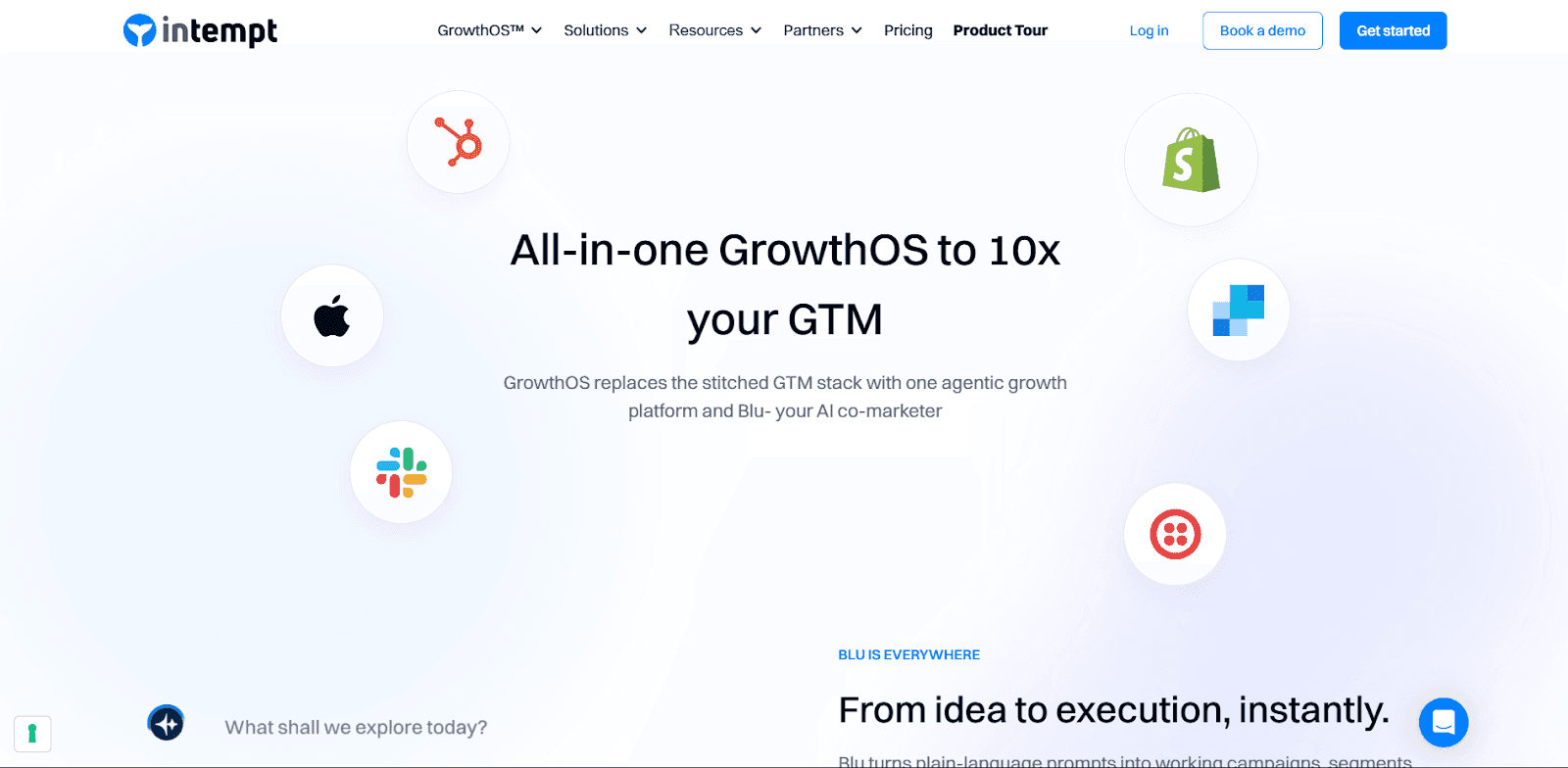
Intempt

Best for: Teams that want an integrated engine - segmentation + journeys + personalized experiments + recommendations + analytics, without stitching five tools.

Why it stands out

  • Journey control. Visual journeys with trigger/condition/action blocks, re-entry controls, and block-level metrics so you see how many users entered, progressed, or failed at each step.
  • Behavioral targeting first. Audiences built from events, attributes, and lifecycle states; journeys can hold, branch, and react to real user behavior.
  • Personalization & experimentation. Web and App A/B and multi-page testing, targeted offers, and content/recommendation surfaces in the same workspace to prove lift.

Watchouts

Implementation scope, potential overkill for simple email campaigns, and change-management needs when consolidating tools.

When to choose Intempt

Choose Intempt if you're an SMB or lean team needing one platform for CRM, multichannel journeys, web/app personalization and recommendations, strong behavioral logic, and clear measurement in one place.

2) Brevo (Formerly Sendinblue)
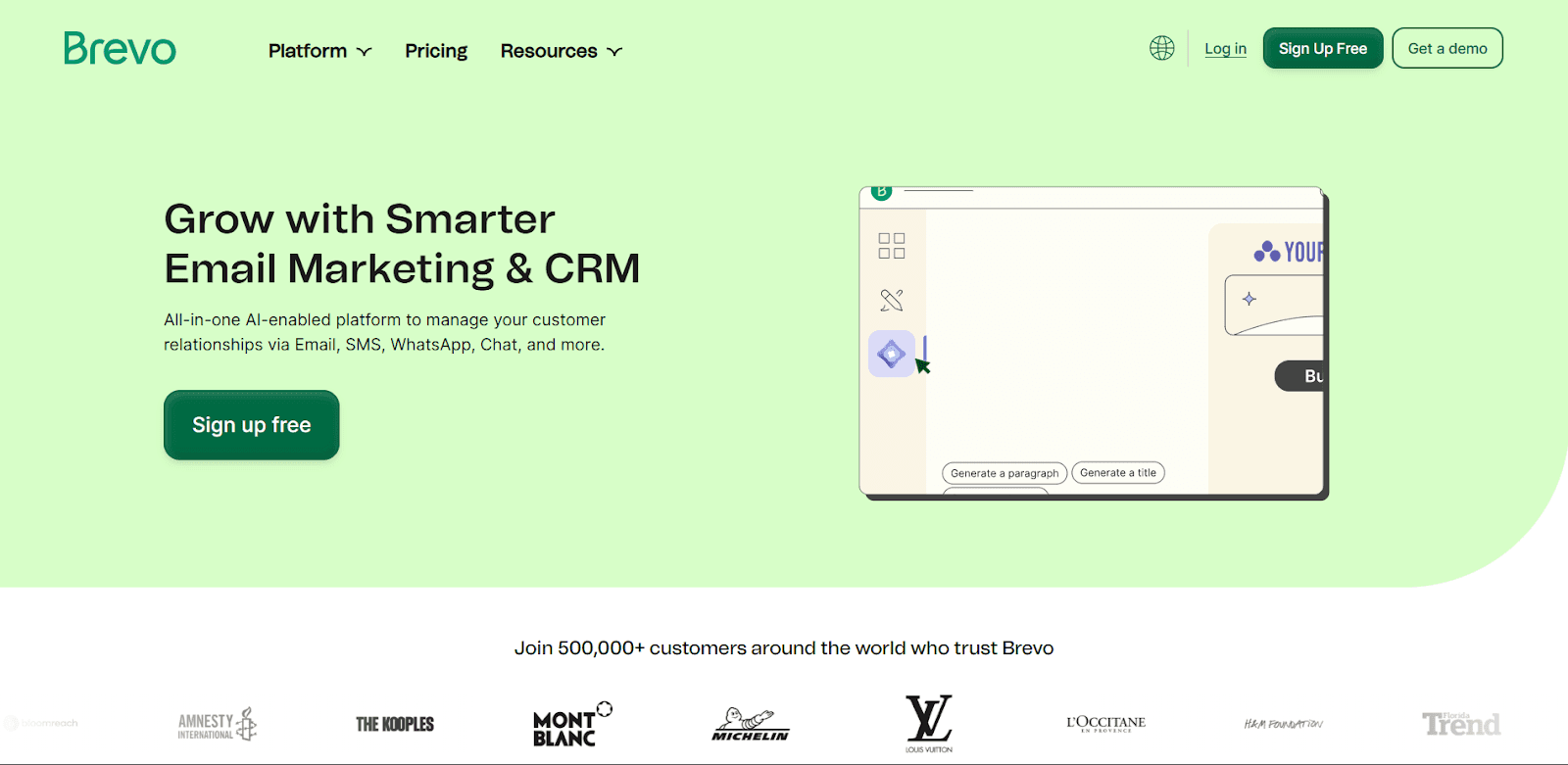
Brevo

Best for: Budget-sensitive teams that prefer send-volume pricing over contact-based pricing, plus simple automation and transactional email.

Why it stands out

  • Pricing is organized by monthly email sends, not list size - useful if you keep a large list but send less frequently. Free tier available; paid plans scale by email volume.
  • Includes marketing automation, basic segmentation, and transactional email under one roof (SMTP/API).
  • Straightforward pricing and strong value for email + SMS + transactional (SMTP) in one place; solid templates and an easy builder.

Watchouts

Advanced journey logic and experimentation depth may feel lighter than specialist lifecycle tools.

When to choose Brevo

You're an SMB or lean team needing dependable campaigns, basic automations, and transactional email without stacking multiple tools.

3) Mailchimp
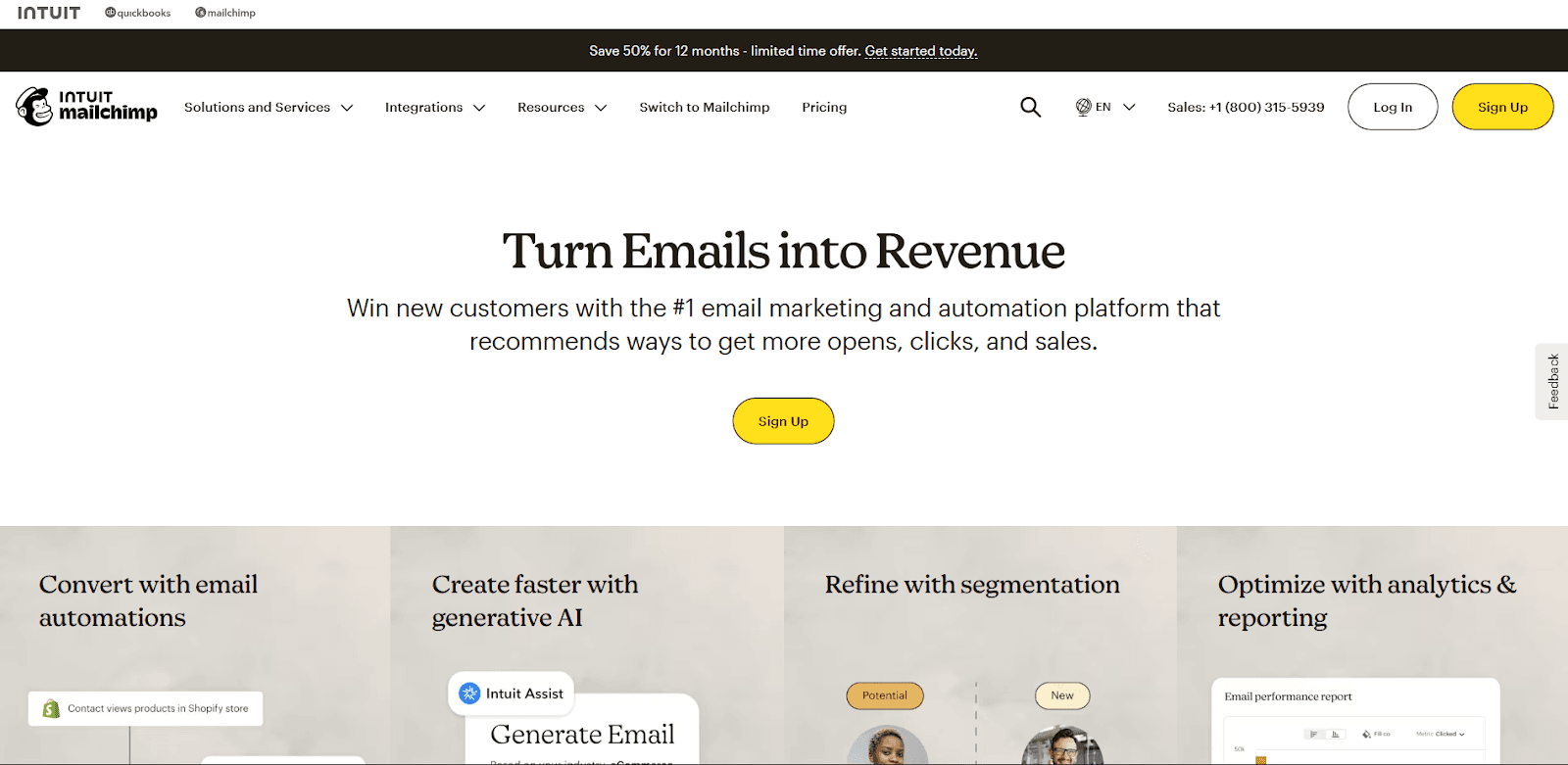
Mailchimp

Best for: Marketers who want a broad ecosystem, templates, and a familiar UI with quick campaign execution.

Why it stands out

  • Mailchimp prices primarily by contacts and plan tier; plan features (automation depth, testing) unlock as you move up. Limits and eligibility are defined per tier.
  • Huge template library, lots of native integrations, and approachable UX; good for "all-in-one" marketing starters.

Watchouts

As automation and experimentation needs grow, teams often outgrow entry tiers and start paying for contact count even if sends are modest.

When to choose Mailchimp

You want fast time-to-first-send, broad ecommerce/CMS integrations, and decent automations without heavy setup.

4) ActiveCampaign
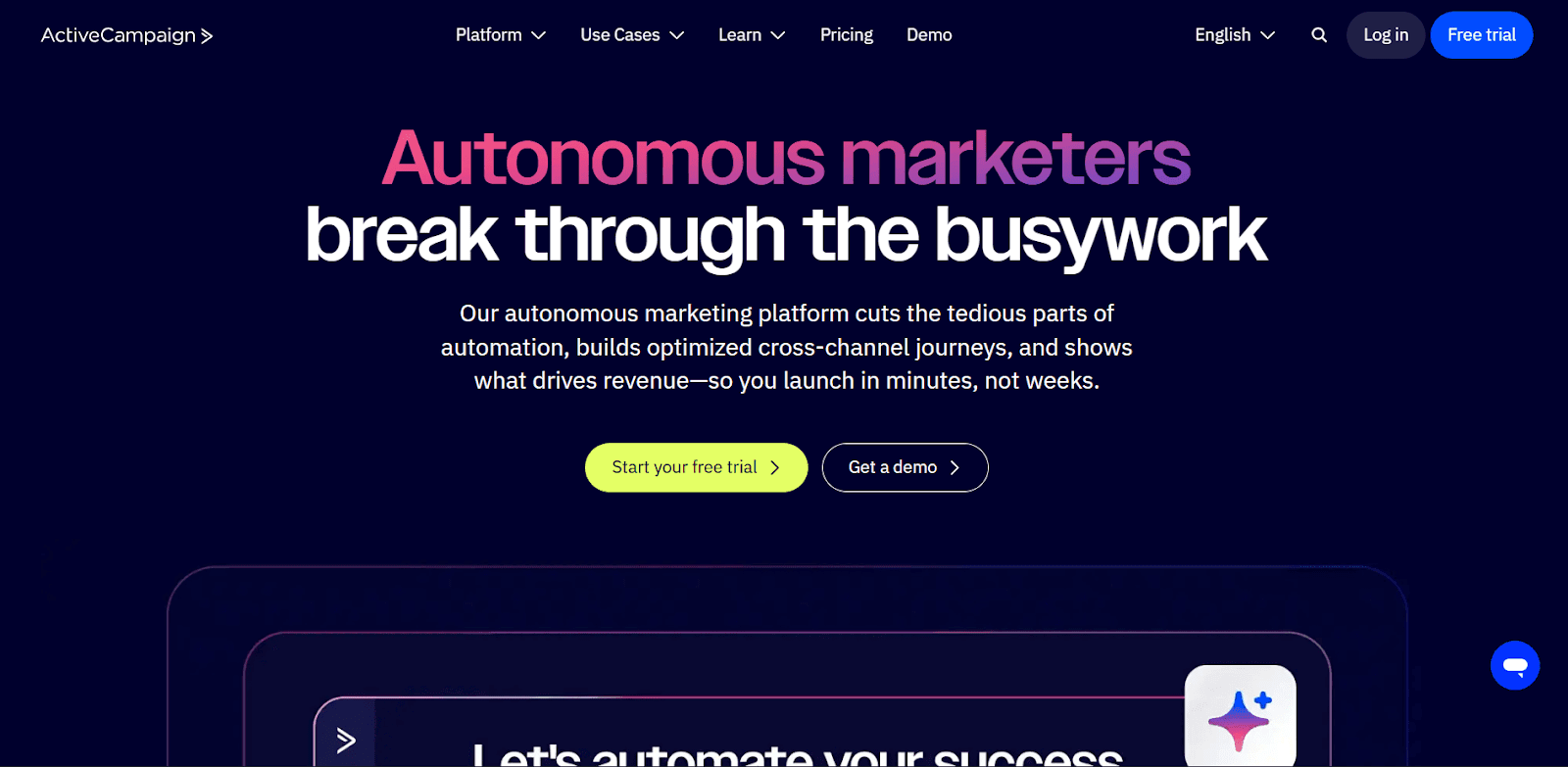
ActiveCampaign

Best for: Companies that want powerful automations with integrated CRM/Sales automations alongside marketing journeys.

Why it stands out

  • AC is known for deep, conditional automations across marketing and sales; pricing and packaging vary by plan and feature bundle (Marketing, Sales, or bundled). Many buyers go through a quote flow for the right mix.
  • One of the strongest visual automation builders with sales CRM/pipelines, lead scoring, and granular triggers.

Watchouts

Expect more configuration to align marketing + sales objects; confirm deliverability needs and exact entitlements during scoping. Power comes with complexity; best results require careful architecture. Pricing scales with list size and feature tier.

When to choose Active Campaign

You need sophisticated, branching automations across lifecycle stages (marketing + sales handoffs) and robust testing/segmentation.

5) Omnisend
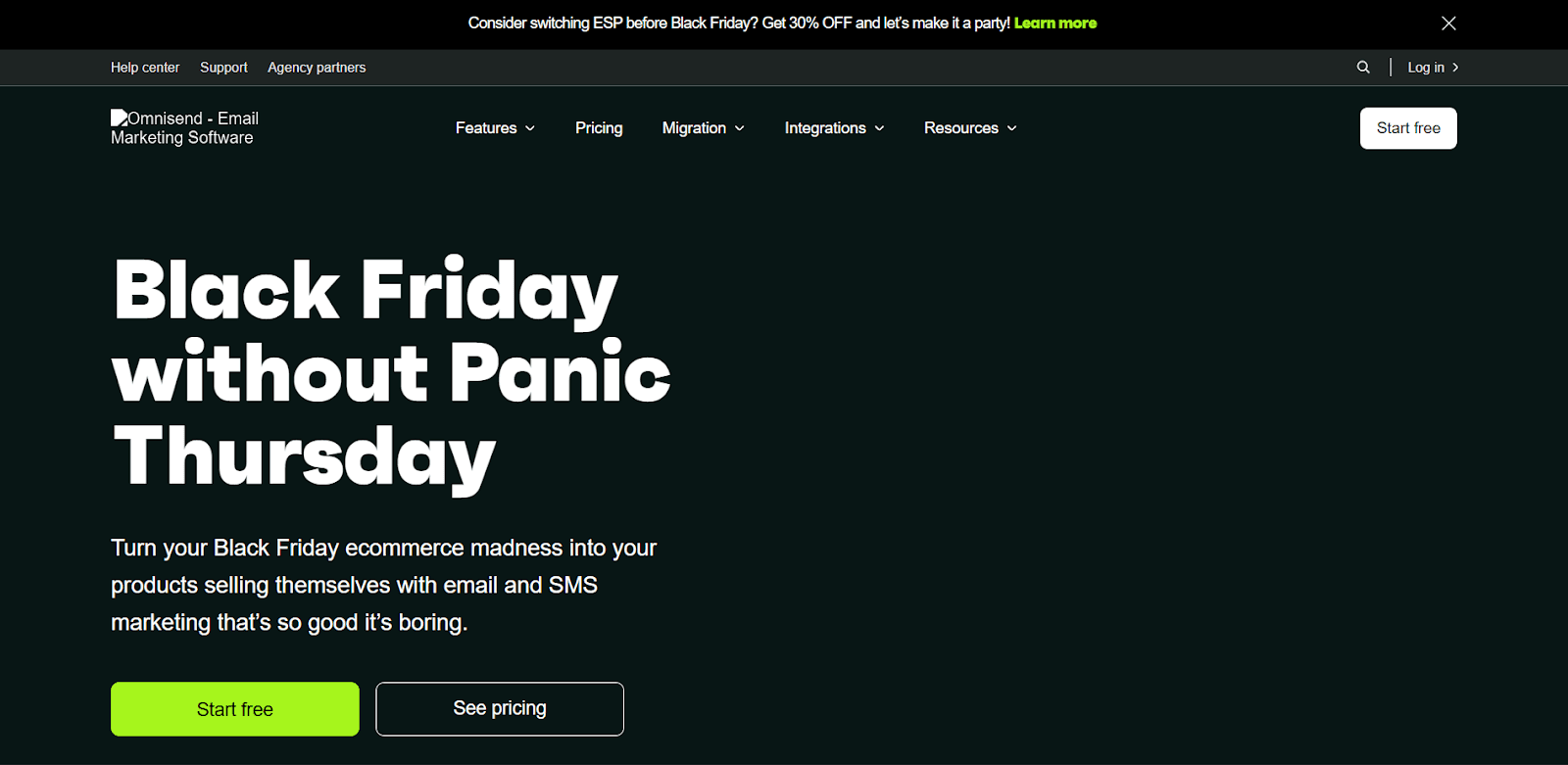
Omnisend

Best for: Ecommerce brands that need email + SMS built for storefronts and promos with strong template flows.

Why it stands out

  • Omnisend focuses on ecommerce automations (welcome, browse/cart abandon, post-purchase) and ties tightly into store data. Their documentation and support center center around commerce-first use cases.
  • Built for ecommerce: email + SMS + push, product pickers, lifecycle stages, and store-friendly blocks. Free plan for small lists.

Watchouts

  • Journeys tend to be promotion-oriented; if you need complex account-level logic or B2B journeys, map that before committing.
  • Less suited to non-commerce use cases; advanced experimentation and cross-channel analytics aren't as deep as higher-end suites.

When to choose Omnisend

Your store needs revenue-driven flows (welcome, abandon, post-purchase) with commerce elements out of the box and minimal wiring.

6) Constant Contact

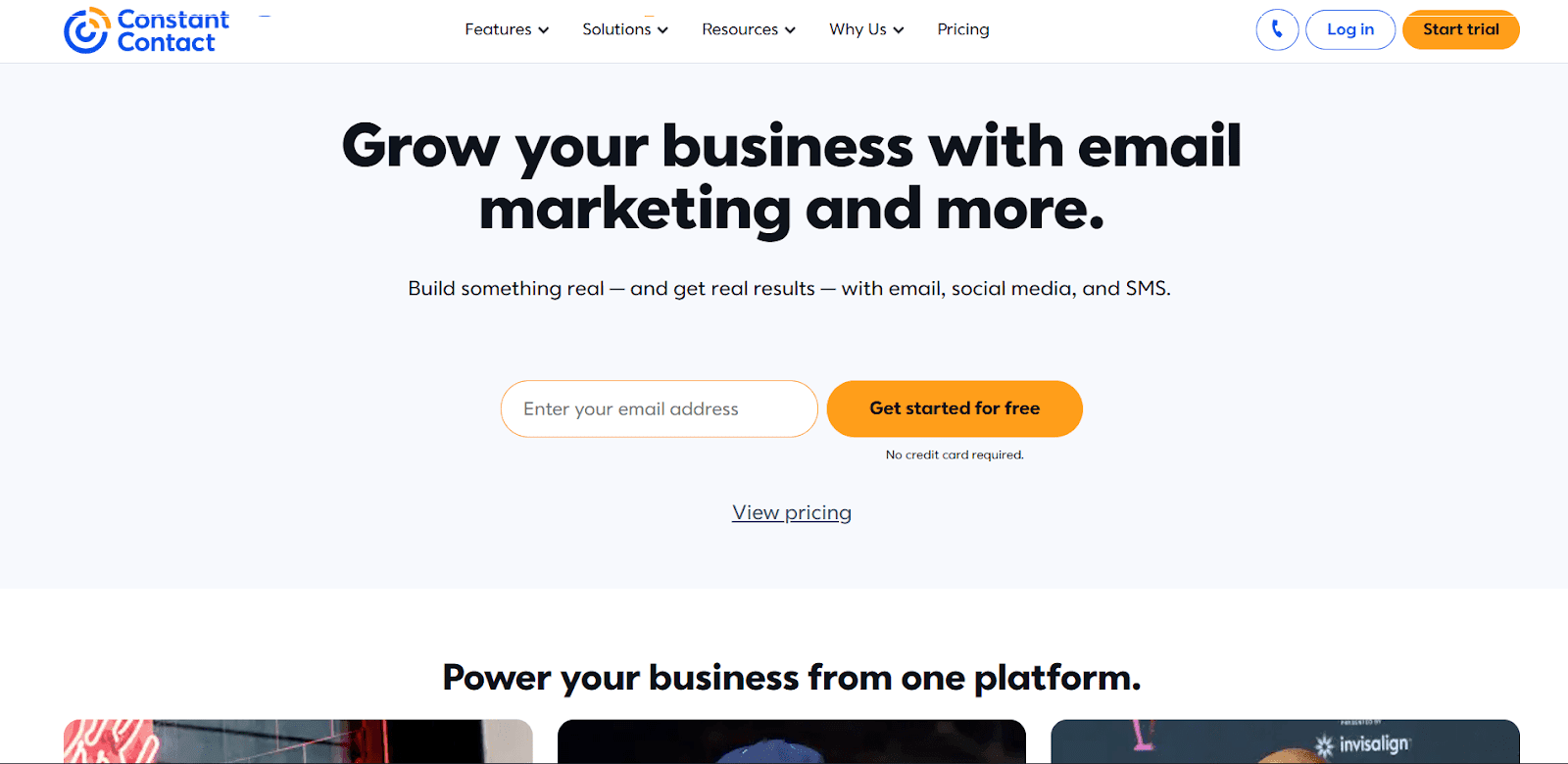
Constant Contact

Best for: Small businesses and nonprofits that want straightforward email campaigns, simple automations, and events/donations tooling.

Why it stands out

  • Clear tiered pricing with contact-based plans for email and digital marketing; straightforward packaging and feature sets.
  • Longtime ESP with approachable editor, event tools, and social features; simple for small orgs and nonprofits.

Watchouts

Automation and experimentation are intentionally simpler; evaluate if you'll need behavioral branching or testing beyond the basics. Pricing/value versus modern competitors can feel dated; automation/testing depth and ecommerce-first features are limited.

When to choose Constant Contact

You want reliable basic campaigns, lists, and light automation with a minimal learning curve for community groups/SMBs.

7) Moosend

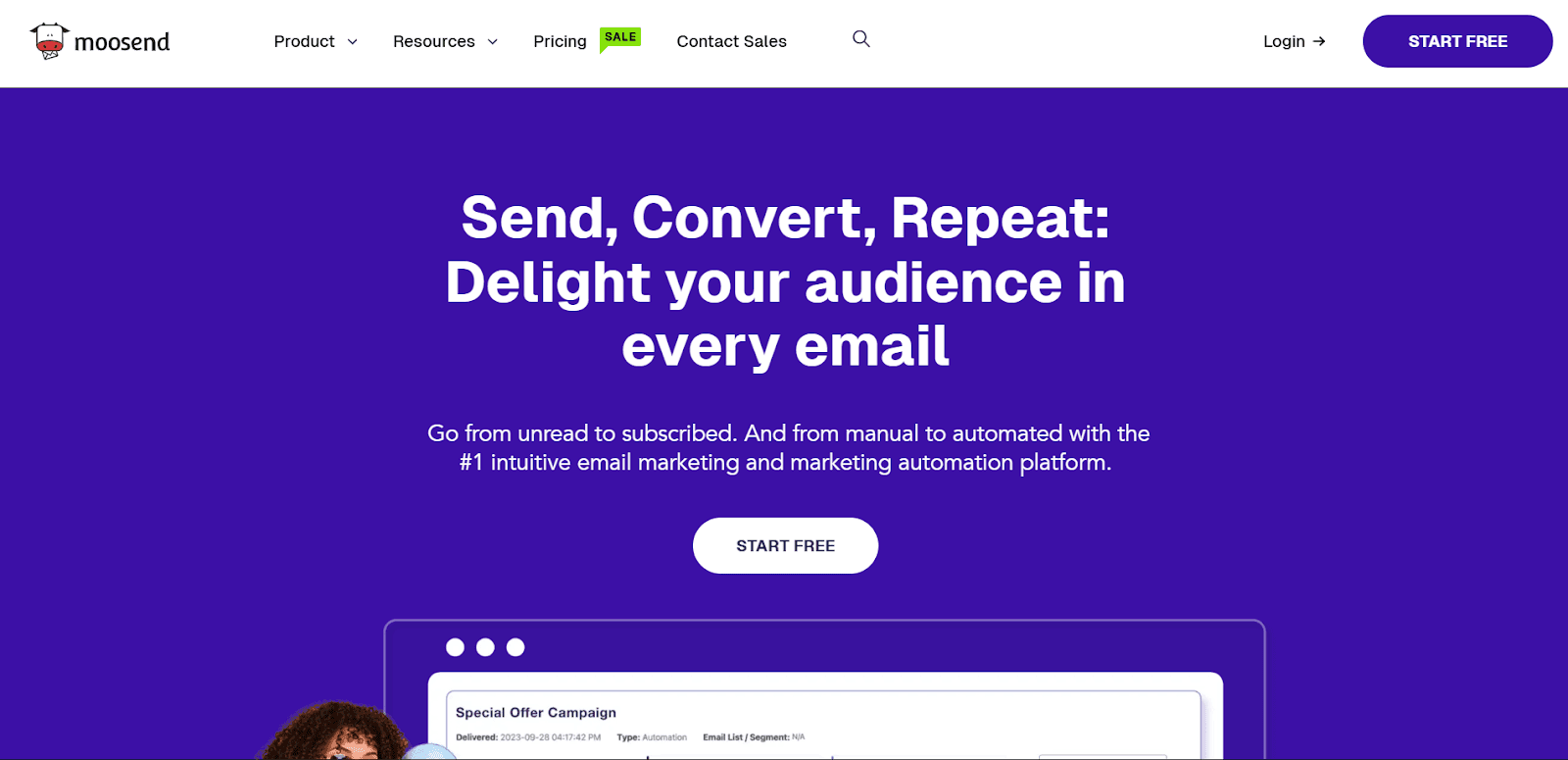
Moosend

Best for: Teams needing an affordable, easy starter with essential automations and a simple UI.

Why it stands out

  • Moosend provides a lightweight automation builder, templates, and contact-tiered plans; their docs outline feature availability per plan and workspace constraints.
  • Budget-friendly plans, clean UI, and solid core automations; good deliverability tooling for the price.

Watchouts

If you anticipate heavy multichannel or advanced testing, confirm roadmap and add-ons early. Smaller ecosystem and fewer native integrations than legacy majors; advanced analytics and multichannel breadth are lighter.

When to choose Moosend

You need a low-cost ESP with visual workflows, segmentation, and decent templates without enterprise overhead.

Comparison snapshot (at a glance)

Pricing model

  • Send-volume-based: Brevo (can be cheaper if you mail infrequently to a big list).
  • Contact-based: Mailchimp, Intempt, Moosend; typically contact-tiered within plan bundles.

Automation depth

  • Advanced journey control and analytics: Intempt (block-level metrics, re-entry rules, failure tracking).
  • Strong multi-branch automation: ActiveCampaign & Intempt
  • Solid but lighter: Brevo, Mailchimp, Intempt, Moosend (varies by tier).

Channels

  • Email + web personalization + experiments: Intempt
  • Email + SMS + transactional: Brevo
  • Email + SMS (ecom focus): Omnisend & Intempt
  • Email + Recommendations: Intempt
  • Email + Push notifications: Intempt & Omnisend

Final notes before you try

Model total cost, not sticker price. Contact growth can silently push you up a tier; send-volume plans can spike on promos. Check overage rules and sending limits on each plan page.

Run one proof of value. Pick a single journey (e.g., new-user activation), define goal events and a holdout, and compare downstream revenue - don't judge by opens/clicks alone. Intempt, for instance, gives per-block failure/progression plus experiment results to make this easy.

Frequently asked questions. Answered.

Pricing falls into two broad camps: - Contact-based tiers (you pay as your list grows): Checkout Mailchimp, Intempt, Constant Contact, & Moosend pricing. - Send-volume tiers (you pay by emails sent): Brevo is a notable example. Check the current plan pages before committing; names and limits change.

- Brevo: yes - SMTP/API for transactional email. - Mailchimp: yes via Mailchimp Transactional (formerly Mandrill). - Omnisend: supports order/transactional flows for e-commerce.

- Authenticate with SPF, DKIM, and set up DMARC. - Include one-click unsubscribe and honor it quickly. - Send wanted mail (clear opt-in) and keep complaint rates low. Intempt has a solid privacy and preference center to monitor opt-ins and outs.

Start with Intempt if you want product recommendations + journeys + on-site experiences together, or Omnisend for store-ready automations (orders, carts, browse) that are easy to wire up.

ActiveCampaign excels at multi-step automations tied to CRM-like data. Pair with if you also want web personalization or multi-channel triggers outside email.

Use a custom sending domain and authenticate it (SPF/DKIM/DMARC). Dedicated IPs help at high volumes but require careful warm-up; they're not mandatory for everyone.

- Marketing: promotional/newsletter content; often batch or triggered by behavior. - Transactional: account or order-related messages a user expects. They can be sent through different systems or subdomains for best deliverability.

Yes. Most tools let you import contacts and rebuild automations. Expect to: - Export contacts with consent fields and source tags. - Recreate key triggers (signup, welcome, cart/order). - Re-verify authentication and gradually warm up sends.

Intempt supports email, SMS, and push alongside on-site experiences and recommendations. Brevo and Omnisend also bundle SMS with email.

Thanks for reading till the end. Here are 3 ways we can help you grow your business:

1

Boost growth with proven growth plays

Explore our Growth Play Library, filled with actionable growth tactics and step-by-step guides to unlock your app's potential.

Check out Growth Play Library
2

Create a free GrowthOS account

Create a free GrowthOS account and get started on the journey to grow your app.

Get started free on GrowthOS
3

Get advice from a Growth expert

Schedule a personalized discovery call with our founder to explore how GrowthOS can help you grow your business.

Subscribe to The Full Stack Marketer

Zero theory or mindset discussions here; just actionable marketing tactics that will grow revenue today.