Remember when qualifying leads was simple? Marketing would hand over MQLs to sales, and sales would work their magic to convert them into SQLs. Those days are gone! The rise of product-led growth (the strategy lets users try your product for free before they make a financial commitment) in SaaS has changed everything about how we identify and qualify potential customers.
Expected Results
- Identify high-intent users based on actual product usage, not just marketing signals.
- Detect expansion opportunities (EQLs) among existing customers showing upgrade potential.
- Combine Fit and Activity scoring to prioritize leads most likely to convert or expand.
- Automate scoring workflows to deliver real-time qualification insights to Sales and Success teams
- Increase conversion, retention, and revenue per lead with data-driven qualification.
The Problem With Traditional Lead Qualification
The traditional MQL/SQL model worked well in an enterprise sales-led world. Marketing teams would score leads based on website visits, content downloads, and form fills. Sales would then qualify these leads through calls and emails. But here's the problem: none of these activities tells us if someone will actually use and get value from our product.
Think about it, someone might download five whitepapers and attend three webinars, making them a "hot" MQL. But what if they never open your product? Or what if they do, but barely use its core features? That's why we need a better way.
Why Activity-Based or Single-Score Methods Fail?
Simply switching from MQL scoring to PQL scoring still misses half the picture. Product usage tells you engagement, not fit. A user might love your tool, but be from a company that will never buy.
That's why modern PLG teams use dual scoring - evaluating both fit (who they are) and activity (what they do).
This approach aligns Sales, Marketing, and Product around one truth: the best leads are those who both fit your ICP and get value from your product.
Understanding PQLs and EQLs: Your New Qualification Pillars
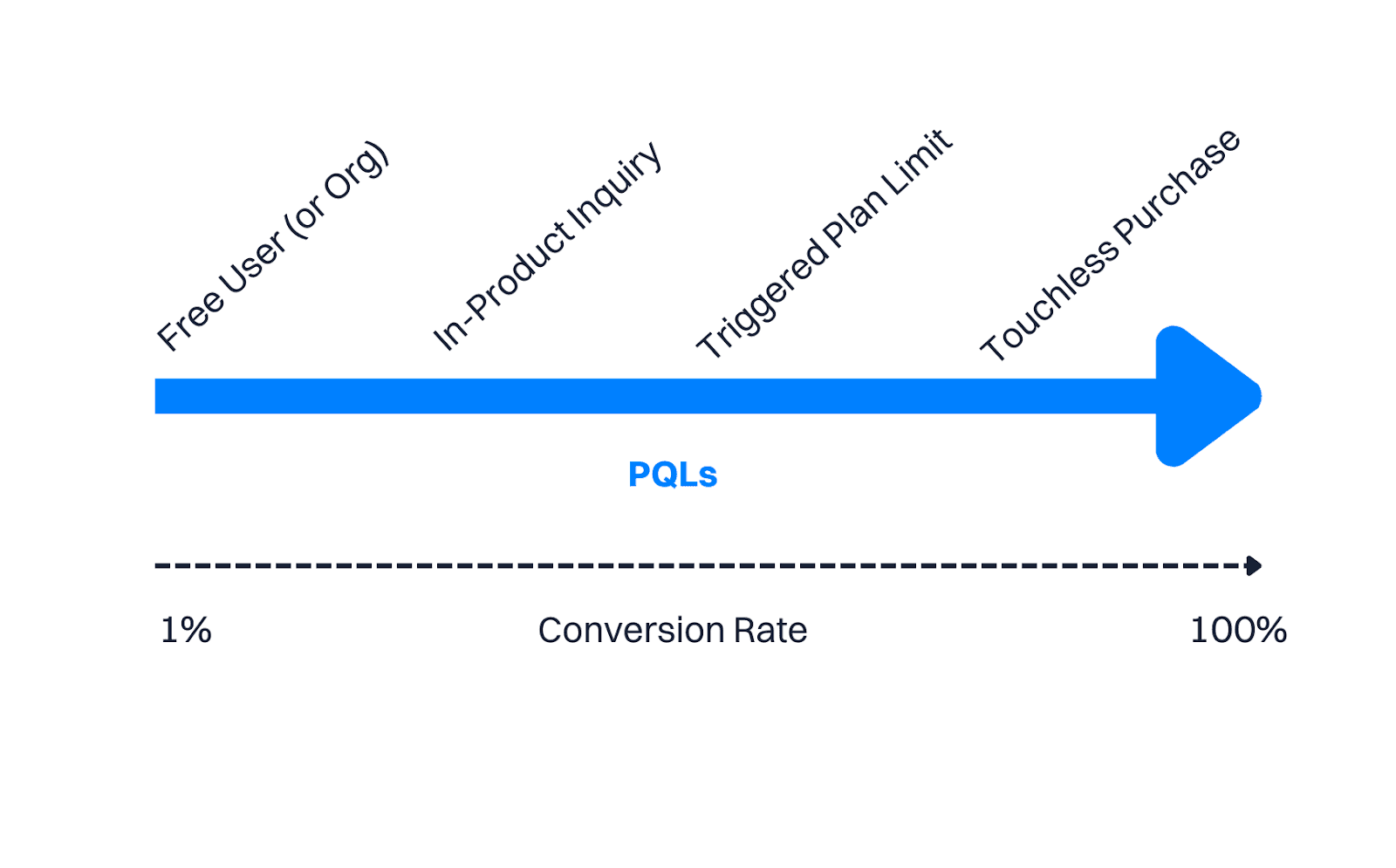
Product Qualified Leads (PQLs)
A Product Qualified Lead is someone who has demonstrated real value from your product through actual usage. Instead of guessing whether someone might be interested based on marketing activities, PQLs show us who's already getting value.
For example, let's say you offer a team collaboration tool. A PQL might be a user who has:
- Created multiple projects
- Invited team members
- Integrated with their existing tools
- Used key features regularly
These actions show they're actually experiencing the value your product provides - something no amount of website visits can tell you.
Key Benefits of PQLs Include:
- **Evidence of Engagement**: They've already used your product, so their actions speak louder than words.
- **Better Conversion Rates**: Since these users have firsthand experience, they are more likely to convert.
- **Data-Driven Insights**: Their product usage provides rich insights that can inform further engagement strategies.

Expansion Qualified Leads (EQLs)
EQLs take this a step further. These are existing customers showing signs they could benefit from additional features or higher-tier plans. They're particularly valuable in SaaS, where expansion revenue often drives growth.
Signs of an EQL might include:
- Reaching usage limits on their current plan
- Using advanced features frequently
- Having team members on a waiting list
- Accessing premium feature previews
Why EQLs Matter?
- **Identifying Growth Potential**: They help pinpoint existing customers who are ready to expand their usage.
- **Tailored Engagement**: By understanding user behavior, companies can craft personalized strategies for retention and expansion.
- **Revenue Boost**: Focusing on EQLs can lead to significant revenue growth without the acquisition costs associated with new leads.

Why Single Score Methods Don't Work Anymore?
Many companies trying to modernize their approach simply switch from MQL scoring to PQL scoring. Now they're missing half the picture. Just because someone uses your product heavily doesn't mean they're a good fit for your business.
This is where dual scoring comes in.
The Power of Dual Scoring: Combining Fit and Activity
Dual scoring looks at two complementary dimensions:
Fit Score - How well the user matches your ideal customer profile (ICP):
- Company size and industry
- Tech stack
- Budget and authority
- Geography
Activity Score - How actively they use your product:
- Frequency of feature usage
- Team adoption rate
- Time spent in workflows
- Achievement of product value milestones
When you combine these scores, you get a much clearer picture of your best opportunities through our AI-based scoring. A high-fit, high-activity user is your dream customer. They're not just using your product - they're the type of customer you can grow with.
How To Implement PQL and EQL Scoring?
Now that we understand the "what" and "why," let's dive into the "how." You have two clear paths to implement PQL and EQL scoring: a manual, do-it-yourself process, or leveraging an automated solution like Intempt's Fit and Activity model.
Let's look at both:
The Manual Way
For those who are not yet ready to invest in an automated system, a manual process can be a viable starting point. Here's how you can do it:
Define Your Fit Criteria
- List the key characteristics of your ideal customer (industry, company size, etc.).
- Use your CRM data to filter leads based on these criteria.
Track Product Activity
- Use analytics tools such as Mixpanel, Amplitude, or Heap to capture key in-app behaviors.
- Manually compile data on usage patterns, feature adoption, and engagement metrics.
Create a Scoring Model
- Develop a spreadsheet that assigns weights to various fit and activity factors.
- For instance, a high fit score might come from being in the right industry, while a high activity score might result from frequent logins or feature usage.
- Sum these scores to create a dual score for each lead.
Analyze and Act
- Regularly review the scores to identify top PQLs and EQLs.
- Pass these high-scoring leads on to your sales or customer success teams for targeted outreach.
But let's be real - this is time-consuming and hard to scale. As your user base grows, maintaining accurate, real-time scoring becomes nearly impossible.
The Smart Way
Instead of juggling everything manually, let AI-based marketing automation tools handle your dual-scoring workflow. It's more than a tool; it's your agentic co-marketer, guiding you every step of the way. Here's how this process typically works:
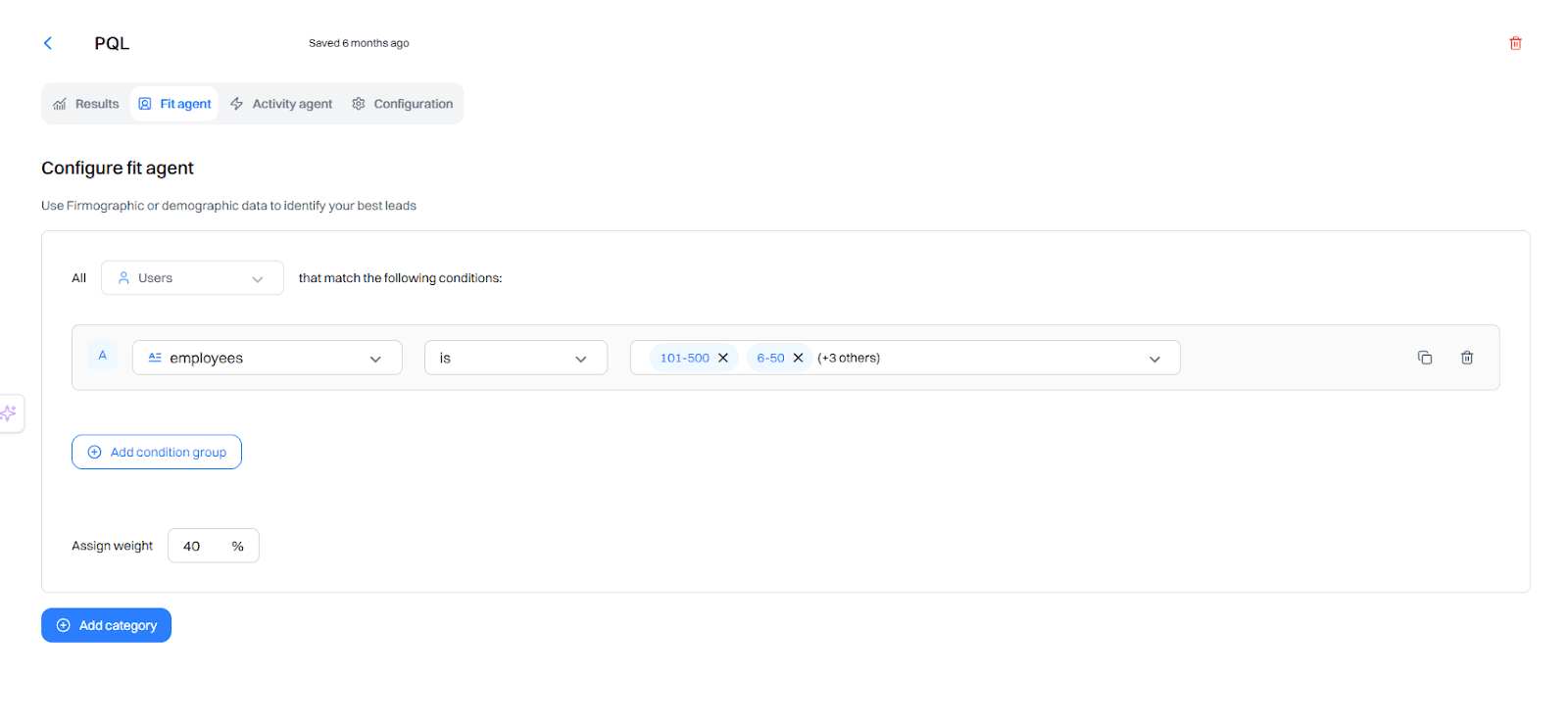
Automated Fit Scoring:
This AI tool automatically segments users based on your predefined ICP criteria. As soon as a new user comes in, their data is evaluated against your target profile.
Real-Time Activity Tracking:
The platform continuously monitors user interactions - whether it's feature usage, session duration, or login frequency - to keep the activity score up to date.

Instant Dual Scoring:
By merging the fit and activity scores, the tool immediately identifies which users qualify as high-potential leads (PQLs) or expansion opportunities (EQLs). This AI-based automation eliminates manual labor and guesswork.
Actionable Workflows:
With automation, you can set up workflows that automatically route high-scoring leads to your sales or customer success teams, ensuring timely and personalized follow-up.

The key advantage of this automated approach is that your team can focus on engaging with qualified leads rather than spending time identifying them.
Fit & Activity Scoring with Intempt
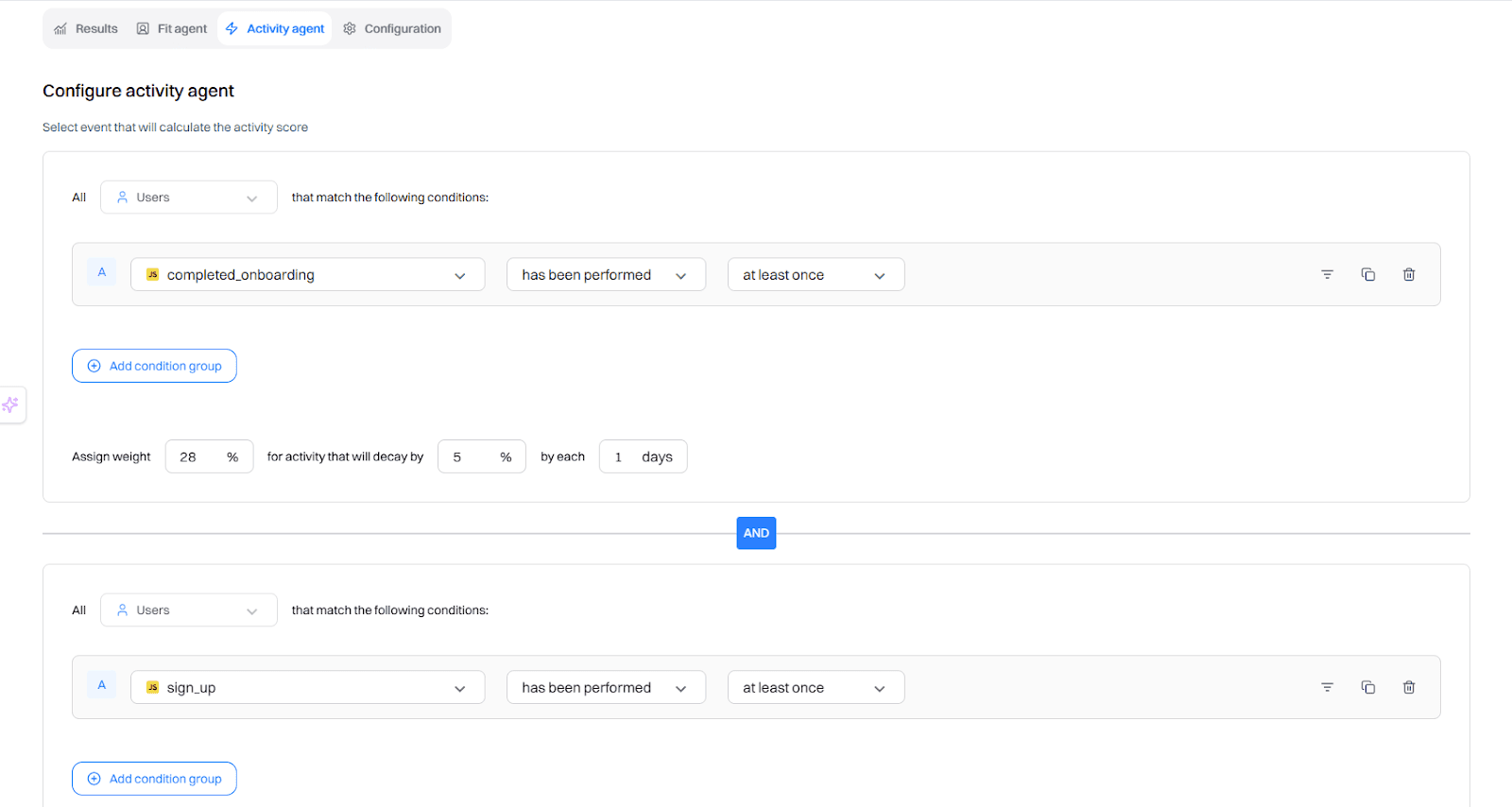
Using Intempt, you can evaluate your leads through custom Fit & Activity scoring. It's all about creating a matrix that uses fit attributes (like job title and industry) and activity events (like signups and logins). Leads are scored as "Low," "Medium," or "High," ensuring you always have actionable insights. Qualifying leads early on is crucial to avoid wasted resources and improve sales success.
Example: PQL Model


Example: EQL Model


Fit Criteria include things like company size, role, and budget authority. The goal is to make sure this lead could be a good long-term customer.
Activity Criteria look at how users are engaging - what features are they exploring, and are they using the product consistently?
Score Decay: Ensure your scores are up to date by implementing decay for inactivity. Leads that have not interacted in a set period should see a reduction in their activity score, ensuring your sales team only focuses on leads with ongoing interest.
Scores are updated dynamically as user behavior evolves, which means your sales team always knows when it's the right time to reach out.
Making The Switch: Moving From MQLs to PQLs and EQLs
Transitioning to PQL and EQL scoring isn't just a new metric; it's a mindset shift. It means aligning your GTM motion with how customers actually buy and grow in the SaaS era.
To start:
- Define what "product qualified" means for your product.
- Identify your key expansion signals.
- Set up fit + activity tracking.
- Automate your scoring process.
The goal isn't more leads, it's better-qualified leads.
Whether you use Intempt or another platform, dual scoring ensures your teams focus on users most likely to convert, expand, and stay.
TL;DR
- Traditional MQLs fail because they ignore product engagement
- PQLs = users proving value through product use
- EQLs = customers signaling upgrade potential
- Dual scoring combines Fit (who they are) + Activity (what they do)
- Manual scoring works short-term; automation scales insight in real time
- Intempt helps you dynamically score, decay, and route leads for conversion and expansion