


Marketers want connected customer journeys, not a maze of rules and manual triggers. If the system feels like work, it's not automation, it's stress in a shiny UI. Klaviyo has long been the go-to for e-commerce platforms, powering email, SMS, and now even WhatsApp automation. But 2025 teams want more than AI that writes better subject lines; they want an AI agent that thinks ahead. In this comparison, we'll explore Intempt v/s Klaviyo with a sharp focus on their Journeys to help you find out which one delivers true AI-powered orchestration rather than just automated messaging.
Why Compare Intempt and Klaviyo?
Both platforms promise smarter, faster customer journeys. Klaviyo helps e-commerce teams automate messaging across channels like email, SMS, and WhatsApp with growing AI muscle.
Intempt, on the other hand, orchestrates entire customer lifecycles, connecting analytics, personalization, experiments, and recommendations into one adaptive AI-driven system with a superior UI that makes orchestration less complex and more intuitive.
In 2025, choosing the right tool means asking:
- Which one does more than just automate messages?
- Which has more impact on the full customer journey?
- Which one adapts in real time instead of relying on static flow logic?
- Which one ties orchestration directly to analytics + AI-driven decision making?
- Which one offers a user interface and user experience that lets marketers move faster, with fewer clicks and less complexity?
That's what makes this comparison important. Because the future of marketing isn't automated, it's intelligent and easy to use.
How Is Intempt Different Than Klaviyo?
At first glance, both Intempt and Klaviyo let you create automated journeys. But beneath the surface, they're powered by very different philosophies of marketing automation and different levels of UI/UX refinement.
Intempt
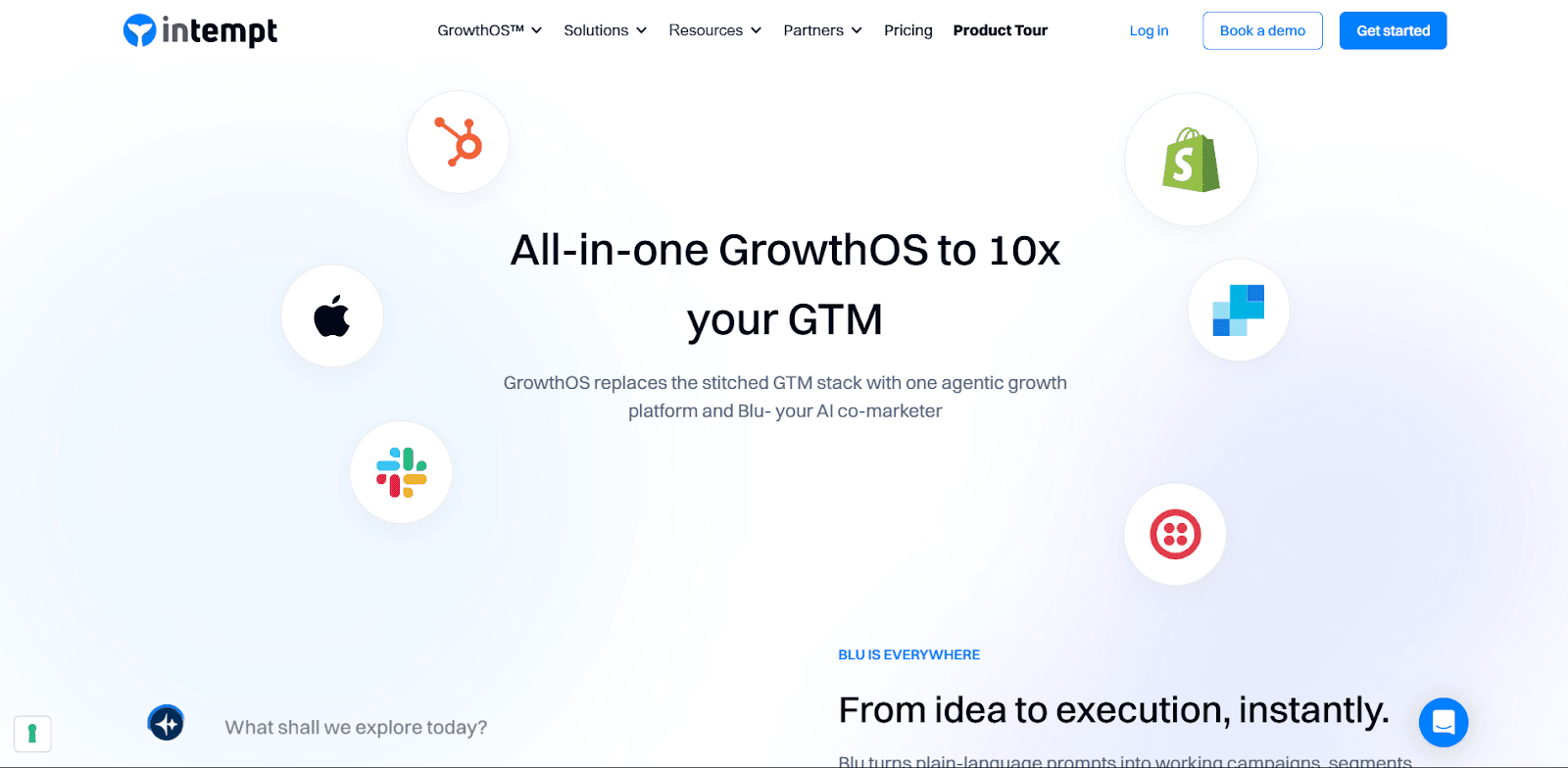
Intempt is built for growth teams that want their automation to think, not just execute, and for marketers who prefer a clean, intuitive interface. It's your AI agent that understands intent, predicts what users will do next, and orchestrates personalized experiences automatically. The UI is designed to make building, visualizing, and tweaking journeys easy: fewer nested menus, easier experimentation setup, and clearer revenue attribution dashboards.
The Journeys feature inside Intempt goes beyond flowcharts. It combines behavioral analytics, CRM data, intent-scoring, and predictive modeling to dynamically recalibrate each user's path.
With the Lifecycle Marketer, you can build omnichannel journeys on the fly. From onboarding to re-engagement, design and launch adaptive campaigns that personalize in real time and drive conversions.
For example:
If a user shows high purchase intent but doesn't convert, Intempt's AI will instantly trigger a personalized experiment testing a discount email vs. an in-app recommendation and automatically learn which drives the best outcome. You only need to set up the campaign once, and whenever the situation arises, Intempt handles the rest automatically.
It's not "set it and forget it" automation. It's "set it and let AI + your interface work together to learn and adapt."
Klaviyo
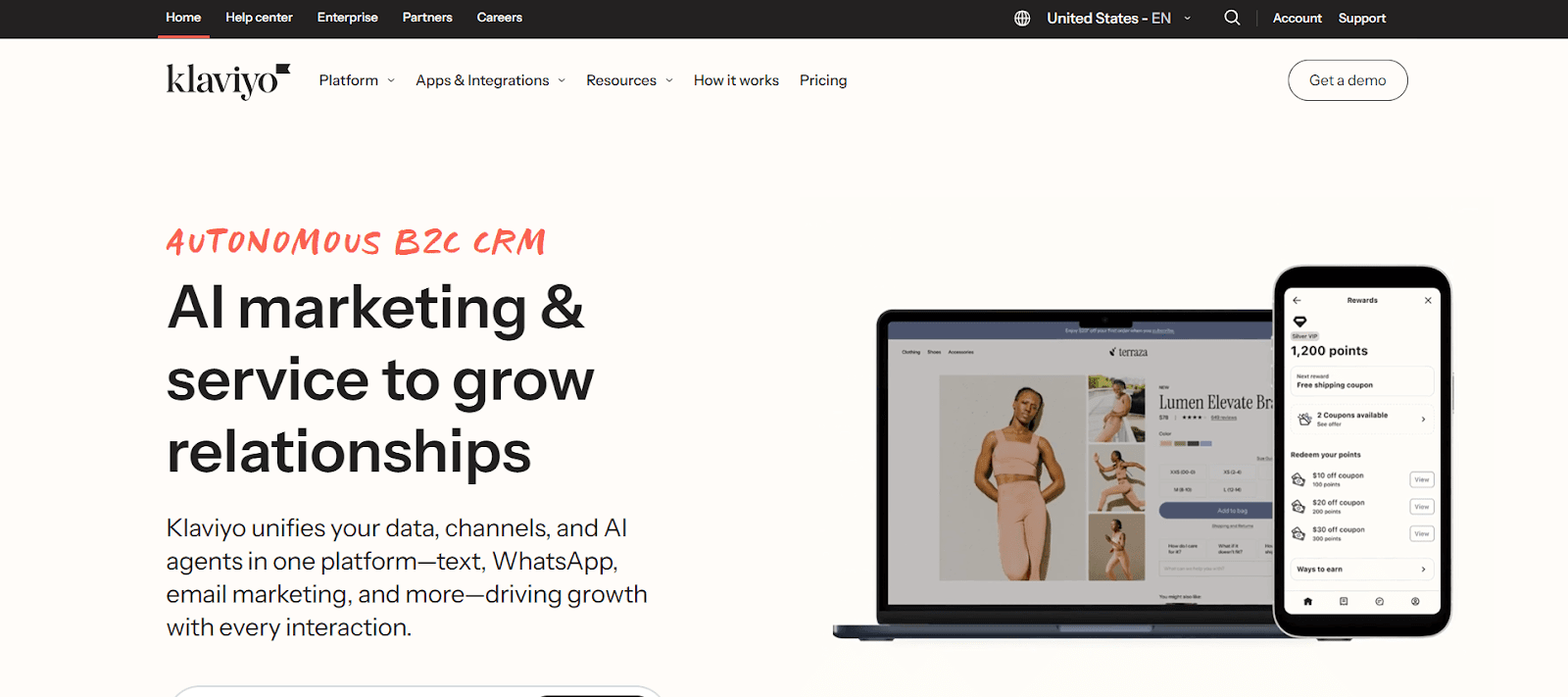
Klaviyo has evolved from being an email automation platform to a powerful AI-assisted omnichannel engine. It provides features like AI content generation for email, SMS, and WhatsApp, predictive analytics, and flows. It still starts from an order, which is where our marketing automation tools guide for GTM teams places it among the lifecycle messaging tools.
Journeys in Klaviyo (called Flows) are rule-based: you define the triggers, time delays, and logic branches manually. The AI helps create content and timing inside those branches, but it doesn't rewrite or optimize the journey logic itself in a fully autonomous way. Also, while its UI is full-featured, many marketers still report steeper learning curves for advanced journey orchestration.
In-Depth Comparison: Intempt vs Klaviyo
As an all-in-one platform, Intempt isn't just an alternative to Klaviyo; it's a step-up from campaign automation to intelligent journey orchestration. Modern growth teams don't just need tools that send messages; they need connected, AI-driven systems that understand intent, adapt in real time, and turn every customer path into a personalized growth loop.
Automation alone doesn't build loyalty unless it connects to personalization, analytics, and orchestration. That's where the comparison between Intempt and Klaviyo becomes crucial.
Both platforms let marketers engage customers across channels, but the way they handle journey intelligence, personalization depth, orchestration flexibility, and UI/UX simplicity differs significantly.
Below, we've compared both platforms feature-by-feature across journeys, personalization, orchestration, AI capabilities, analytics, integrations, pricing, and more.
| Feature | Intempt | Klaviyo |
|---|---|---|
| Journeys | AI-powered orchestration that adapts in real time. Intempt's Journeys combine automation, personalization, and predictive logic to adjust user paths dynamically. Designed with a clean, intuitive UI for marketers to visualize and control multi-channel experiences (Slack, sms, emails, push notifications). | Rule-based flows that automate messages across email, SMS, and WhatsApp. Klaviyo's Journeys (Flows) are enhanced by AI for content, timing, and segmentation, but the flow structure itself remains static until manually edited. |
| Multi-Channel Support | Email, web, in-app, push, CRM orchestration across channels | Email, SMS, WhatsApp, with growing AI channel affinity |
| AI Capabilities | Predictive orchestration, intent scoring, adaptive pathing, content generation, send-time optimisation, predictive analytics, integrated experiments, marketer-centric UI | AI for content generation, send-time optimisation, predictive analytics, channel affinity, and some autonomous features |
| Experimentation | Native A/B & multivariate experiments inside Journeys accessible via intuitive UI | Manual A/B testing; AI enables content & segments, but experimentation of entire journey logic is less automated |
| Feature | Intempt | Klaviyo |
|---|---|---|
| Segmentation | AI-driven, auto-updating cohorts, UI presents predictive segments powered by web/app/Shopify activities | Predictive segmentation (Segments AI), but segment creation and upkeep may need more manual input |
| Personalisation | Real-time personalisation across all channels, UI makes it simple for marketers to apply | Personalized messages within flows, strong in content generation, and channel routing |
| Analytics | Complete behavioral analytics with revenue attribution across journeys | Strong campaign analytics; limited revenue attribution depth |
| Recommendations | AI recommends next-best-actions, journey updates, segments, offers, experiments, etc | AI recommends content, subject lines, send times, and predictive attributes |
| CDP | Built-in CDP unifying behavioral, product, CRM, revenue & identity data | Customer data platform with a major focus on e-commerce activities. |
Journeys
Both Intempt and Klaviyo help teams automate customer journeys, but the way they do it defines how far your marketing can really scale.
Intempt takes a predictive, AI-driven approach to orchestration. Its Journeys aren't static flows; they're living systems that adapt in real time. Powered by behavioral data and AI intent models, each path recalculates dynamically based on what a user does, not just what's been pre-set. If engagement drops, the Lifecycle Marketer triggers a new route, maybe a retargeting experiment, a personalized offer, or an in-app nudge.
Marketers can start flows based on behaviors, attributes, or agent signals, including agent-triggered enrichment blocks and research workflows. With the help of predictive branching, marketers can go beyond static Yes/No splits with AI that routes users based on likelihood to convert, upgrade, or churn, and let AI detect churn risk, purchase intent, or lifecycle stage and auto-start journeys at the right moment.
Klaviyo, in contrast, uses Flows, which are rule-based sequences built around pre-defined triggers and timing. They're powerful for e-commerce campaigns like welcome sequences, abandoned cart reminders, or post-purchase follow-ups. AI layer adds automation for content generation, segmentation, and send-time optimization.
However, its capabilities are more limited in terms of multi-channel real-time event triggers and cross-device behaviour. The journey logic itself doesn't evolve automatically. To change how a customer moves through a flow, marketers need to manually edit branches and triggers.
In short, Klaviyo automates journeys, but Intempt orchestrates them intelligently, dynamically, and across every channel.
Multi-Channel Support
Both platforms connect multiple communication channels, but differ in how deeply they orchestrate them.
Intempt was designed from the ground up for omnichannel orchestration. Marketers can build a single journey that spans web, app, email, push notifications, and CRM. The system automatically syncs user data across all channels and adapts messages in real time, ensuring consistency and personalization wherever users engage. For how other vendors handle that shared profile, see our ranked omnichannel engagement platforms.
Marketers can use AI snippets and real-time variables, enriched with Research Agent fields and updated CRM data, and combine channels to build consistent, cross-platform journeys that adapt dynamically using enrichment and deliverability intelligence.
Klaviyo has evolved into a strong multichannel marketing platform, expanding beyond email and SMS to include WhatsApp and push notifications. Its AI layer helps choose the optimal channel for each user and predicts when they're most likely to respond.
That said, orchestration remains more message-based than experience-based channels are managed individually rather than holistically. Real-time coordination across platforms often requires additional setup or third-party tools.
In essence, Intempt connects every channel into one adaptive journey, while Klaviyo optimizes communication across separate channels.
AI Capabilities
AI is where the two platforms diverge most dramatically.
Intempt's agents work as autonomous AI, not just content assistants. They analyze intent signals, predict user actions, run adaptive experiments, and orchestrate entire journeys end-to-end. The agents don't just generate copy; they shape strategy, recommend journey changes, identify friction points, and optimize outcomes automatically.
The Data Analyst can describe your ideal customer profile in natural language and build segments instantly. It suggests experiments, identifies which users are likely to churn, and automatically adjusts journey paths based on predictive scoring. The agents learn from every interaction, making the system smarter over time.
Klaviyo's K:AI focuses on messaging optimization. It generates email and SMS content, optimizes send times, predicts engagement, and suggests segments. It's excellent for improving communication quality and timing, but it doesn't influence journey logic or orchestration strategy.
Klaviyo's AI improves execution; Intempt's AI improves strategy.
Personalization
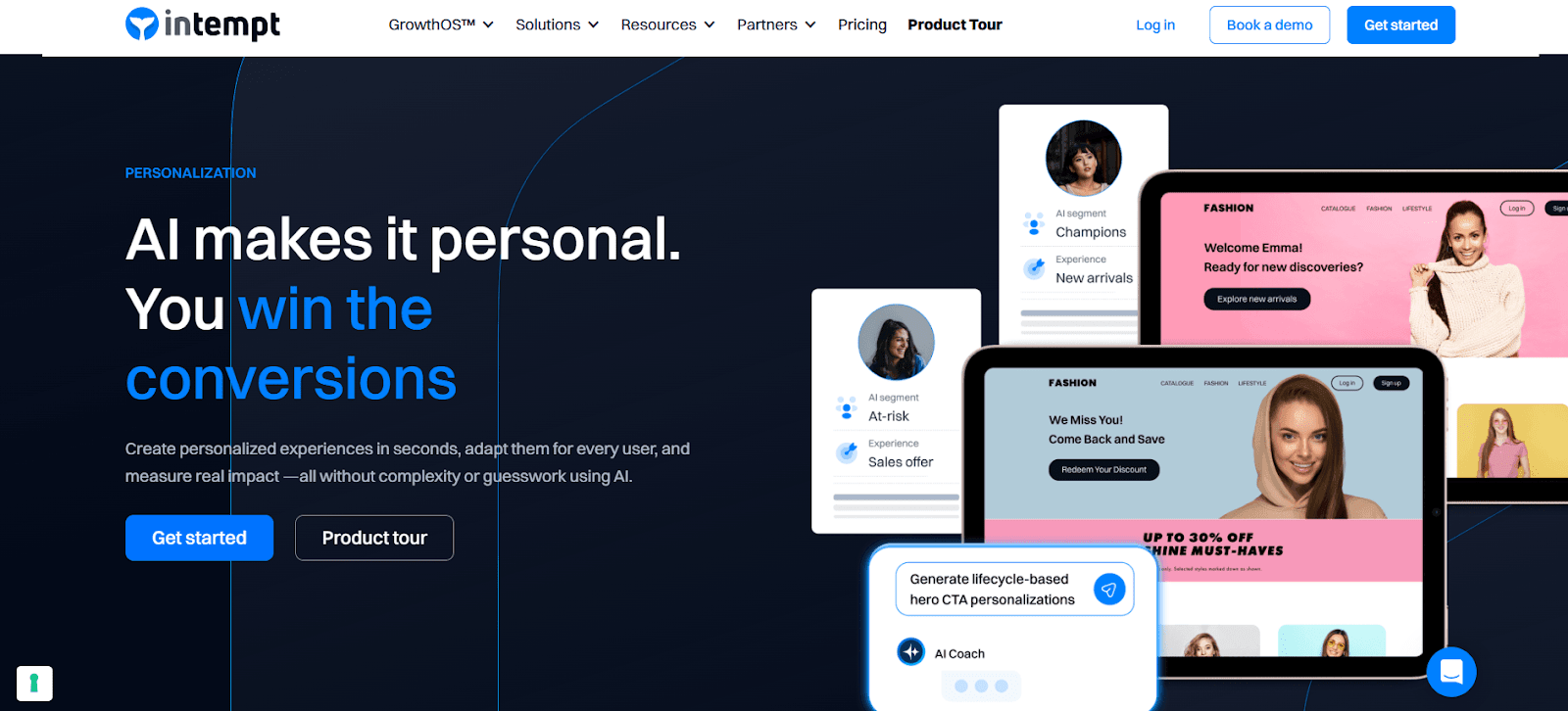
Both platforms personalize experiences, but at different depths.
Intempt personalizes the entire customer lifecycle. Recommendations, experiments, content blocks, and journey paths all adapt dynamically based on behavior, predictive insights, and revenue signals. Website personalization applies across web, app, email, SMS, push, and CRM, creating truly omnichannel experiences.
The same intelligence that powers product recommendations also drives journey orchestration, ensuring every touchpoint feels personalized and relevant.
Klaviyo personalizes messages deeply using dynamic content, product recommendations, and behavioral triggers. Personalization is strong within email and SMS campaigns, but it doesn't extend to journey-level orchestration or cross-channel experience personalization.
Analytics + Revenue Attribution
Intempt integrates behavioral analytics and revenue attribution directly into its journey engine. Every action, whether a message, experiment, or path adjustment, is tied to revenue impact. Marketers can see which journeys create activation, which branches reduce churn, and how each touchpoint contributes to revenue.
Analytics aren't just reports; they're decision-making tools that feed back into journey optimization automatically.
Klaviyo provides strong messaging analytics: opens, clicks, conversions, and campaign performance. It offers revenue reporting and customer lifetime value metrics. However, analytics exist separately from journey orchestration, and there's no built-in revenue attribution system that directly influences journey logic.
Experiments
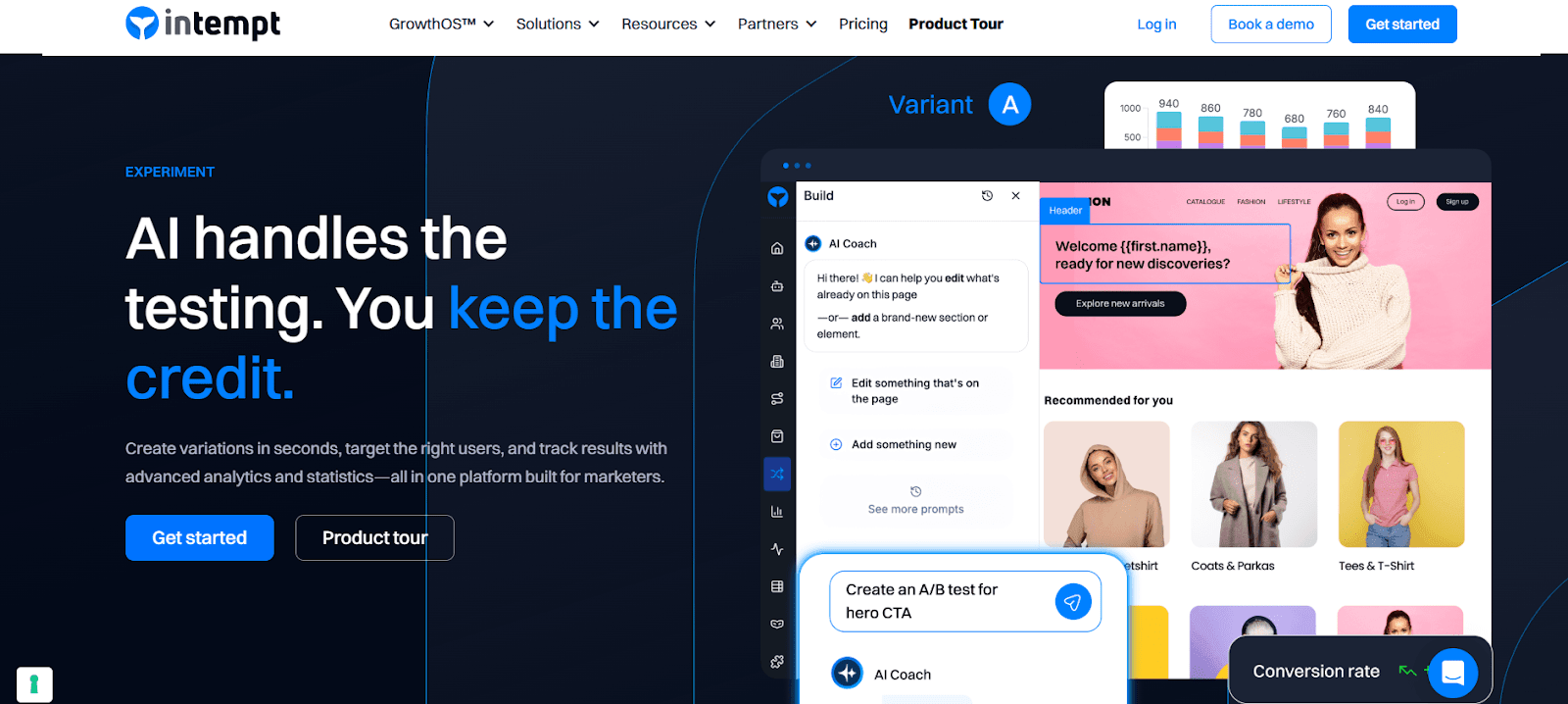
Intempt embeds experiments directly into journeys. Marketers can test journey branches, recommendation strategies, personalization variations, and multi-surface experiences. The AI can propose tests, allocate traffic intelligently, and optimize results automatically.
Experiments run across messaging, web, app, and product surfaces, allowing teams to optimize entire experiences, not just emails.
Klaviyo offers A/B testing for email campaigns, subject lines, content, and send times. However, experimentation is limited to messaging and doesn't extend to journey-level tests or multi-surface experiences.
Segmentation
Intempt provides predictive, auto-updating segmentation powered by AI intent scoring, lifecycle stages, and behavioral patterns. Segments update continuously as users move through lifecycle stages, ensuring journeys always operate on fresh, dynamic audiences.
Real-time updates mean every stage of the lifecycle runs on live segmentation, not just the send list.
Klaviyo offers highly flexible rule-based segments with fast updates. Segments are powerful for messaging workflows and can be based on events, attributes, and behavior. However, segments don't adapt automatically as users move through lifecycle stages unless you define the rules yourself.
Integrations
Intempt integrates across the entire revenue stack with CRM, ecommerce, data warehouses, and marketing tools. Shopify, HubSpot, Stripe, Segment, and native SDKs all plug into the platform natively. Integrations are activation layers, not just data pipes. A predictive score from Intempt can update a CRM record, trigger a personalized journey, or adjust an experiment without manual intervention.
Klaviyo integrates deeply with e-commerce platforms like Shopify, WooCommerce, BigCommerce, and Magento. It connects to various data sources and marketing tools. Integrations excel at syncing product catalogs, orders, and customer data for messaging workflows.
Pricing
Intempt uses per-seat pricing, listed on our pricing page. Pricing scales predictably with your team, not with message volume or campaign complexity. Because Intempt includes CDP, analytics with revenue attribution, journeys, personalization, and experiments in one platform, teams often replace multiple tools and lower their total cost of ownership.
Klaviyo charges based on contact count and email/SMS volume. Pricing starts around $20 per month for up to 500 contacts, scaling up as you add more contacts and send more messages. Costs can increase quickly as you scale email, SMS, or push campaigns. Brands that need deeper analytics, CDP functionality, or experimentation often add external tools, raising overall spend.
When to Choose What?
Choosing between Intempt and Klaviyo doesn't have to be confusing. The difference becomes obvious once you know what each platform is built for. Here's the marketer-friendly breakdown, so you can immediately see which platform aligns with your brand, team, and growth model.
Choose Klaviyo If…
- You want a proven email and SMS automation platform with strong e-commerce integrations.
- Your primary automation happens through messaging channels (email, SMS, WhatsApp).
- You prefer rule-based flows that run exactly as you configure them, without AI-driven branching.
- You're focused on optimizing communication performance, such as open rates, click rates, and message engagement metrics.
- Personalization for you lives mostly inside emails or SMS, using dynamic content and product recommendations.
- You don't require unified analytics, CDP-level data, or revenue attribution to drive automation decisions.
- You're comfortable maintaining journeys manually, updating logic when behavior changes or performance drops.
Klaviyo: a messaging automation engine built for e-commerce teams that want detailed control, message-centric workflows, and a flexible system for sending communications across multiple channels.
Choose Intempt If…
- You want AI-driven journeys that adapt automatically, recalculating paths based on behavior, intent scores, lifecycle stage shifts, and revenue impact.
- You need unified analytics with insights, funnels, cohorts, retention, and revenue attribution feeding directly into orchestration decisions.
- You want a full CDP that unifies behavioral events, product usage, and revenue data into one evolving profile.
- You need predictive segmentation and lifecycle intelligence, including intent scoring, churn risk, propensity to convert, and RFM-style modeling.
- You want experiments and personalization embedded in journeys, allowing AI to test variations across web, app, email, SMS, and push.
- You prefer a growth system that reduces manual work, identifies friction points, recommends journey changes, and optimizes outcomes automatically.
- You want a platform that scales with your actual customer base rather than message volume, making it significantly more cost-efficient as you grow and engage users across multiple channels.
- You want a modern UI designed for speed and clarity, with fewer nested menus, cleaner visualization, and a workflow that lets marketers iterate fast.
Intempt: intelligent orchestration for teams that want adaptive growth loops, not just automated messages. From onboarding to re-engagement, design and launch adaptive campaigns that personalize in real time and drive conversions. If your growth strategy depends on full lifecycle personalization, predictive AI, and real-time decisioning, Intempt is the smarter choice.
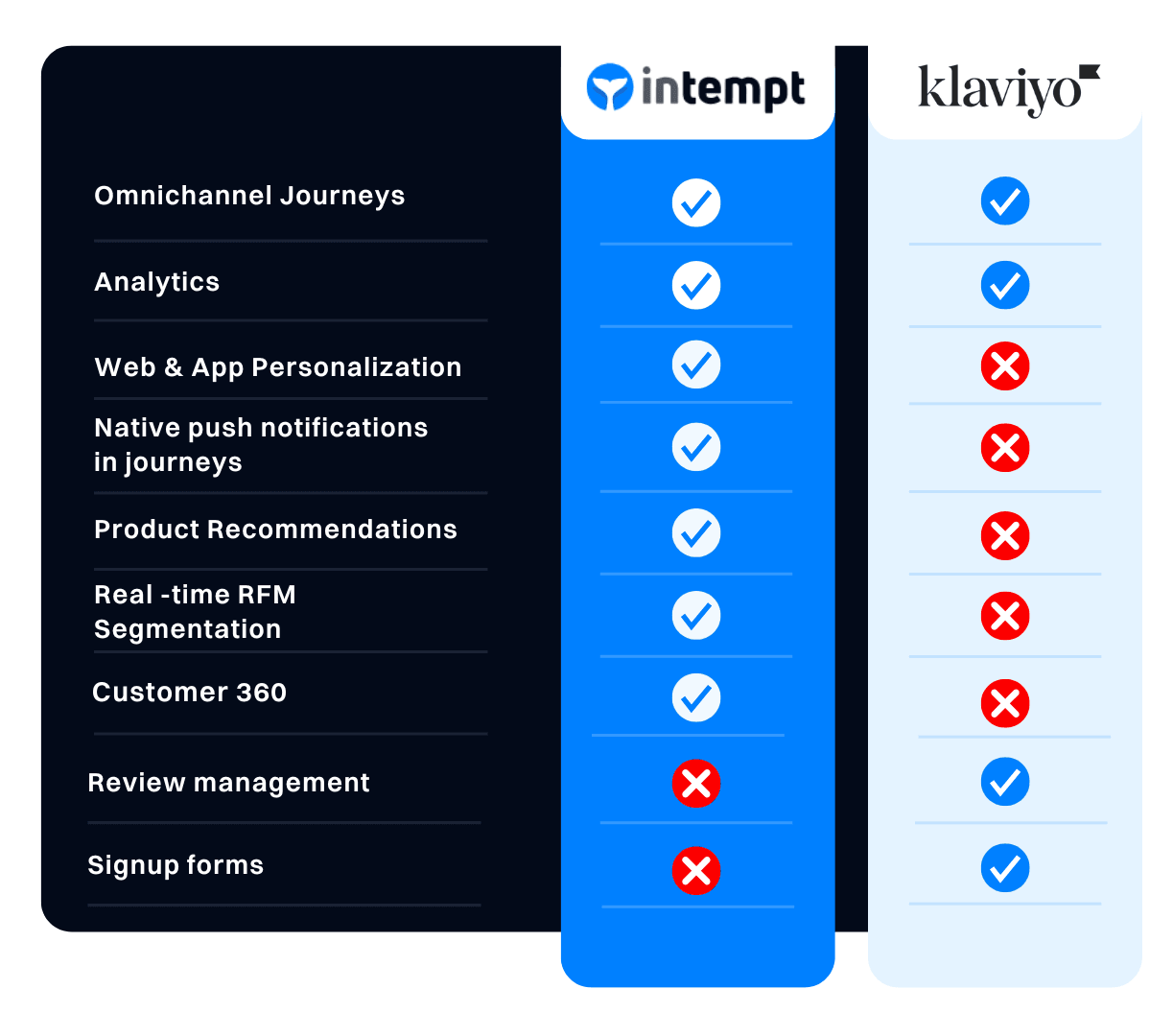
Quick summary
- Journeys: Klaviyo automates messages with rule-based flows; Intempt orchestrates adaptive journeys that update themselves using real-time behavior, predictive signals, and revenue attribution.
- AI: Klaviyo uses AI for content generation and send-time optimization; Intempt uses AI to predict intent, adjust paths, recommend experiments, and optimize lifecycle outcomes automatically.
- Personalization: Klaviyo personalizes messages; Intempt personalizes full experiences across email, SMS, push, in-app, and web.
- Experiments: Klaviyo offers message-level A/B tests; Intempt runs full journey and multi-surface experiments inside flows.
- Segmentation: Klaviyo relies on rule-based segments; Intempt provides predictive, auto-updating audiences tied to lifecycle intelligence.
- Analytics + Revenue Attribution: Klaviyo focuses on communication metrics; Intempt ties every journey, experiment, and personalization to revenue impact.
- Integrations: Klaviyo integrates widely through connectors; Intempt integrates deeply with real-time, two-way sync for cross-channel orchestration.
- Pricing: Klaviyo charges based on contacts and message volume, starting around $20/month for 500 contacts. Intempt is priced per seat (see intempt.com/pricing), scaling with your team rather than message volume.