.svg)


Best Real-Time Customer Segmentation Tools in 2025


Feeling like your audience lists are stuck in the past instead of driving growth? You’re definitely not the only one. With customer data evolving faster than ever and personalization becoming the secret to real growth, real-time segmentation isn’t just a nice-to-have anymore; it’s essential.
Teams today need tools that don’t just collect customer data but react to it. Whether it’s a user browsing your app, abandoning a cart, or hitting a paywall, your system should know and respond in the moment.
Think of it like this: a SaaS user explores your pricing page but doesn’t upgrade, or an eCommerce shopper views running shoes twice without adding to cart, your platform can automatically recommend the right size and offer free shipping via email or SMS. When a power user completes a key milestone inside your app, they can get nudged toward the next feature with a contextual in-app message.
That’s what real-time segmentation is all about: turning behavior into immediate, personalized action that drives engagement and revenue, not just reporting on what already happened.
This guide walks you through the best real-time segmentation tools in 2025, built for SaaS, and eCommerce teams that want to act fast, personalize smarter, and grow without juggling disconnected stacks.
What Is A Real-Time Segmentation Tool?
A real-time segmentation tool groups users based on their behaviors, attributes, and events as they happen. It helps teams deliver personalized experiences instantly - triggering emails, push notifications, or in-app actions right when a customer shows intent.
In short, real-time segmentation lets you group users based on what truly matters, like high-intent visitors who view pricing pages, first-time buyers who abandon checkout, active users approaching a paywall, or loyal customers who haven’t engaged in weeks. Teams often create segments such as “cart abandoners,” “repeat purchasers,” “new signups yet to activate,” or “trial users nearing expiry.” These dynamic segments update automatically as users act, giving marketers live audiences they can engage instantly with relevant offers or nudges.
Why do you need real-time segmentation?
- Instant personalization. React to user actions the moment they happen.
- Smarter targeting. Build dynamic audiences that evolve automatically.
- Unified data. Break silos between marketing, product, and sales tools.
- Improved conversions. Send the right message at the right time.
- Reduced manual work. Let AI segment and predict customer behavior for you.
What to look for in a segmentation tool?
- Unified data model. Real-time event and attribute sync across all touchpoints like your website, mobile app, email, checkout flow, and CRM.
- AI-driven audiences. Predict who’s likely to churn, convert, or engage next.
- Cross-channel activation. Connect segments with your ESPs, ads, and product flows.
- Privacy compliance. GDPR, CCPA, and consent management built in, with secure data handling, user-level consent tracking, and the option to anonymize or delete user data on demand.
- Transparent pricing. No hidden event-based charges.
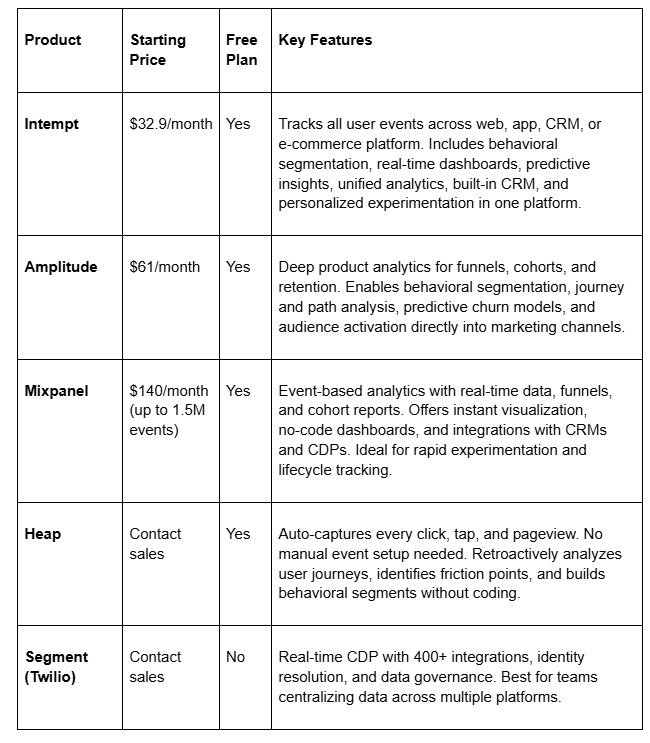
If you are running a little low on time, here’s a comparison chart for you to review all the tools and choose the one that suits you best.
The Top Picks
1) Intempt
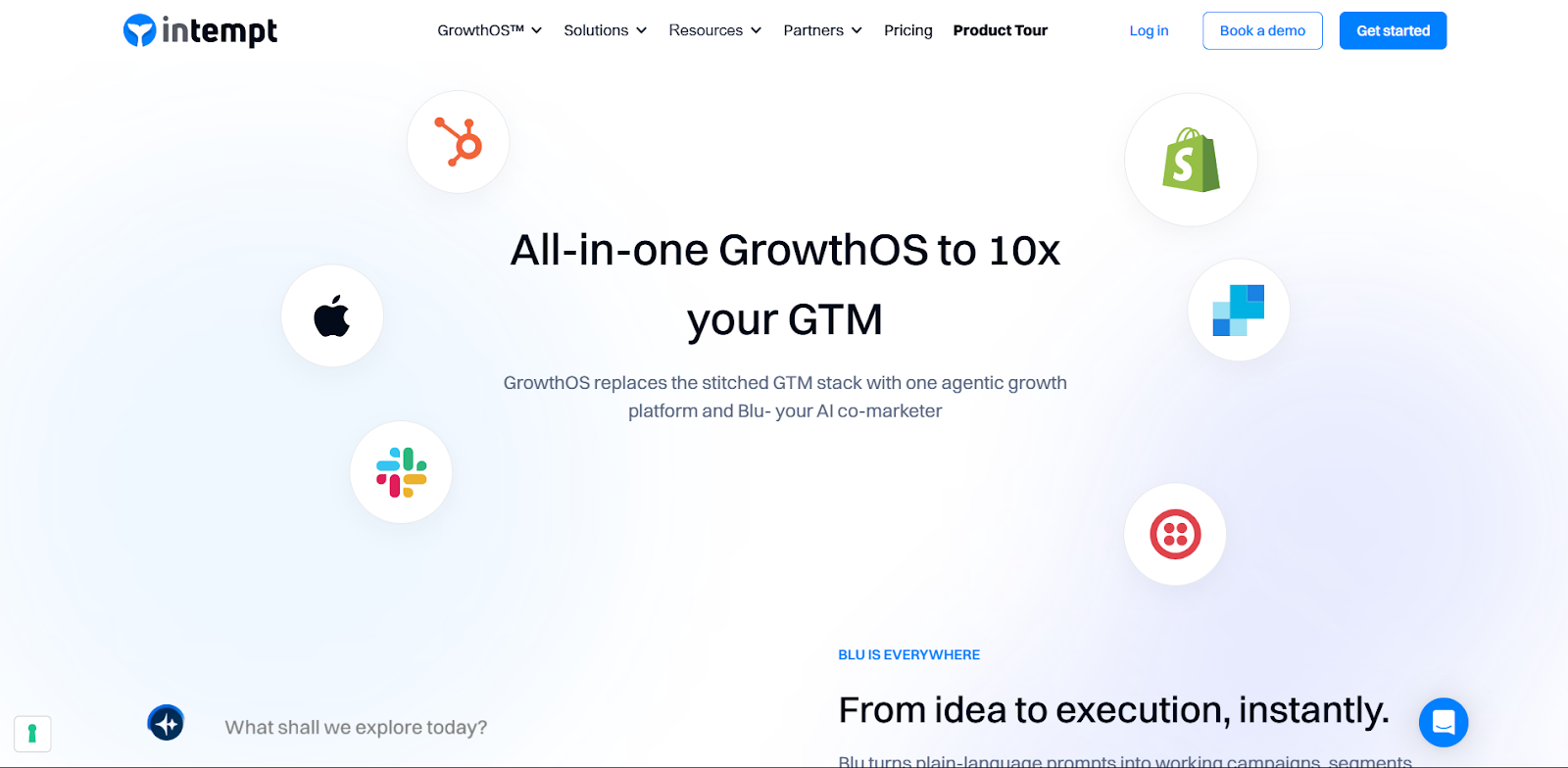
Intempt brings together customer data, analytics, and activation into one unified platform designed for real-time, data-driven growth. It helps SaaS and eCommerce teams connect data from multiple sources like web, app, and CRM, to build AI-powered audiences and launch personalized experiments across journeys. With its real-time segmentation, marketers can instantly react to user behavior, while analytics connects customer actions directly to business outcomes.
Intempt does an excellent job by integrating with Hubspot, Shopify, and Stripe, making it a super fit for both eCommerce and SaaS. Its Revenue Analytics module lets you measure not only conversions but also downstream revenue impact, helping teams move beyond vanity metrics to real growth signals.
Strengths:
- Intempt brings together customer data, analytics, and activation so you can see exactly how users move through your app or storefront in real time.
- Instead of static campaigns, Intempt lets you design real-time, AI-powered experiments across email, web, and in-app touchpoints.
- Native HubSpot, Shopify, and Stripe integrations mean you can directly measure how each audience or experiment impacts sales, not just clicks.
- Automatically builds and updates segments based on live user behavior; think cart abandoners, active subscribers, trial users, or high-value repeat buyers.
Watchouts:
- Setup needs thoughtful data mapping: While Intempt offers an intuitive setup, teams still need to define the right events and attributes early to get the most out of predictive segmentation and revenue analytics.
- Learning curve for advanced personalization: Features like AI-based scoring and server-side personalization require initial experimentation to fine-tune accuracy.
Best for: PLG SaaS and eCommerce teams that want fewer tools and faster growth.
Pricing: Starts at $32.9/month, with a free trial available.
2) Amplitude
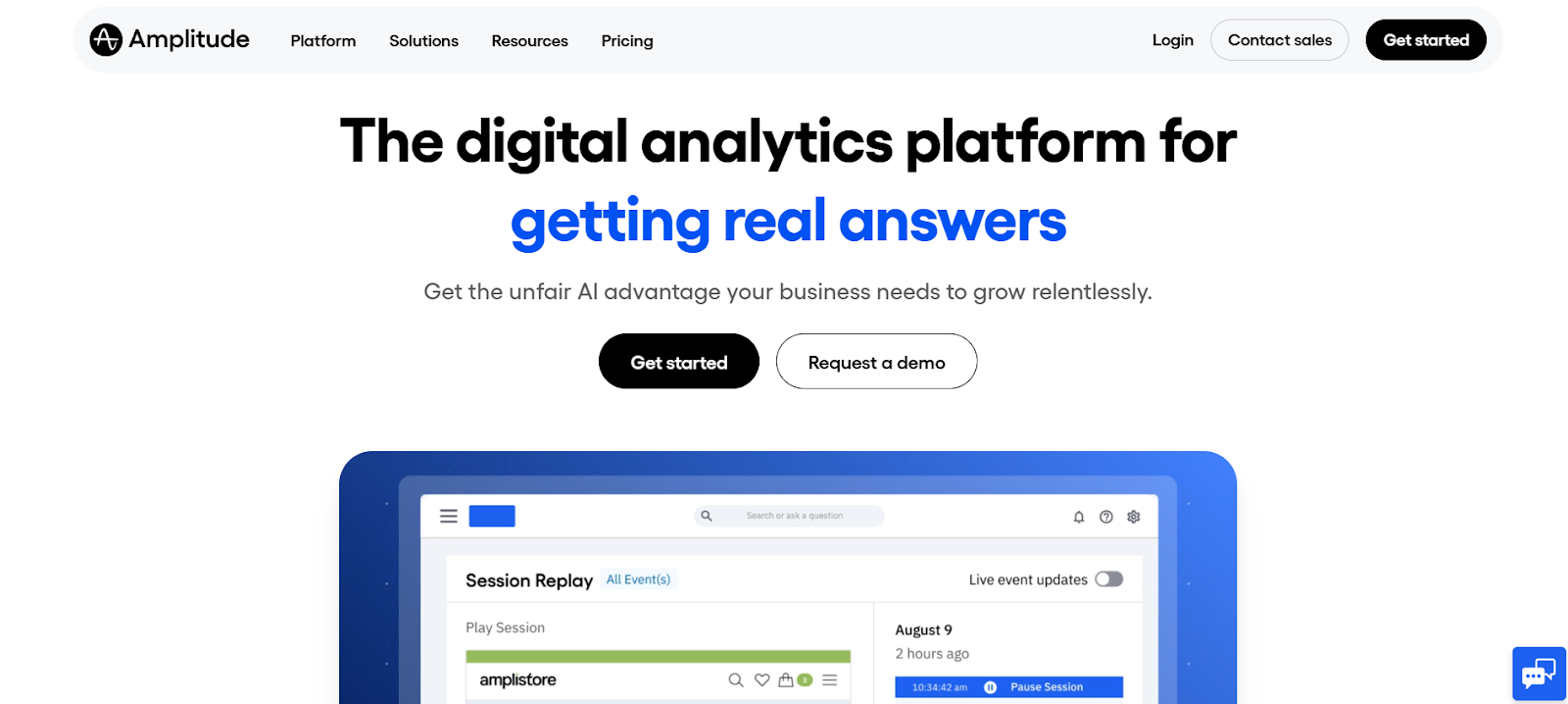
Amplitude is a leading product analytics and segmentation tool that helps you deeply understand user behavior, track conversions, and predict engagement trends. Its Audiences feature lets you create behavioral cohorts and activate them in real time across channels. With journey analytics, retention reports, and predictive churn models, teams can make every interaction count. The tool integrates seamlessly with marketing platforms, allowing data-driven activation without switching contexts.
Strengths:
- Deep behavioral analytics and real-time segmentation.
- Predictive churn models and advanced funnel analysis.
- Strong integrations with ad platforms and CRMs.
- Scalable for both startups and enterprises.
Watchouts:
- Depth can overwhelm small teams: Its analytics power comes with complexity. For teams without data analysts, reports and cohorts can feel heavy at first.
- Requires data cleanliness: Inconsistent or poorly tagged events can lead to confusing reports and unreliable retention or funnel insights.
Best for:
Product-led teams that want to turn analytics into actionable, personalized experiments.
Pricing:
Starts at $61/month, with a free plan for small teams.
3) Mixpanel
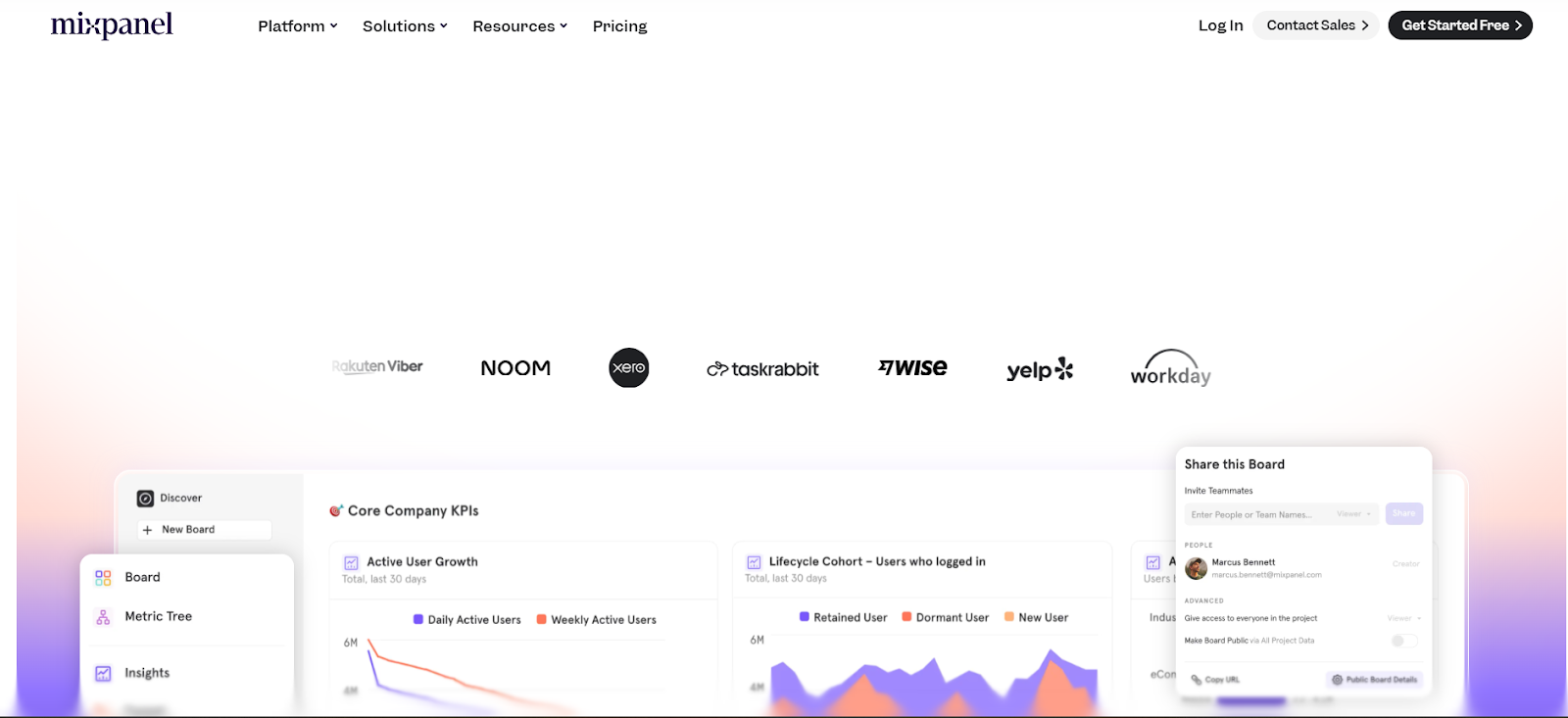
Mixpanel is an established analytics platform for event-based tracking, segmentation, and cohort analysis. It helps teams uncover insights about user engagement, retention, and growth through real-time data visualization and no-code dashboards. Its strength lies in instant, query-based analysis and easy data slicing for non-technical teams. Integrations with CRMs and CDPs make it an analytics hub for many organizations.
Strengths:
- Real-time event tracking and cohort segmentation.
- Flexible reporting with customizable dashboards.
- Supports rapid experimentation and funnel analysis.
- Robust integrations with marketing and data tools.
Watchouts:
- Event-based pricing grows fast: As traffic scales, costs can balloon since pricing is tied to the number of tracked events, which can discourage detailed data capture.
- Limited experimentation features: Mixpanel offers segmentation and analysis but lacks built-in experimentation or personalization modules, forcing you to integrate external tools.
Best for:
Teams focused on analytics-first segmentation and fast experimentation loops.
Pricing:
Starts at $140/month for up to 1.5M events, with a free plan available.
4) Heap
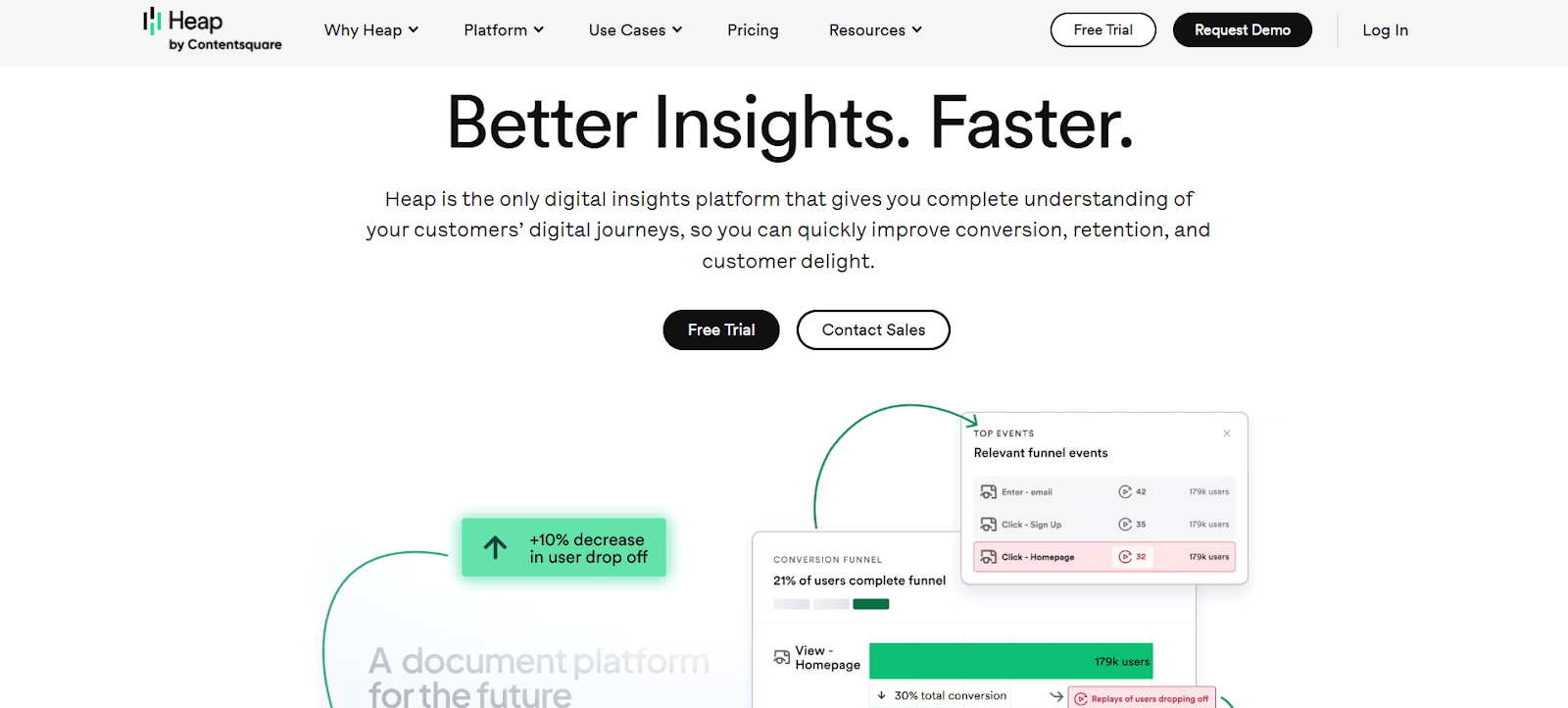
Heap takes the pain out of tracking by automatically capturing every user action, clicks, scrolls, taps, and pageviews—so you never miss an event. Its retroactive analysis allows teams to build user journeys and behavior segments even after the fact. Heap’s no-code tools make it simple for marketers and designers to find friction points and optimize conversions without developer setup.
Strengths:
- Automatic data capture without manual tagging.
- Retroactive analytics for fast experimentation.
- Intuitive interface and minimal technical setup.
- Great for identifying drop-offs in user flows.
Watchouts:
- Data overload without discipline: Since Heap auto-captures every interaction, teams can quickly drown in unstructured data if they don’t curate key events and metrics.
- Limited predictive capabilities: Heap is great at explaining what happened, but not as strong at forecasting what might happen next.
Best for:
Marketing and UX teams that want fast, retroactive behavioral insights without coding.
Pricing:
Custom pricing based on usage, with a free plan available.
5) Segment (Twilio)
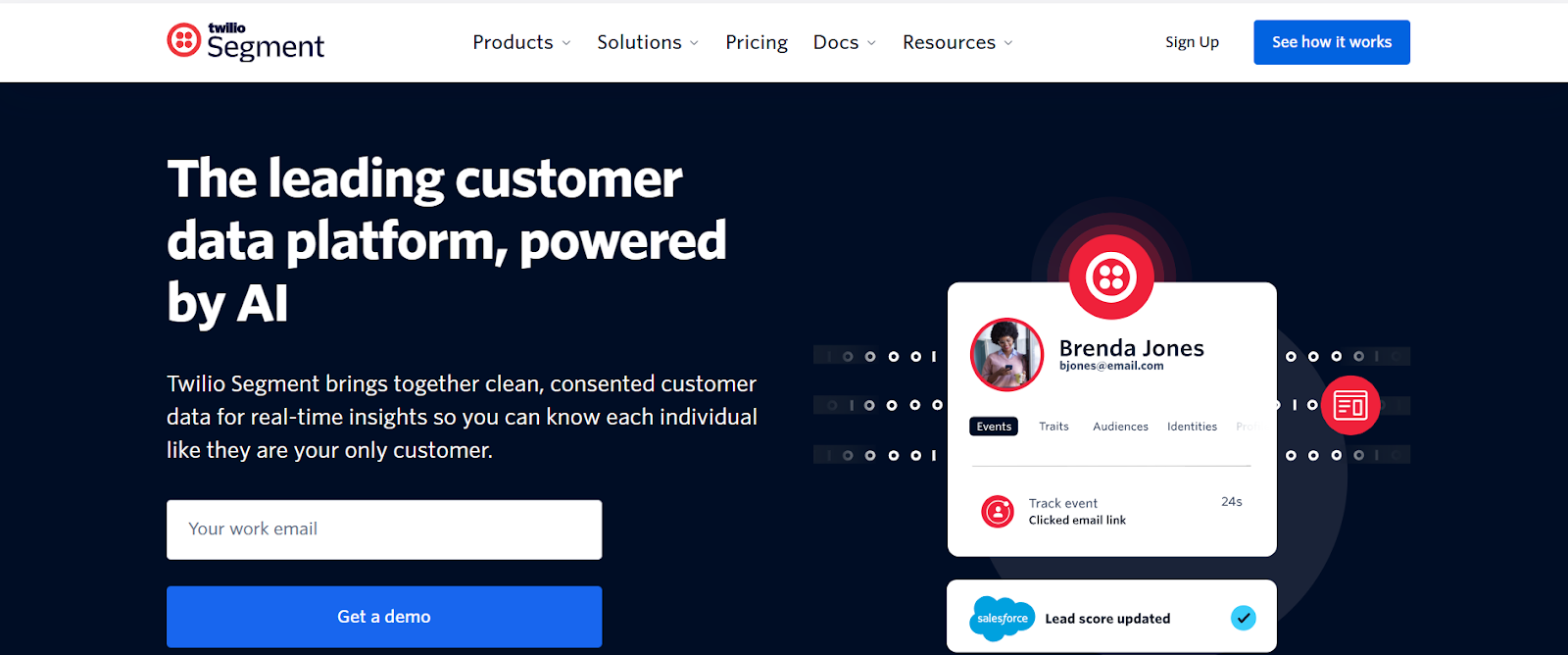
Segment is the go-to Customer Data Platform (CDP) for companies that want a single source of truth for their customer data. It collects, standardizes, and routes data across marketing, analytics, and warehouse tools in real time. Its power lies in simplifying complex data flows, unifying user identities, and ensuring every destination tool receives clean, consistent data. With 400+ integrations, Segment acts as the connective tissue for your entire growth stack.
Strengths:
- Connects seamlessly with 400+ tools, including CRMs, analytics platforms, and ad networks.
- Captures and syncs events across all customer touchpoints like web, app, and backend APIs.
- Automatically merges user profiles across devices and sessions for accurate audience tracking.
- Offers schema enforcement, consent management, and data quality checks to keep analytics trustworthy.
Watchouts:
- Implementation requires technical planning: Segment isn’t a plug-and-play analytics tool. You’ll need engineering resources to set up event tracking, data pipelines, and consistent schemas. Without a solid taxonomy, data can get fragmented fast.
- Cost grows with scale and destinations: Pricing depends on both the number of tracked users and the tools you send data to. As your stack and traffic grow, costs can scale steeply—especially for enterprise usage.
Best for:
Product and customer success teams focused on engagement and onboarding inside the app.
Pricing:
Contact sales for custom pricing; free trials available on request.
How To Choose (Fast)
- If you want an all-in-one growth engine:
Go with Intempt. It unifies real-time segmentation, personalized experiments, and activation in one powerful platform. Perfect for teams tired of juggling separate analytics, CDP, and personalization tools. You can track revenue impact from HubSpot, Shopify and Stripe natively and instantly act on behavioral signals using its AI-driven audience builder and predictive scoring. - If you already have a strong analytics setup:
Amplitude is built for data-savvy SaaS and PLG teams that live inside dashboards. It transforms behavioral analytics into actionable insights and helps you predict churn, retention, and engagement trends before they happen. - If you care about deep funnel analytics and experimentation:
Mixpanel and Intempt shines when you want to uncover where users drop off, what drives retention, and how engagement changes across journeys. You can pair Mixpanel with Intempt to instantly activate those insights and launch personalized experiments across channels. - If you want effortless tracking and retroactive insights:
Heap automatically captures every click, tap, and scroll, letting teams retroactively analyze journeys without manual event tagging. It’s a no-code favorite for marketers and product teams who want to understand friction points and optimize UX fast. - If you want to unify and distribute clean data across tools:
Segment (Twilio) and Intempt are your foundational CDP. It collects, standardizes, and routes customer data to 400+ tools, ensuring consistency and compliance across your analytics, marketing, and sales stack. Great for teams managing complex multi-tool environments. - If personalized customer engagement is your priority:
Intempt is built for eCommerce retention and omnichannel automation. It uses real-time segmentation, predictive analytics, and deep Shopify integration to send perfectly timed email, SMS, and push campaigns that drive conversions and repeat purchases.
FAQs
1) What is the difference between real-time and static segmentation?
Real-time segmentation updates customer groups instantly based on live behavior, while static segmentation relies on fixed lists that don’t change dynamically.
2) Which real-time segmentation tool is best for SaaS companies?
Intempt and Amplitude Audiences are ideal for SaaS. They connect behavioral analytics with real-time personalization and activation.
3) Do I need a CDP for real-time segmentation?
Not always. Tools like Intempt and Segment combine CDP, analytics, and activation capabilities, so you can unify and act on data without needing a separate CDP layer.
4) What’s the best way to get started with real-time segmentation?
Start small: define one or two live behaviours you care about (e.g., “added to cart but didn’t purchase in 5 mins”), map your data sources, pick your audience tool, set up activation. Then scale.
5) How does data privacy and compliance affect real-time segmentation?
Because you’re reacting to live behaviour, you must ensure you have consent, manage identity properly, and anonymise where needed. Real-time tools require strong governance.
6) Which tool is best for non-technical marketers?
For no-code segmentation and easy activation, Intempt and Heap are ideal. They offer visual builders, AI-based audience creation, and seamless campaign integrations without requiring SQL or developer support.
FAQs
Can I trial Webflow before paying?

Sure! You can test out Webflow on our free plan where you can experiment with 2 projects. Your unhosted projects will have a two-page limit, but you can purchase a site plan on a per-project basis to unlock up to 100 static pages and additional CMS pages.
What is a project?
A project is a website that you build in Webflow. You can publish projects to a webflow.io staging subdomain for free, export the code on a paid plan, or add a site plan to connect your custom domain and unlock hosting features.
What can I white label?
Pro accounts can add their own logo to Client Billing forms and the Editor. Pro accounts can also remove references to Webflow in the source code and form submission emails, and hide the Webflow badge from their staging sites.
How much traffic can the hosting handle?
Webflow hosting scales automatically to handle millions of concurrent visits. All site plans serve sites through our Amazon's Cloudfront CDN and accelerated using Fastly, loading sites in milliseconds.
What kind of support does Webflow provide?
We offer fast email support to paid accounts and prioritized help for team accounts. Community support (forum.webflow.com) is available to free accounts.
How long does it take to learn Webflow?
If you're new to building websites, our video tutorials will get up and running quickly. If you already know concepts behind CSS and the box model, you will feel at home in Webflow.
Check out Growth Play Library ➡️
Get started free on GrowthOS ➡️
Book a growth call ➡️
.svg)
Sid Chaudhary
Founder & CEO


Looking for ways to grow faster?
Discover marketing workspace where you turn audiences into revenue.
Learn about IntemptReceive Monthly Insights
Get expert insights & news on the latest promotion trends in our monthly newsletter.
Sid Chaudhary
CEO & Founder

Lifecycle automation tips
Industry tips
Case Studies
You might also like...
%20In-Depth%20Comparison.png)
Intempt v/s Klaviyo (2025): In-Depth Comparison
Marketers want seamless customer journeys, not a maze of rules and manual triggers. If the system feels like work, it’s not automation, it’s stress in a shiny UI. Klaviyo has long been the go-to for e-commerce platforms, powering email, SMS, and now even WhatsApp automation. But 2025 teams want more than AI that writes better subject lines; they want an AI comarketer that thinks ahead. In this comparison, we’ll explore Intempt v/s Klaviyo with a sharp focus on their Journeys to help you find out which one delivers true AI-powered orchestration rather than just automated messaging.

%20In-Depth%20Comparison.png)
Intempt vs VWO (2025): In-Depth Comparison
Marketers don’t just want to test ideas; they want to turn those ideas into real customer experiences. Simple A/B tests and standard conversion lifts were once the gold standard, but now they have become the ghost of the past, because in 2025, growth teams demand more. They want to personalize in real time, orchestrate intelligently, and connect experiment results to revenue outcomes.
%20In-Depth%20Comparison.png)
Intempt vs Mixpanel (2025): In-Depth Comparison
Marketers and product teams thrive on data, and let’s be honest, they hate it when it’s scattered across 2-3 different tools, buried in dashboards, and takes a ton of their time just to get a half-answer. Mixpanel has long been the gold standard for analytics, but 2025 teams want more than charts and funnels; they want action. They want orchestration, personalization, and a clear line from insight to revenue. In this comparison, we’re putting Intempt vs. Mixpanel under the microscope, feature by feature, insight by insight, to help you find the smarter and more future-ready analytics partner for your team.
Subscribe to The Full Stack Marketer 📈
Zero theory or mindset discussions here; just actionable marketing tactics that will grow revenue today.

Web A/B testing
Use front-end A/B and multi-page experimentation product built for any business size. Run multiple experiments on the same page.

Targeting & personalization
Deliver targeted messaging, personalized offers and recommend the most relevant content for your users.

Visual editor
Empower your team to collaborate with an easy-to-use visual editor without using developer time to get things up and running.

Analytics
Gain insight into the impact of your experiments with statistically valid results. No complex statistical analysis required.

Server & client-side testing
Go beyond client-side testing and deploy experiments on the server-side. Test and optimize content changes and even complete re-brands.

Flexible goal selection
Select the right goal for each personalization and experimentation campaign to ensure you’re optimizing towards the right objectives.
.svg)

.svg)


.svg)
.svg)