Most tools that call themselves AI agents are not really agents. They're simply automation tools, chatbots, or workflow builders with better marketing. This post cuts through the noise.
After testing six platforms, here's what actually works, what doesn't, and why the distinction matters for your marketing team.
What Is an AI Agent, Really?
An AI agent is a piece of software that can perceive its environment, make decisions, take action, and reach a goal without you guiding every step. It is goal-driven and proactive, not reactive.
By contrast, an AI assistant waits for instructions and then executes. You tell it what to do. It does it.
Gartner defines agentic AI as systems that autonomously share insights, coordinate actions, and pursue goals across multi-step tasks. That's the bar. Most tools on this list don't clear it.
1. Intempt Blu Super Agent
Verdict: The only true AI agent on this list.
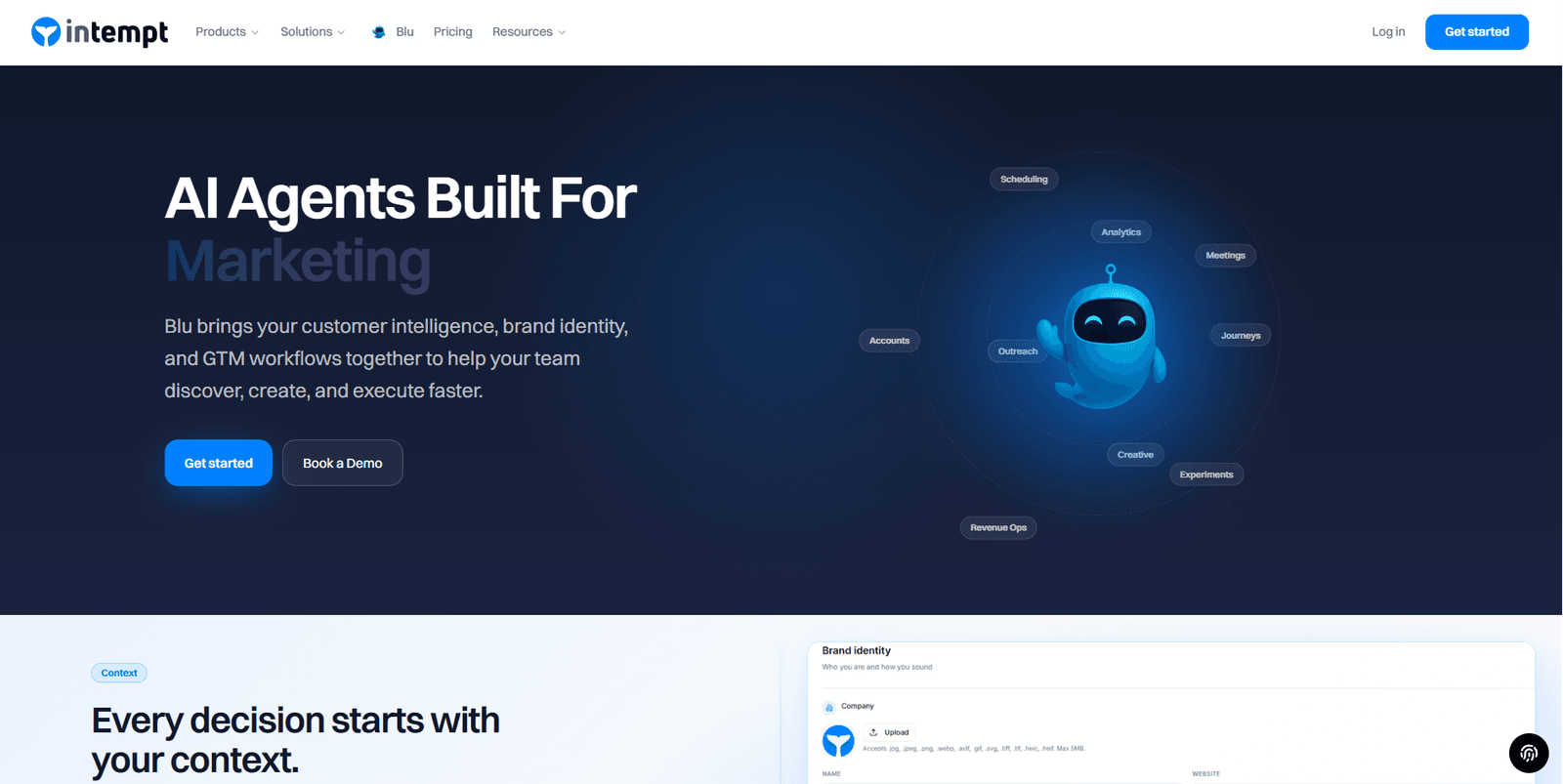
Blu is the one platform tested that actually meets the definition. It doesn't just run tasks you assign. It looks at your customer data, identifies what needs to happen, and takes action across your entire marketing lifecycle.
Here's the clearest way to explain the difference: sending an abandoned cart email is automation. Detecting that a customer is about to churn, spinning up a retention test, and learning from the results in real time is what Blu does.
Blu runs nine specialist agents under one system:
- Data Analyst spots drop-off and churn signals in your data
- Journey Builder fires the right intervention at the right time
- Creative Assistant drafts the content
- Experience Optimizer runs A/B tests on variants
- Account Researcher profiles target accounts
- Outreach Rep sequences the prospect
- Scheduling Assistant books meetings
- Meeting Notetaker captures and summarizes calls
- RevOps Automator routes leads and tracks revenue impact
Everything runs on a single customer profile that connects your behavioral analytics, CRM data, predictive models, and experiment results. No data exports. No rebuilding audiences. No context lost between tools.
You stay in control. Blu proposes actions, but you approve before anything goes out. Emails are drafts. Journeys are in review. Nothing ships without your sign-off.
Why it matters for marketing teams: Most teams are stitching together nine or more tools to do what Blu handles in one place. Blu removes the manual coordination so you can focus on strategy. Learn more about the Intempt marketing platform.
2. CrewAI
Verdict: Best framework for building multi-agent systems.
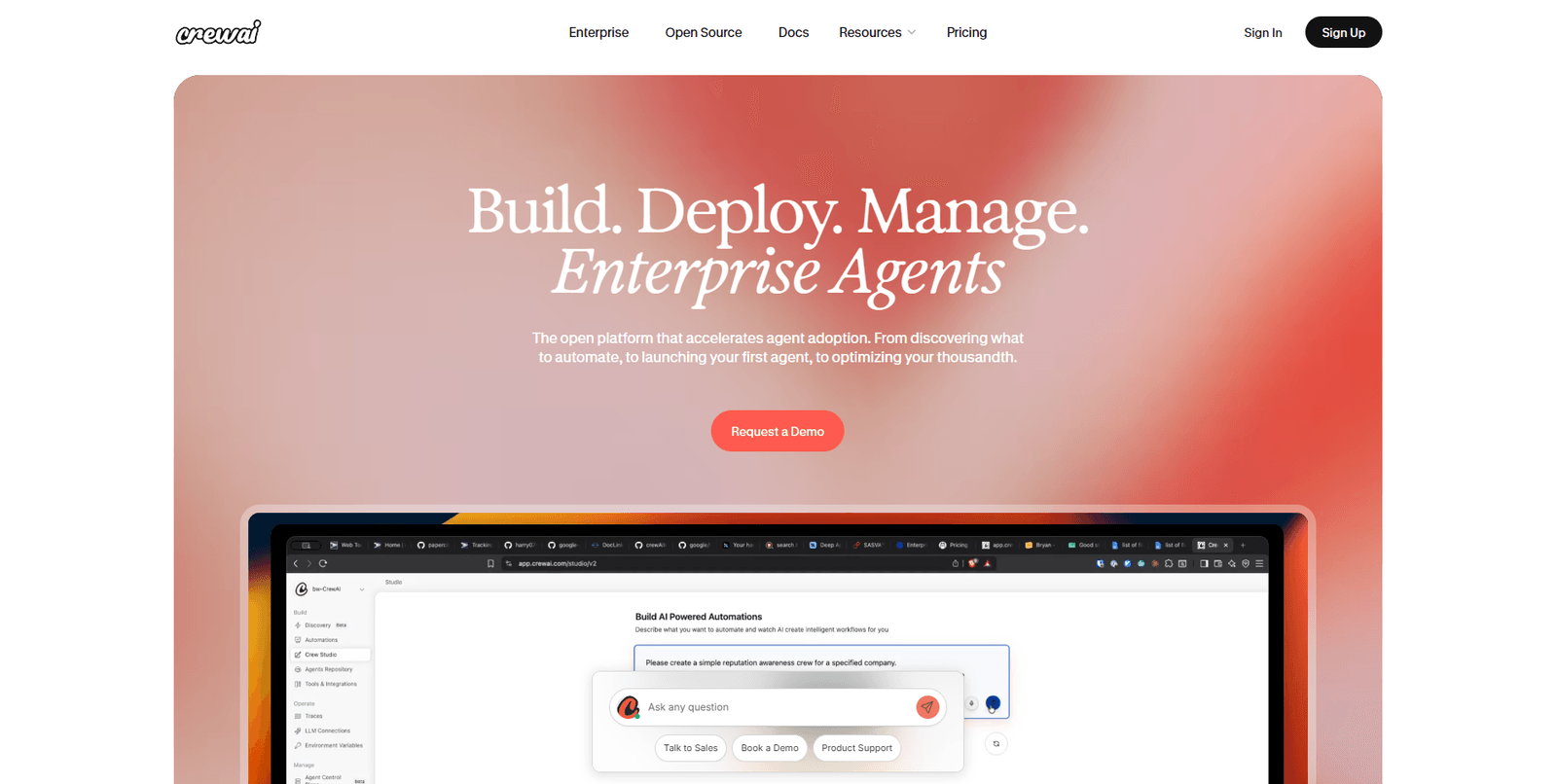
CrewAI is a genuine multi-agent framework. You use it to build systems where multiple agents coordinate and hand off work to each other. That's the actual architecture Gartner describes when it talks about agentic AI.
Their Sales Team example uses a Sales Manager agent that oversees five specialist agents: one manages lead records, one enriches data from LinkedIn, one evaluates company fit, one evaluates individual leads, and one creates targeted outreach. Each agent has a defined role, and they collaborate in sequence.
The caveat: you need developers to set this up. This is not plug-and-play for a marketing team. It's a powerful framework for technical teams who want granular control over how agents work together.
3. Relevance AI
Verdict: Best for building custom agent workflows without deep coding.
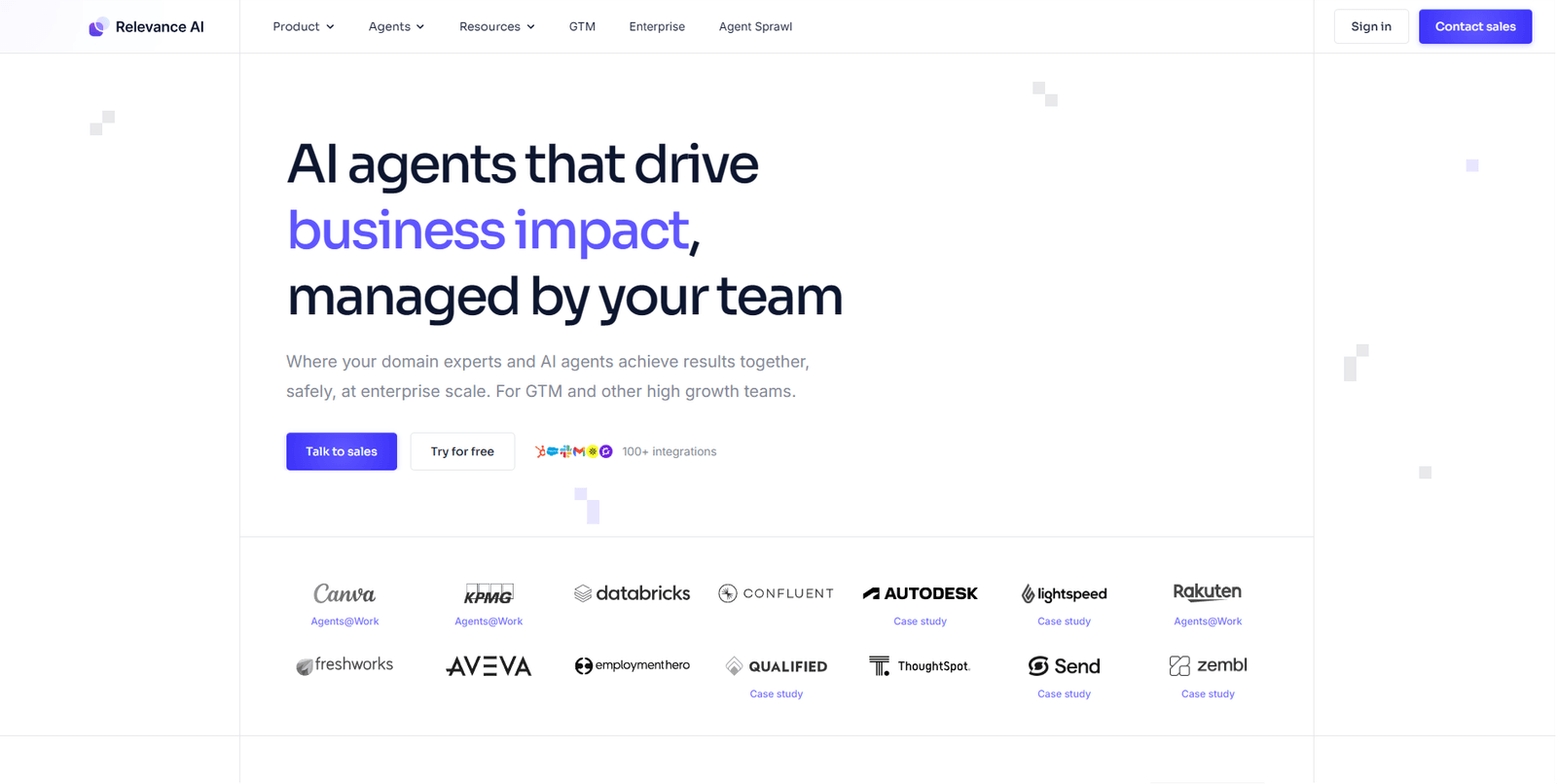
Relevance AI sits between a no-code builder and a true agent platform. Their Lifecycle Marketing Agent example shows the potential: one agent enriches CRM profiles using Google and LinkedIn, another does deep user research, and a third decides what content to recommend for onboarding.
The output is highly personalized, and the platform is flexible enough to handle complex business logic. Unlike CrewAI, it requires less developer involvement to get started.
The limitation: you're still building and defining the workflows. Relevance AI gives you excellent tools to do that. But the intelligence is in the system you design, not in the platform itself.
4. Gumloop
Verdict: Useful workflow automation. Not a true AI agent.
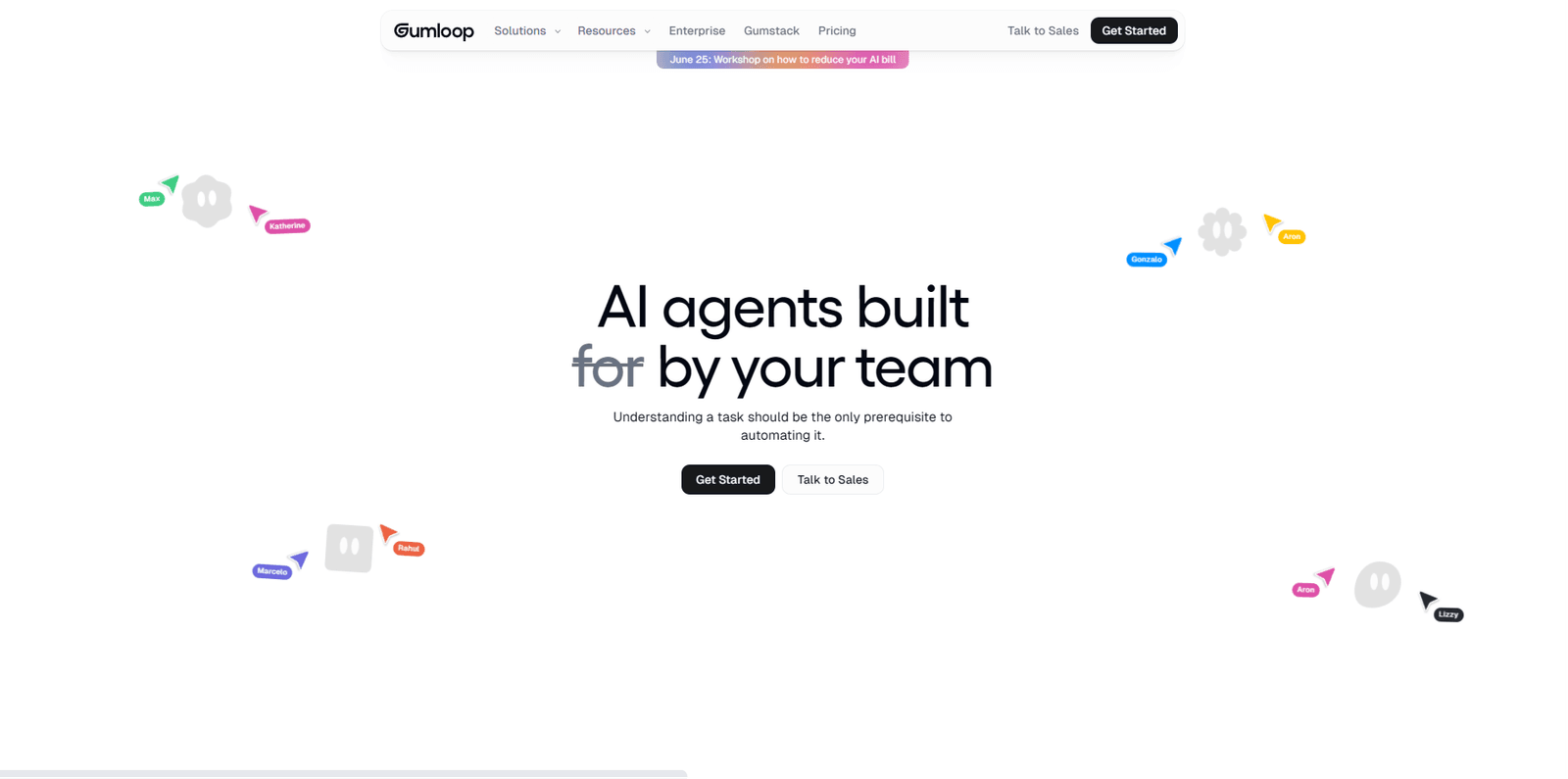
Gumloop is a workflow automation platform. It handles things like lead scoring, outreach sequences, SEO tracking, competitor research, and renewal tracking. Their partner ecosystem builds solid, practical automations for sales and marketing teams.
The difference from a true agent: you define the workflow in advance. Gumloop executes it reliably. There's no reasoning layer that figures out what needs to happen based on changing conditions. It's closer to intelligent automation than genuine agency.
If you need fast, reliable workflow automation without technical overhead, Gumloop is a good pick. Just don't expect it to operate like an agent.
5. Lindy
Verdict: A solid AI assistant. Not an AI agent.
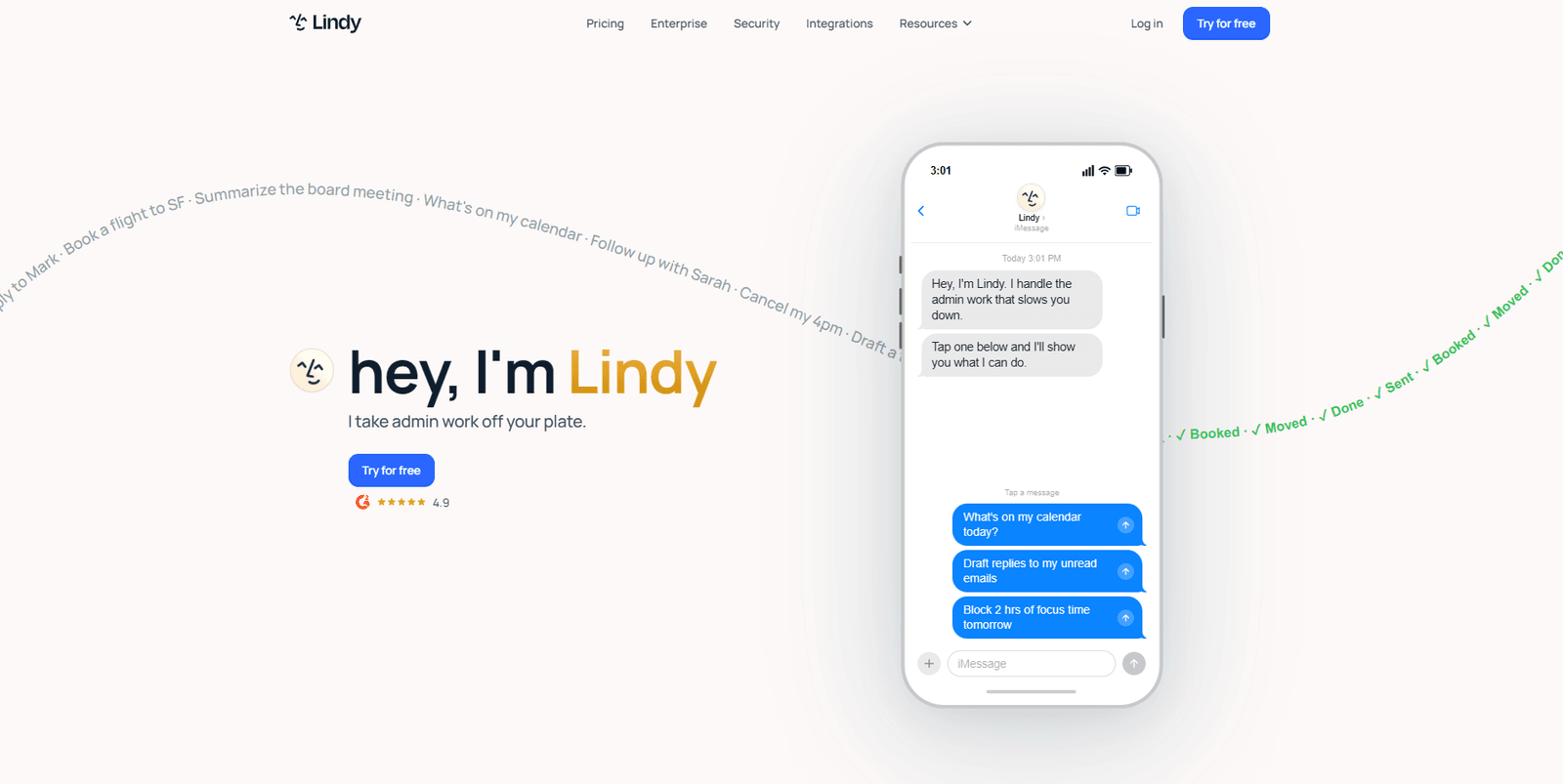
Lindy is well-built and genuinely useful for operational tasks. It generates personalized emails from CRM data, qualifies leads through chat or email, follows up after meetings, and creates content from call transcripts.
The issue is that Lindy is reactive by design. You set up the workflow, you define the parameters, and Lindy executes. No layer perceives changing conditions and decides what to do next. It's an assistant, not an agent.
For teams that want help automating repetitive tasks without complexity, Lindy works well. Just be clear about what you're buying.
6. Relay
Verdict: Light automation with good human oversight.
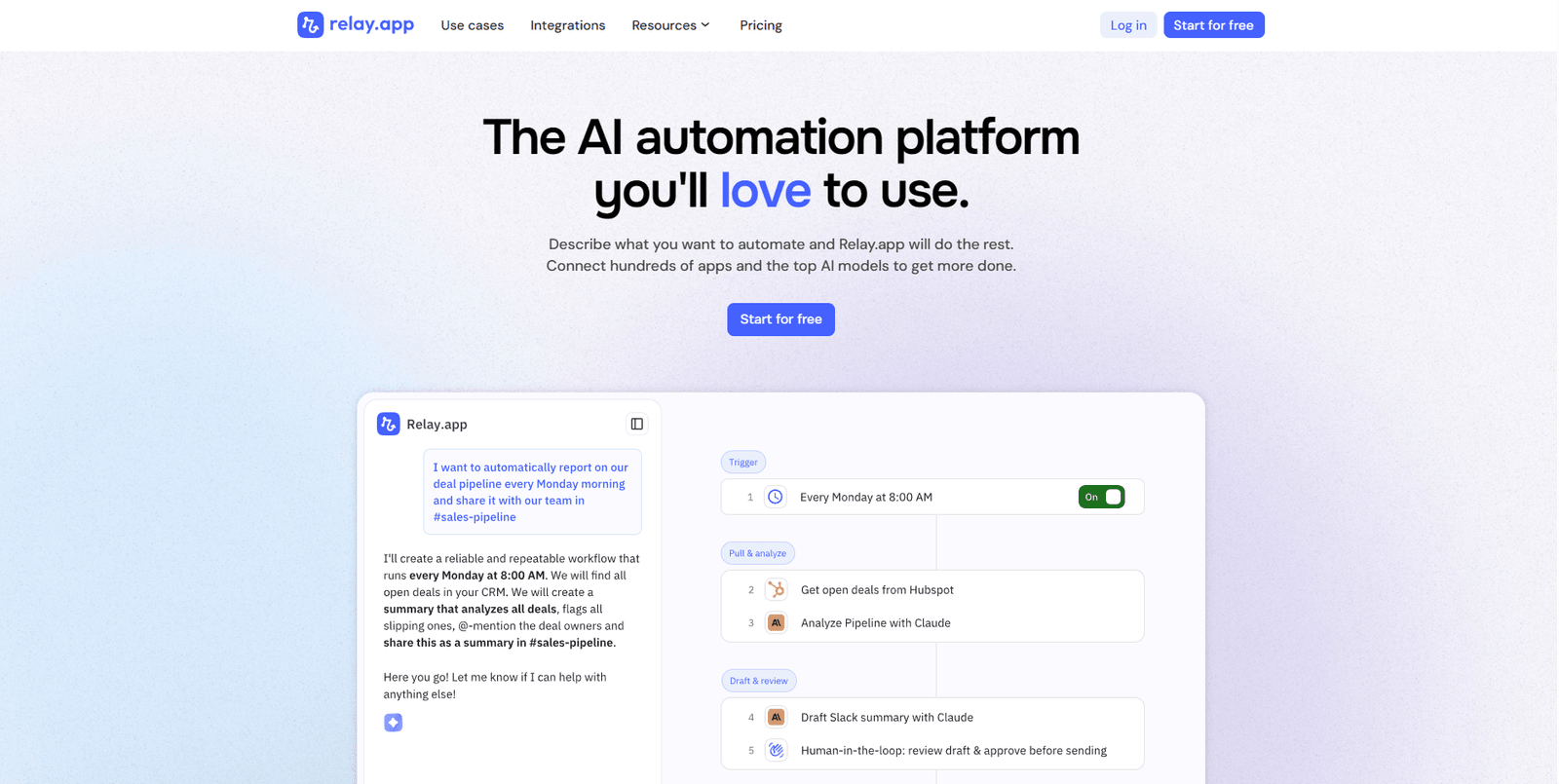
Relay takes the smallest footprint of any tool on this list. It does things like reformat videos for LinkedIn and X, monitor competitor pricing changes, and scan sales call transcripts for coaching signals.
The design philosophy is human-in-the-loop: agents draft work, you review before anything goes out. That's a sensible approach for teams that want control.
What Relay lacks is any real reasoning layer. Most of what it calls "agents" are simple watchers and rewriters. It's predictable and approachable, but it's automation, not agency.
How These Tools Compare
| Tool | True AI Agent | Best For | Technical Skill Needed |
|---|---|---|---|
| Intempt Blu | Yes | Full lifecycle marketing | Low |
| CrewAI | Yes (framework) | Building custom agent systems | High |
| Relevance AI | Partial | Custom agent workflows | Medium |
| Gumloop | No | Workflow automation | Low |
| Lindy | No | Operational task assistance | Low |
| Relay | No | Light content and monitoring tasks | Low |
The Bottom Line
Most tools calling themselves AI agents are automation platforms with updated positioning. That's not a criticism. Automation is useful. But it is a different thing.
The tools that actually qualify as AI agents, where software perceives conditions, reasons about what to do, and takes multi-step action toward a goal, are rare in marketing today.
Intempt's Blu Super Agent is the only platform on this list built for marketing teams that clears that bar end-to-end. CrewAI and Relevance AI are strong frameworks if you have the technical resources to build on them.
For marketing teams that want true lifecycle orchestration without building from scratch, Intempt is the clear starting point.
Frequently asked questions. Answered.
Automation executes predefined tasks. An AI agent perceives its environment, reasons about what action to take, and pursues a goal across multiple steps without needing to be told each one. Agents are proactive; automation is reactive.
Intempt's Blu Super Agent is the most complete option for marketing teams. It handles lead detection, customer journey orchestration, A/B testing, outreach, scheduling, and revenue tracking in one unified system.
CrewAI is a strong framework for building multi-agent systems. It requires developer resources to set up and maintain. It's better suited to technical teams or agencies building custom agent workflows than to marketers looking for a ready-to-use platform.
Blu is a system of nine specialist AI agents that work together to manage your marketing lifecycle. It detects churn signals, builds intervention journeys, drafts content, runs experiments, sequences outreach, books meetings, and routes leads, all connected to a single customer data profile.
No. Despite the marketing language, tools like Lindy and Gumloop are AI-assisted automation. They execute tasks you define in advance. They do not reason about new conditions or plan multi-step actions independently. They are useful tools, but they are not agents by the standard definition.
Look for three things: whether it perceives real-time data and acts on it, whether it can plan and execute multi-step actions without human input at each step, and whether it connects across your full marketing stack rather than handling a single task.

About the author
Harish Kumar
Growth Marketer
Harish writes long-form content on SaaS growth, user onboarding, and marketing automation. He specializes in helping product and lifecycle teams improve activation rates and reduce early churn.
LinkedIn