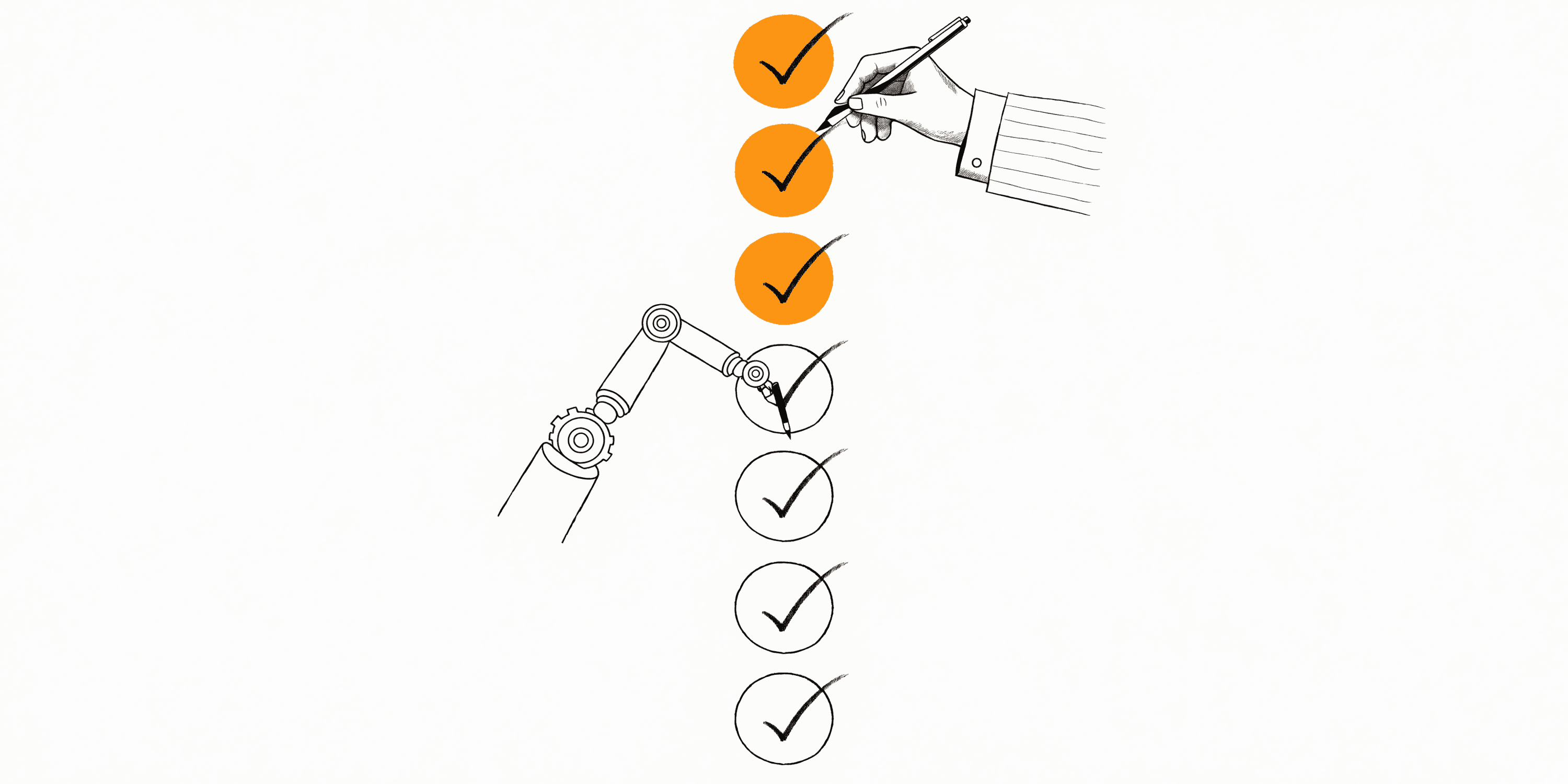
Your marketing team uses Mailchimp. Sales runs Instantly or Smartlead. Product uses Loops. Everyone picked what works. But zoom out and the same buyer gets hit with four emails in two days. No coordination, no context, no timing.
Just activity. Teams mistake motion for momentum, stacking tools and sequences while the buyer has zero intent and the system doesn't even know it.
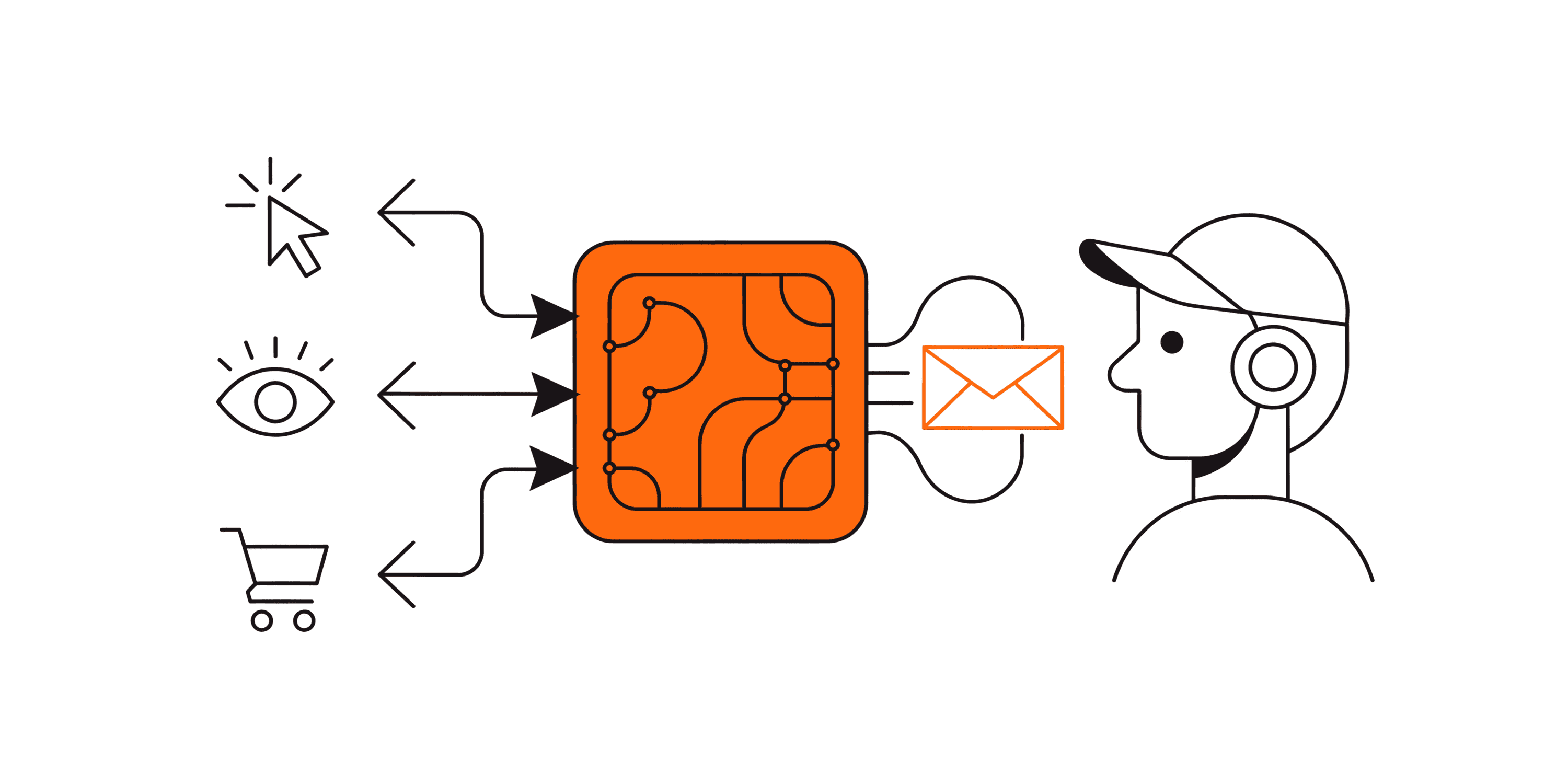
Signal-based outbound fixes this. Start with signals and let timing do the work because relevance beats persistence. Founder-led marketing helps surface who's actually paying attention.
Focus on a tight ICP, layer in first-party signals, and reach out when fit meets activity. Fewer messages, better conversations. Fragmented tools don't just add cost, they kill timing, and that's where ROI lives.
Expected Results
When you consolidate email automation across teams into a single platform, here's what becomes possible:
- Unified customer profiles that give every team the same view of every customer's email history, preferences, and engagement.
- 30-50% reduction in total email tooling costs by eliminating duplicate subscriptions, integration connectors, and manual data syncing.
- Centralized opt-in/opt-out management that keeps you compliant with GDPR, CAN-SPAM, and other regulations automatically.
- Coordinated sending schedules so customers receive a coherent experience instead of overlapping messages from different teams.
- Better deliverability from consistent domain authentication and a cleaner sender reputation across one infrastructure.
- Measurable ROI by tying email performance directly to revenue in a single analytics view.
The Problem with Running Multiple Email Platforms Across Teams
None of the tools are bad. Mailchimp is reliable for campaigns. Loops is clean for product emails. Instantly handles outreach volume. Salesloft is built for sales engagement.
Each solves a real job.
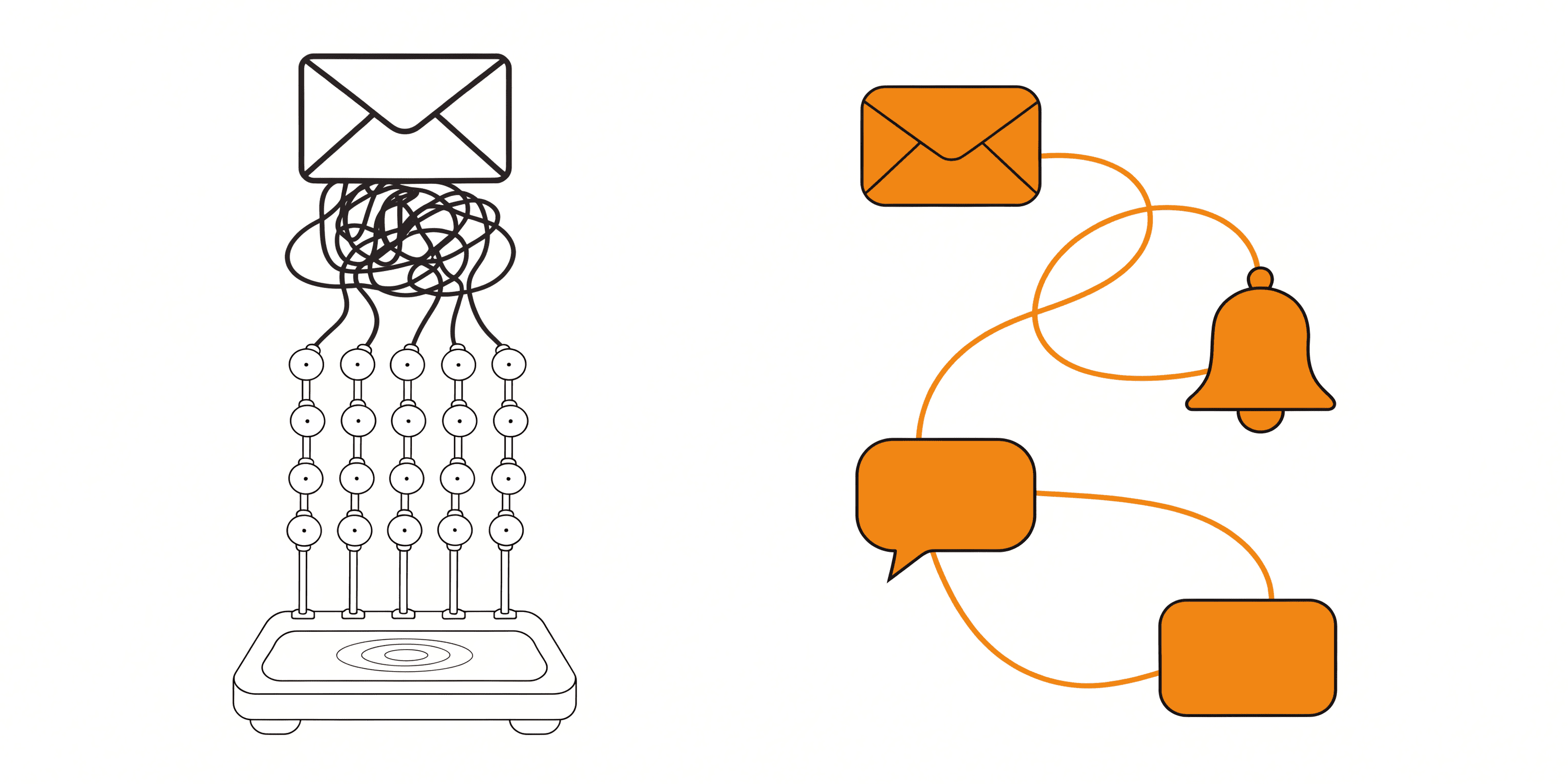
The problem appears when they run in parallel without shared data. Each tool holds its own contact list, its own engagement history, its own suppression logic. Nobody sees the full buyer journey.
And here's what most teams miss.
Signal-based outbound is trending for a reason. It respects reality. Most outbound fails because it starts with activity and calls it progress. Teams bury themselves in sequences while the buyer shows no intent.
When signals are scattered across tools, you can't see intent even if it exists.
Website visits sit in analytics. LinkedIn engagement sits on personal profiles. Product activity sits in a different system. CRM fit data sits somewhere else. Outreach runs independently.
You're not just fragmented operationally. You're blind strategically.
Let's look at what happens:
Marketing sends a product update. Sales launches a cold sequence. Product triggers onboarding. An SDR follows up manually. Four emails. Four systems. Zero coordination.
The customer doesn't experience departments. They experience noise.
Fragmentation doesn't just create overlap. It destroys relevance. And relevance beats persistence every time.
Why Separate Email Platforms Cost More Than You Think?
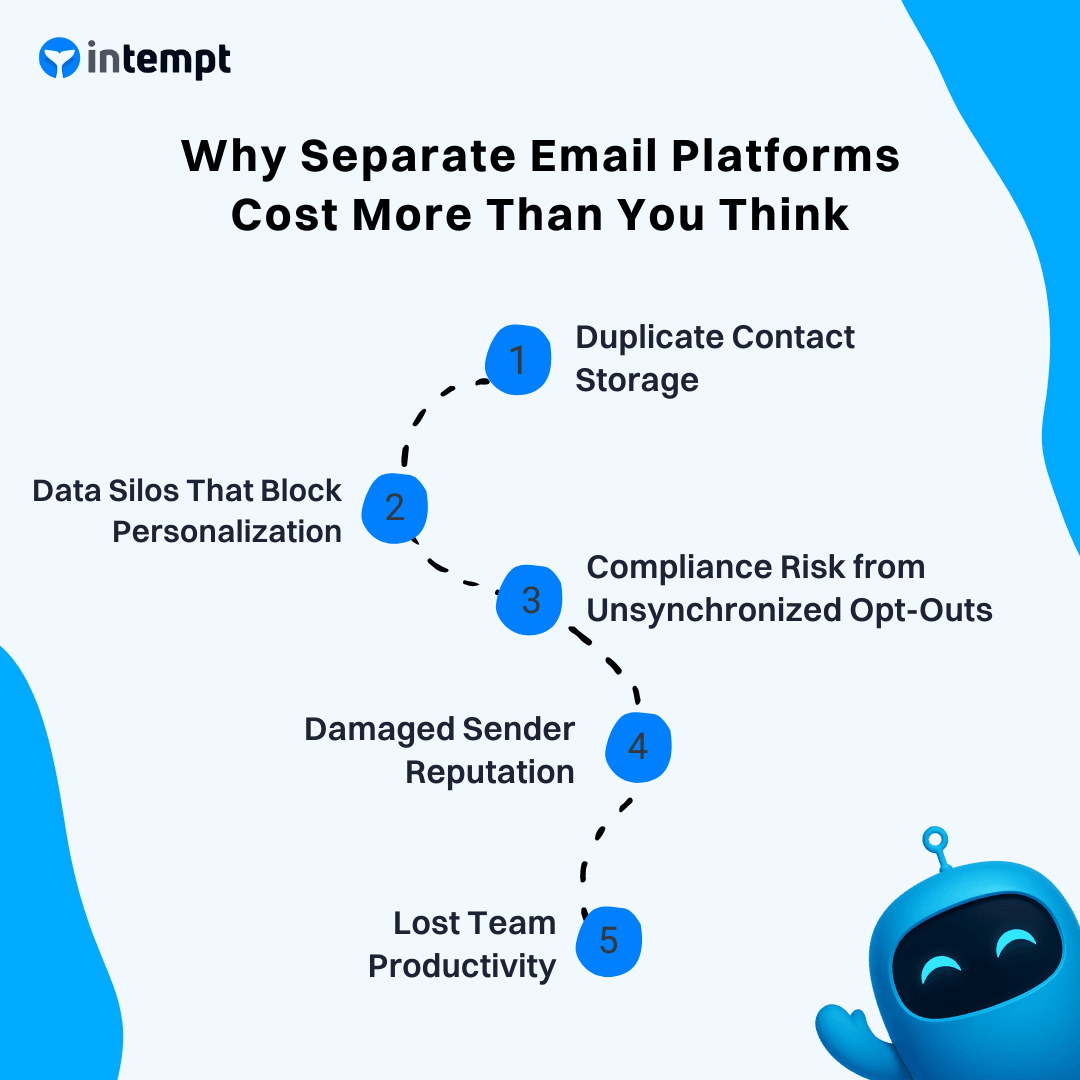
The subscription fees are the visible cost. The real expense hides in places that rarely show up on a budget spreadsheet.
1 Duplicate Contact Storage
Most email platforms charge based on contacts or sends. When you maintain separate lists across Mailchimp, Loops, and Brevo, you're paying to store and message the same customers multiple times. A company with 50,000 contacts spread across three platforms could easily be paying for 150,000 contact slots in total. That's real money going toward data redundancy, not value.
2 Data Silos That Block Personalization
According to the 2025 State of Your Stack Survey by MarTech, data integration is the biggest challenge in managing martech stacks, cited by 65.7% of respondents. When fit lives in CRM, website visits live in analytics, product events live elsewhere, and social engagement never gets captured, personalization becomes guesswork.
You send "try this feature" emails to daily power users. You send aggressive follow-ups to people who already visited your pricing page three times yesterday. Signals exist. They just don't connect.
3 Compliance Risk from Unsynchronized Opt-Outs
When a customer unsubscribes from marketing emails in Mailchimp, that preference doesn't automatically carry over to your other platforms. This is a serious risk. Running multiple ESPs makes it nearly impossible to translate opt-out preferences across systems. One compliance breach caused by disconnected systems can result in fines that far exceed any "savings" from running separate tools. In the GDPR era, this isn't theoretical. It's an active liability that grows with every platform you add.
4 Damaged Sender Reputation
Multiple platforms mean multiple sending domains, inconsistent authentication records (DKIM, SPF, DMARC), and a higher chance of landing in spam. If your marketing emails go out through one tool, sales sequences through another, and transactional emails through yet another, your overall sender reputation becomes fragmented. Inbox providers don't evaluate each platform separately. They evaluate your brand as a whole.
5 Lost Team Productivity
Working with multiple tools across teams, such as sales, marketing, and product, often results in a decrease in efficiency and productivity. Your team isn't spending its time creating better campaigns. They're exporting CSVs, importing them into another tool, checking suppression lists, and manually syncing opt-out data across platforms. That's expensive human labor doing a job that a unified system handles automatically.
What These Hidden Costs Actually Look Like?
Here's a realistic breakdown for a mid-sized company running separate email tools across marketing, sales, and product teams:
| Cost Category | Fragmented Stack (3–4 tools) | Unified Platform |
|---|---|---|
| Subscription fees | $500–$2,500+/month combined | $99–$500/month |
| Duplicate contact storage | Paying for contacts 2–4x across platforms | Single unified contact record |
| Integration/sync tools (Zapier, Make, etc.) | $50–$200/month per connection | Built-in integrations |
| Staff time on manual data reconciliation | 10–20 hours/month | Near zero |
| Compliance risk from unsynchronized opt-outs | One breach = $10,000+ in fines | Centralized consent management |
| Revenue impact from fragmented signals | Poor timing, wasted outreach, lower reply rates | Fit + activity aligned for precise timing |
| Personalization capability | Based on partial, disconnected data | Unified profiles enable real personalization |
| Sender reputation management | Multiple infrastructures, fragmented authentication | Single domain strategy, consistent authentication |
A company spending $1,500/month across four tools, plus $150/month on integration connectors, plus 15 hours of staff time at $50/hour for manual syncing, is burning roughly $2,400/month. That's $28,800/year before factoring in compliance risk or lost revenue from broken personalization.
Why It Matters to Have Everything Inside One Platform?
The case for consolidation isn't just about saving money (although that's significant). It's about what becomes possible when every team works from the same customer data.
1 A Single Source of Truth for Every Customer
When website visits, product activity, CRM fit data, and email engagement live in one system, timing becomes obvious.
Fit plus activity tells you when to reach out.
If a decision-maker visits your pricing page three times this week and engages with your founder's LinkedIn post about churn, that's not a coincidence. That's intent.
When signals converge, relevance becomes simple.
2 Coordinated Journeys That Feel Intentional
Marketing, sales, and product journeys live side by side.
A user finishes onboarding. Sales doesn't send a cold pitch. Product nudges advanced usage. Marketing reinforces outcomes.
The buyer experiences a smooth, connected journey where everything feels aligned and makes sense.
3 Real Personalization Based on Complete Data
Personalization only works when you have the full picture. Unified customer profiles that include behavioral data, purchase history, support interactions, and email engagement allow you to build segments and automations that reflect the actual customer reality. Not guesses based on partial data from one platform.
4 Compliance Becomes Simple
One platform, one opt-out list, one consent record. When a customer unsubscribes, it's reflected everywhere instantly. No manual propagation between tools. No risk of accidentally emailing someone who asked you to stop.
5 Clear ROI Measurement
When all your email activity and customer data live in the same system, you can tie email performance directly to revenue. No more piecing together reports from four different dashboards to figure out whether a campaign actually drove results.
How to Implement Unified Email Automation with Intempt?
Step 1: Import and Unify Your Data from All Sources
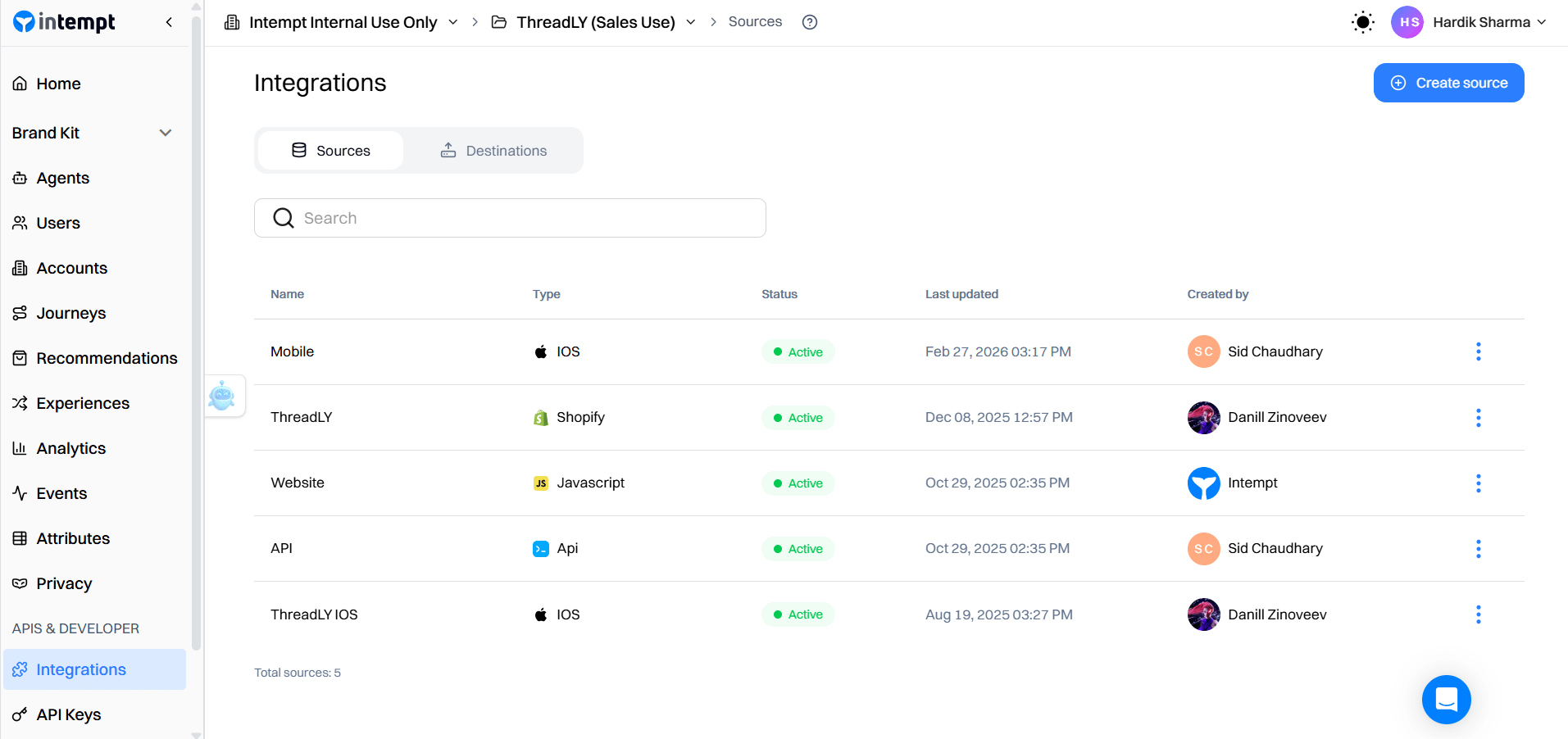
Head to the Integrations section in Intempt and connect your existing data. This includes your CRM data, product events, marketing tools, and any other system that holds customer information. You can bring in data from Shopify, Stripe, HubSpot, Salesforce, or send custom events through the JavaScript SDK and API.
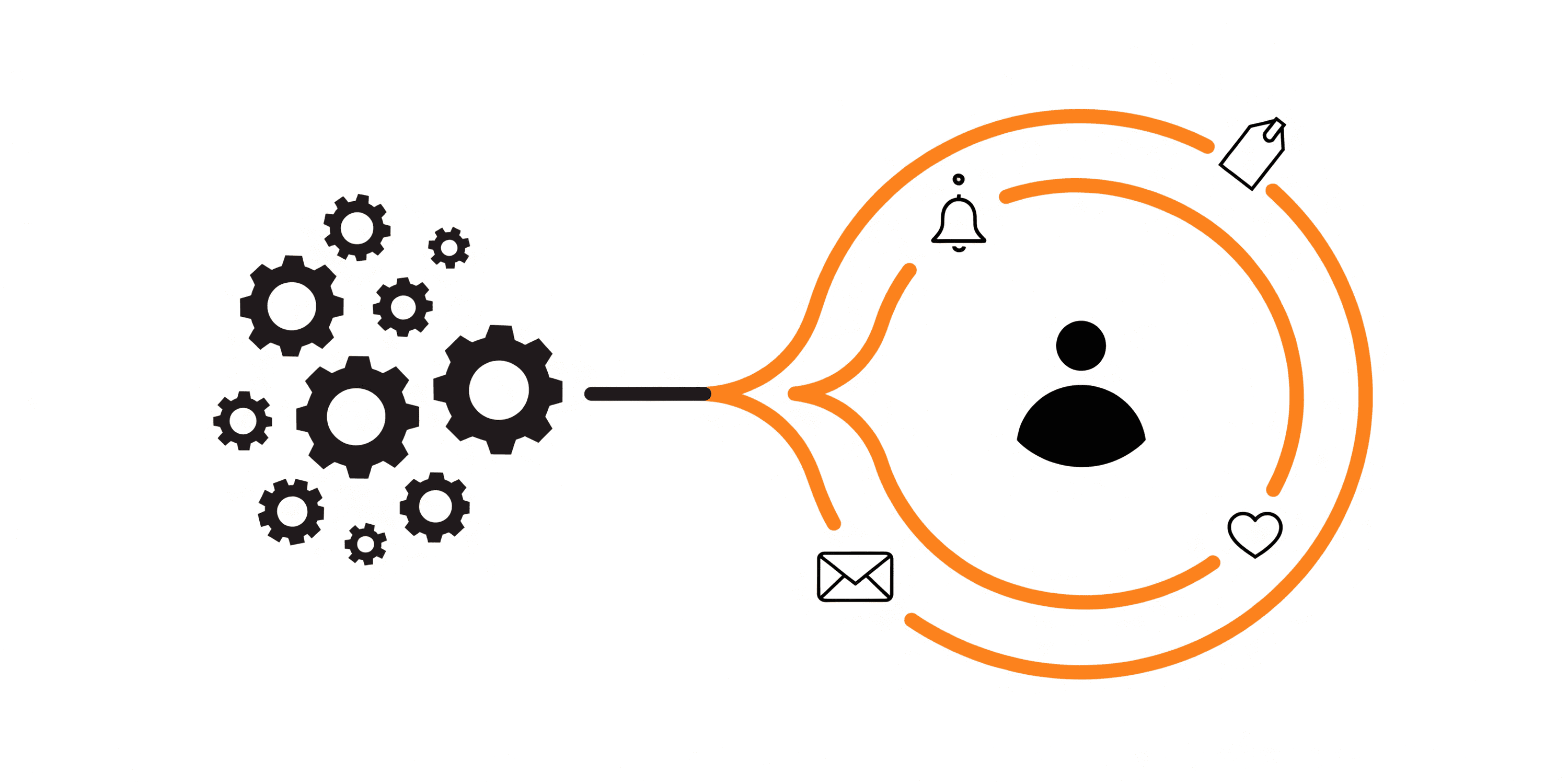
Here's the key part: Intempt automatically merges profiles from all these sources into a single customer view. The person who browsed your website, signed up for a trial, talked to sales, and made a purchase all becomes one unified profile. No manual deduplication. No CSV matching. The platform handles identity resolution for you.
This is where the fragmentation starts to dissolve. Instead of scattered views of the same person across Mailchimp, Loops, and Salesloft, you now have one complete profile that every team can access.
Step 2: Create Journeys for Every Team
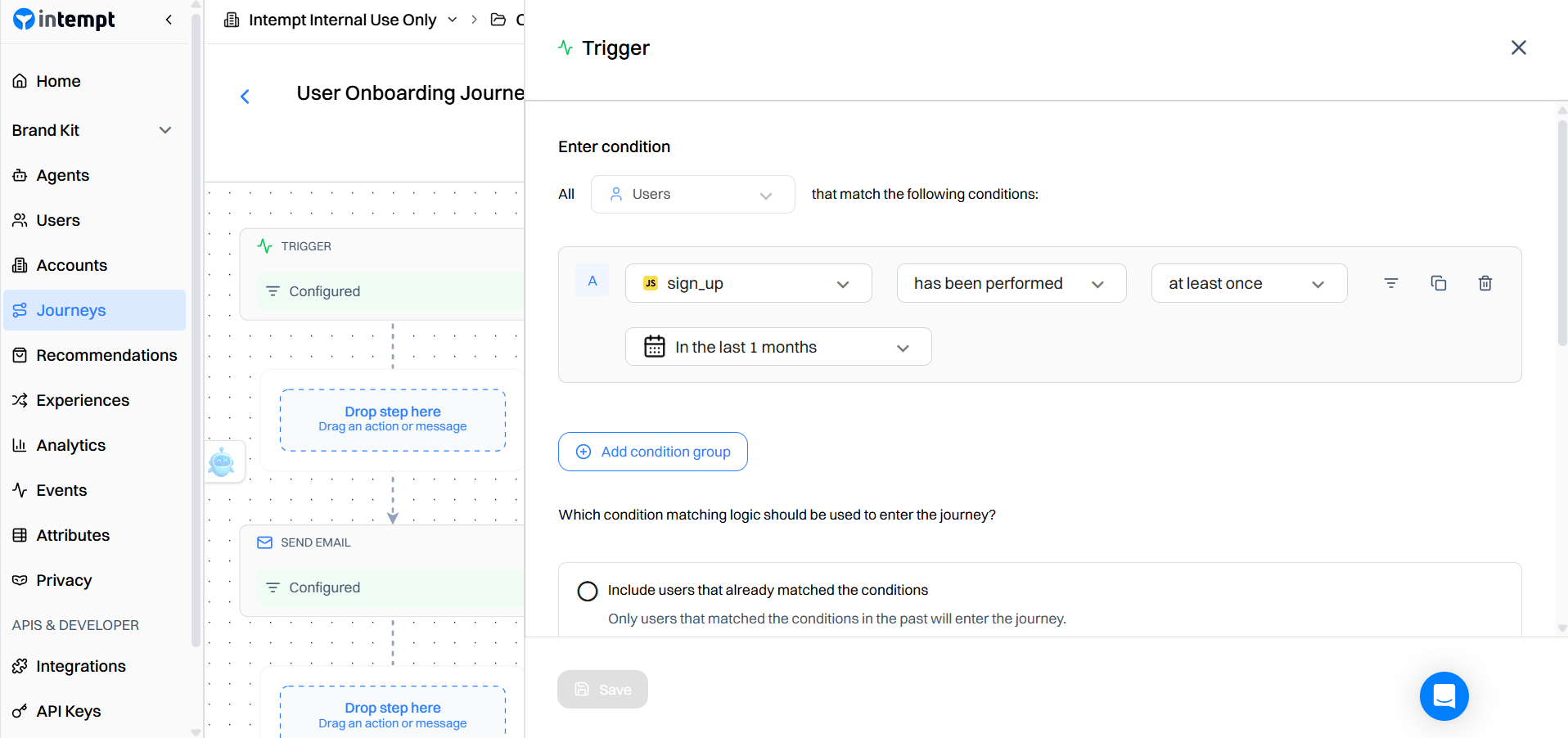
Go to the Journeys section and start building automated workflows. This is where you set triggers based on user behavior or lifecycle stages, so that the right email goes out at the right moment, without anyone pressing send manually.
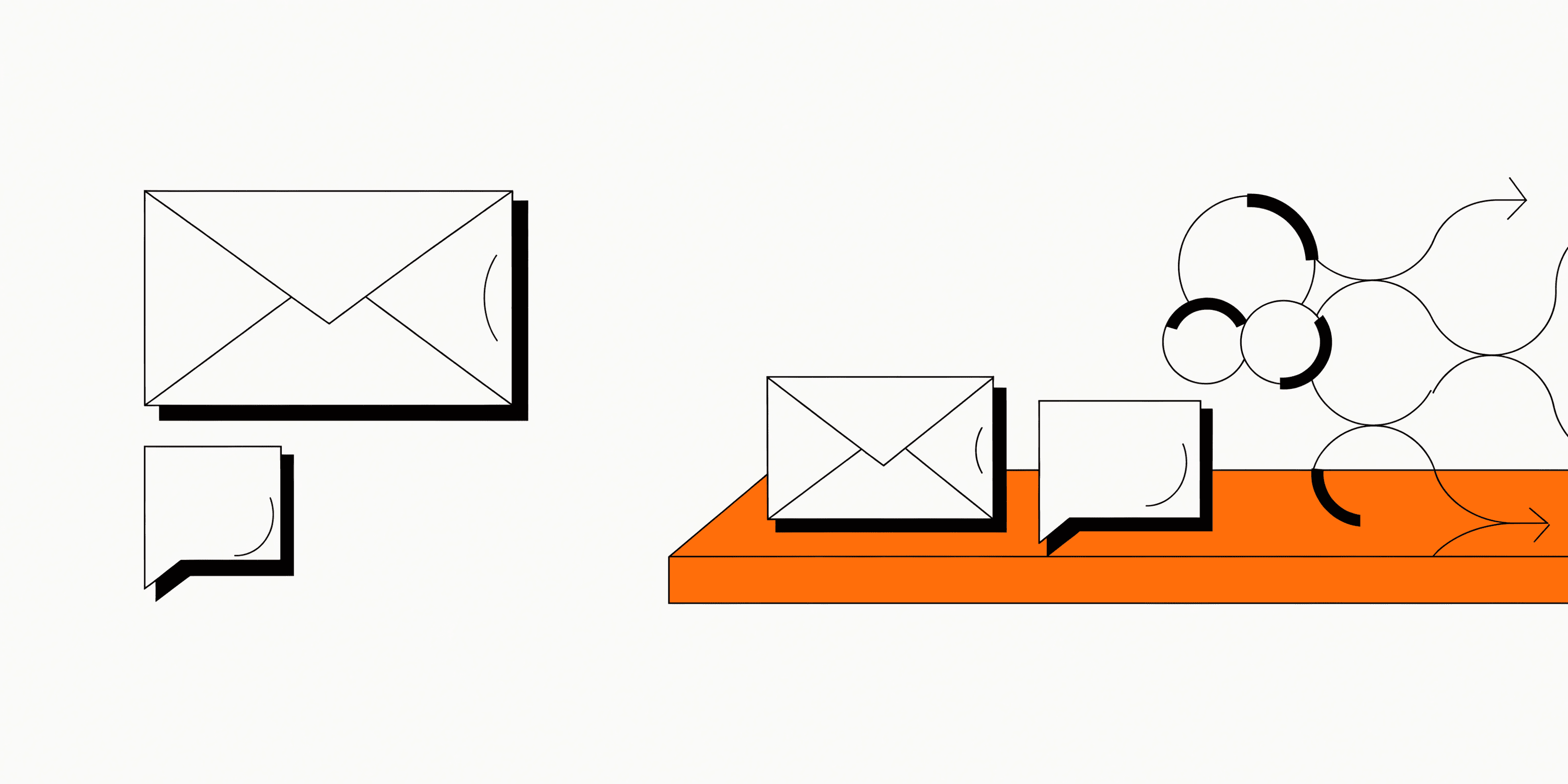
The powerful part? Marketing, sales, and product teams all build their journeys within the same platform. A marketing welcome series, a sales follow-up sequence, and a product onboarding flow all live side by side. Each journey is aware of the others because they all draw from the same unified customer data.
For example, you can set a trigger that fires when a user completes onboarding but hasn't engaged with a core feature in 14 days. Or when a lead visits the pricing page three times within a week. Or when a customer's subscription renewal is approaching. Each of these can kick off a journey tailored to that specific moment.
Step 3: Automate Emails with the "Send Email" Action
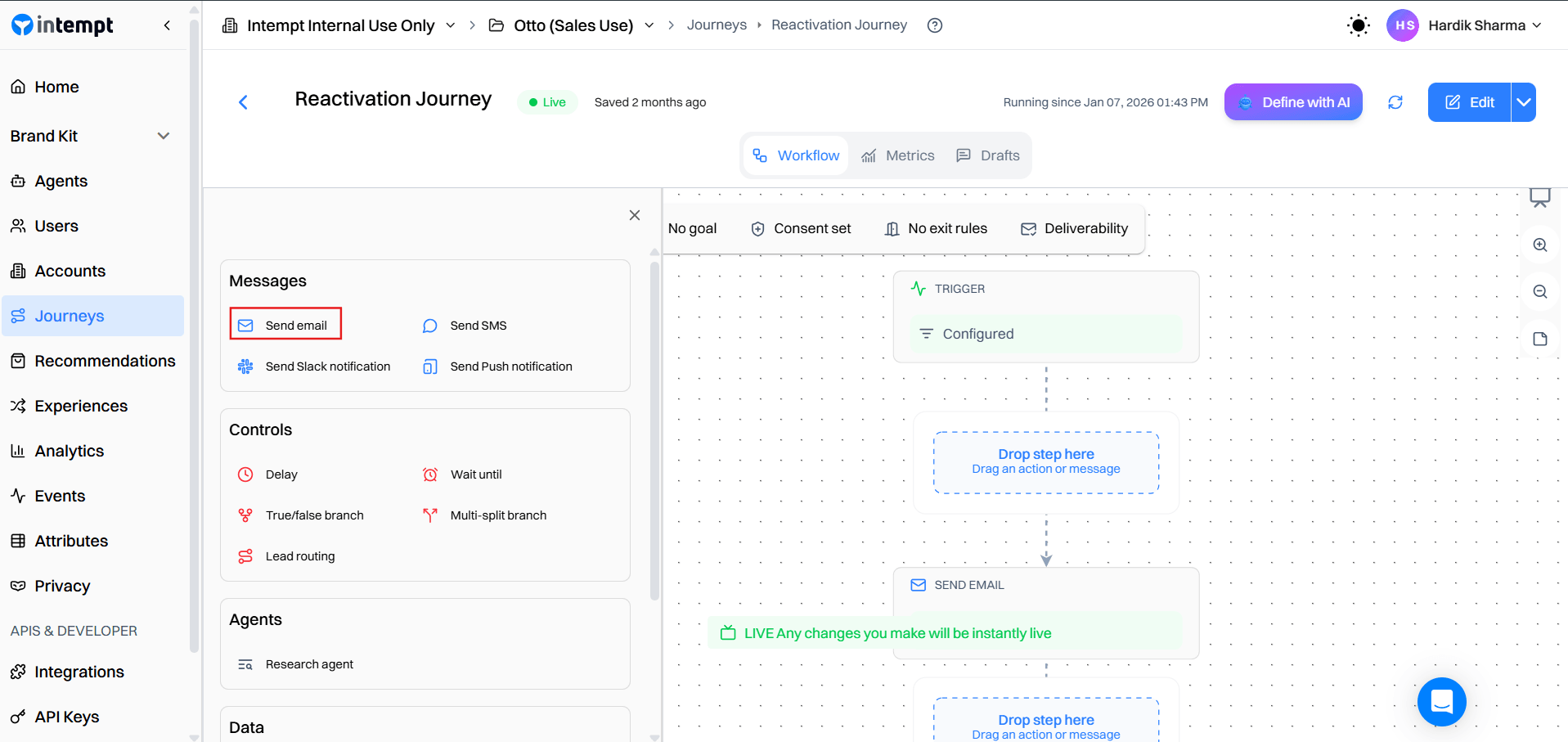
Inside each journey, use the "Send Email" action to automate emails for sales, marketing, and product, all from one platform. This replaces the need for separate tools handling separate email workflows.
Marketing can send campaigns and lifecycle emails. Sales can trigger outreach and follow-ups. Product can deliver onboarding sequences and feature announcements. All of it flows through one system, using the SendGrid email API for reliable delivery, with a shared view of what every customer has already received.
This is the single biggest shift from a fragmented setup. Instead of four tools sending emails independently, one platform coordinates all of it.
Step 4: Personalize Every Email with User Attributes and Behavior
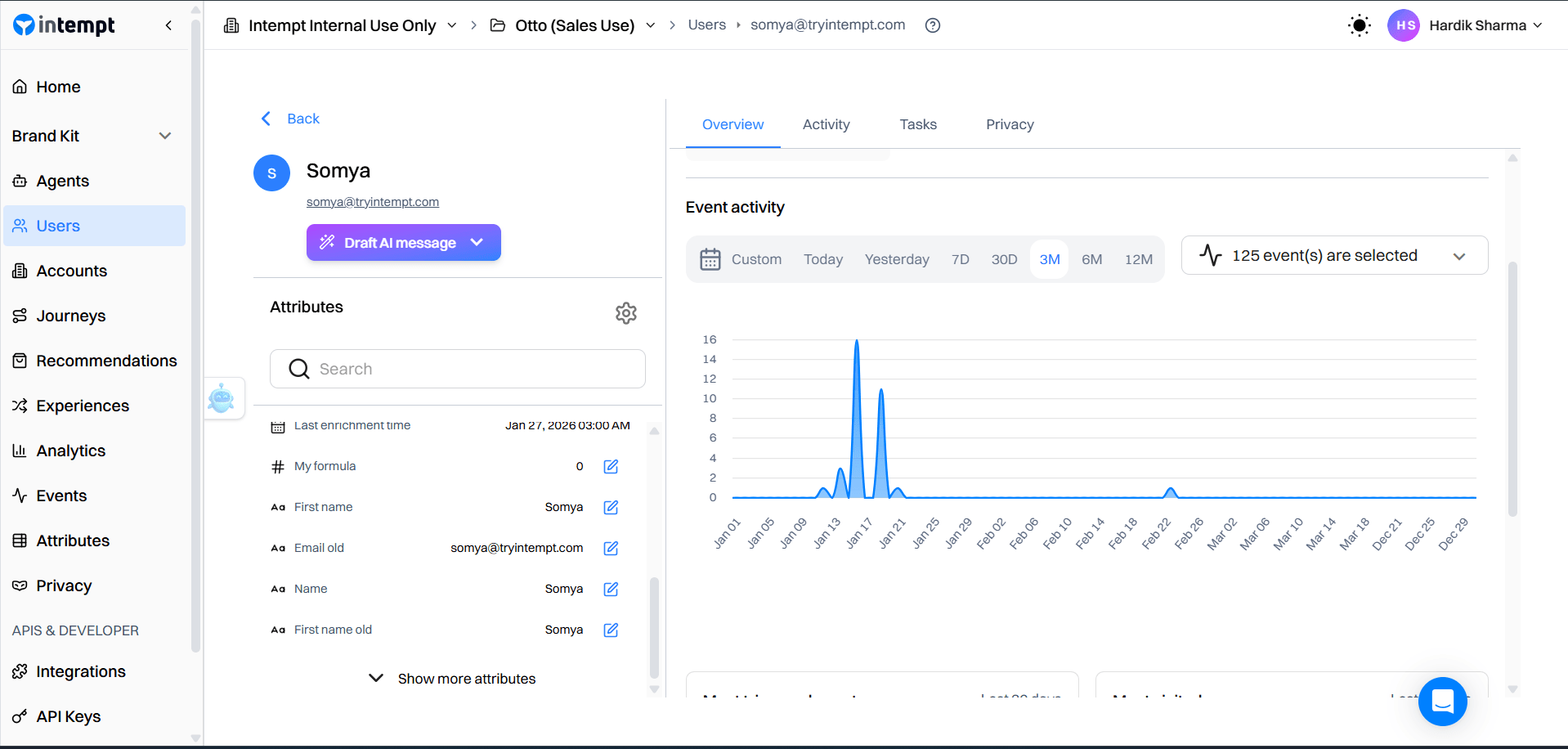
Because all your customer data lives in one place, personalization becomes straightforward. Use user attributes (name, plan type, company size) and behavioral data (features used, pages visited, emails opened) to tailor every message.
This isn't basic "Hi {first_name}" personalization. With unified profiles, you can reference a user's actual product behavior inside a marketing email or tailor a sales follow-up based on which features the prospect explored during their trial. The data is there because it all lives in the same system.
Step 5: Monitor and Optimize with Built-In Analytics
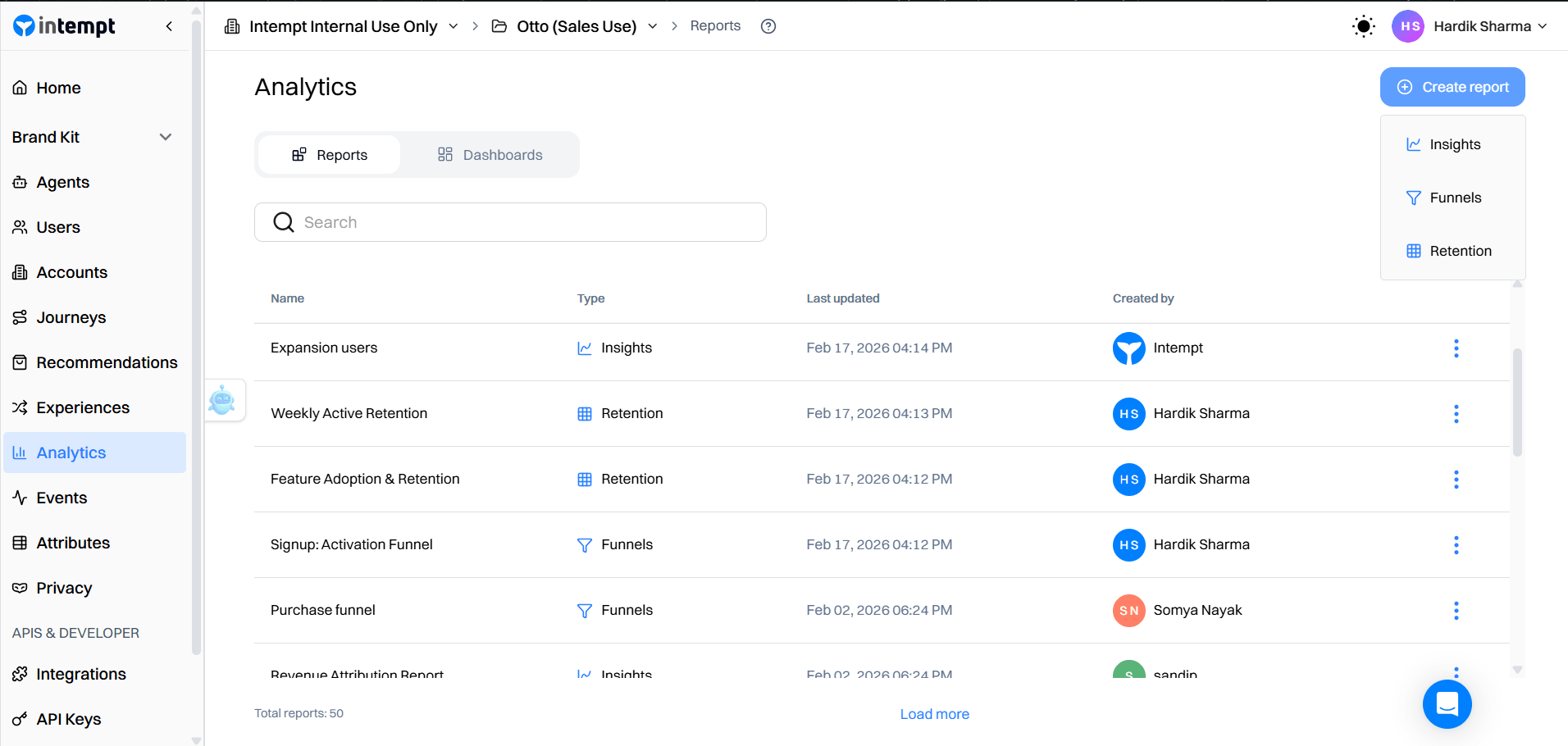
Track email performance, journey completion rates, and overall engagement from Intempt's built-in analytics. No more switching between separate dashboards in Mailchimp, Loops, and Salesloft to piece together the story.
You can see which journeys are converting, where customers drop off, and which emails drive actual results. When something underperforms, you identify the problem and fix it in the same platform where the campaign runs. You can also run A/B tests on email content, send times, and journey branches to continuously improve performance.
The result: one platform replaces multiple tools, reduces costs, and keeps every team aligned on the same customer data.
Results You Get After Consolidating Your Email Stack
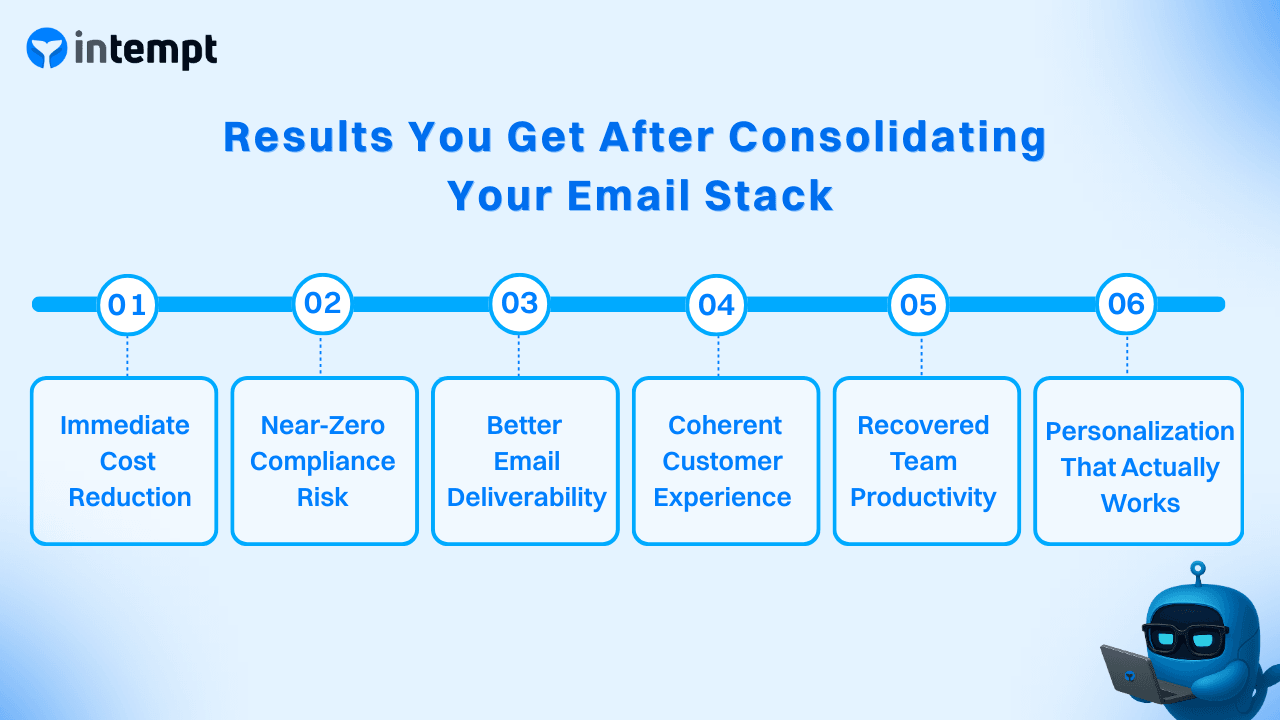
1 Immediate Cost Reduction
You're replacing multiple subscriptions with one. A company running three or four separate email platforms at a combined $1,500-$2,500/month can bring that down significantly by moving to a unified platform. The savings go beyond subscriptions, too. Integration connectors, sync tools, and the staff hours spent manually reconciling data between platforms all drop to near zero. When you factor everything in, teams that consolidate typically cut their total email tooling costs by 30-50%.
2 Near-Zero Compliance Risk
One system, one opt-out list, one consent record. When a customer unsubscribes, it's reflected everywhere, instantly. No more manual syncing between platforms. No more hoping that last week's export actually propagated across all your tools. This alone can save you from fines that would dwarf years of subscription savings.
3 Better Email Deliverability
Consolidating to a single sending infrastructure means consistent authentication, cleaner IP reputation, and fewer conflicting signals to inbox providers. When you manage DKIM, SPF, and DMARC from one place instead of configuring them across multiple tools, deliverability improves because inbox providers see a consistent, trustworthy sender rather than fragmented signals from your brand.
4 Coherent Customer Experience
Your customer stops getting multiple uncoordinated emails from your company on the same day. Send frequency is managed centrally. Messaging is coordinated. The customer feels like they're interacting with one brand, not a collection of disconnected departments.
5 Recovered Team Productivity
Those 10-20 hours per month spent reconciling data between platforms? Gone. Your team spends that time creating better campaigns, testing new strategies, and doing actual marketing instead of data plumbing. When your team no longer needs to export, import, deduplicate, and cross-check data across tools, the time savings in the first few weeks alone can be substantial.
6 Personalization That Actually Works
With unified profiles that include behavioral data, purchase history, support interactions, and sales activity, you can build segments and automations that reflect the full customer reality. The emails get better because the data behind them is complete. You're not guessing what a customer did in another tool. You can see it, and you can act on it.
Looking Ahead
Signal-based outbound is not a trend. It's a correction.
Buyers show intent before they convert. They visit. They engage. They explore. They raise subtle hands.
If those signals sit in five different tools, you miss them.
If they sit in one system, timing becomes strategic advantage.
Consolidation is not about replacing good tools with worse ones. It's about replacing fragmentation with coordination.
Audit your stack. Map where signals live. Quantify duplicate spend. Identify where intent disappears between systems.
Your ROI problem may not be messaging quality. It may be fragmentation.
Quick summary
- Running separate email platforms across teams (Mailchimp for marketing, Instantly for sales, Loops for product) creates hidden costs far beyond subscription fees: duplicate contacts, data silos, compliance risk, and wasted productivity.
- No individual tool is the problem. The problem is the lack of a shared customer view when multiple tools run in parallel.
- Consolidating onto a single platform gives every team the same customer data, coordinated journeys, and centralized compliance.
- Intempt unifies CDP, email automation, journey orchestration, and analytics for sales, marketing, and product teams.
- Implementation typically takes 3-4 days or less with proper planning.
- Signal-based outreach only works when fit and activity live on the same record.
- Companies that consolidate report a 30-50% reduction in total email tooling costs and measurable improvements in deliverability, engagement, and team productivity.
Frequently asked questions.Answered.
- If more than one team sends emails using different platforms and nobody has a single view of all communications a customer receives, you have a problem. A quick test: ask your marketing, sales, and product teams to list every email tool they use. If the answer includes more than one platform, you're paying the hidden costs outlined above.