- The definition of conversation intelligence is stable. What you can actually buy is not. The transcript is not the product. Where the structured summary goes after the call is.
- Checked July 2026: Gong publishes no price and calls itself a Revenue AI OS. ZoomInfo never mentions Chorus. Avoma sells it as a $29 per seat add-on. Jiminny shows no pricing. The 236 percent ROI figure everyone cites traces to an unsourced aggregator page.
- Ask one question: where does the structured summary land? If it's a dashboard, keep looking.
Conversation intelligence is software that records, transcribes, and analyzes sales calls, then turns them into structured data your CRM, your coaching program, and your forecast can use. That definition has not changed in five years. What has changed is what you can actually buy, and this guide covers both, with every vendor claim checked against the meeting intelligence pages those vendors publish themselves.
Most guides to this category end in a vendor table that treats every tool with a transcript as a competitor. That table is where the analysis usually breaks. Checked directly in July 2026, the five real conversation intelligence products left are pointed at four different buyers, only one of them publishes a price, and the category leader has stopped using the category name to describe itself. The call recording intelligence workflow shows what this looks like as a running system rather than a market map.
The short version
- Gong's pricing page calls the product a Revenue AI OS. Conversation intelligence is a component of the pitch now, not the pitch.
- Gong publishes no dollar figures. Licenses are priced per user, plus a platform fee based on the number of users supported.
- Chorus still has a live product page branded Chorus by ZoomInfo. ZoomInfo's Copilot page never mentions Chorus, and its product nav lists the capability generically as conversation intelligence.
- Avoma publishes real prices: $19, $29, or $39 per recorder seat per month on annual billing. Conversation intelligence is a $29 per seat add-on on top of that.
- Jiminny has no pricing page and no pricing link in its site navigation.
- Cresta describes itself as a unified platform for human and AI agents, aimed at contact center CX. Different buyer, different job.
- Otter is a notetaker at $8.33 to $19.99 per user per month, not a conversation intelligence platform, and its own page never claims deal analytics.
- The 236 percent ROI figure repeated across the category traces to an aggregator page with no source attached.
- What survives all of that: the transcript is not the product. Where the structured summary goes after the call is the whole purchase.
What is conversation intelligence?
Conversation intelligence is software that records, transcribes, and analyzes spoken conversations and turns them into structured, usable data. The conversations are mainly sales calls, customer success meetings, support interactions, and internal team meetings.
The output is not the transcript. The output is who talked most, which topics came up, which objections were raised, how sentiment moved, what both sides agreed to, and what happens next. A transcript is raw material. Everything of value is what gets built on top of it.
One clarification worth making early: conversation intelligence is not conversational AI. Conversational AI builds bots that talk back, meaning chatbots and voice assistants. Conversation intelligence understands conversations between humans so nothing valuable gets lost. The practice side of conversational AI for sales is a separate purchase from the analysis side.
How does conversation intelligence differ from a notetaker, call recording, and speech analytics?
Four different products get sold with the word transcript on the page, and they are not substitutes. Conversation intelligence records, analyzes, and triggers action. A notetaker documents a meeting. Call recording stores audio for compliance. Speech analytics finds patterns across large call volumes. Price differences between them are mostly rational, not arbitrary.
| Conversation intelligence | AI notetaker | Call recording | Speech analytics | |
|---|---|---|---|---|
| What it does | Records, transcribes, analyzes, and triggers action from conversations | Records, transcribes, and summarizes a meeting | Stores audio for playback and compliance review | Finds patterns across large call volumes |
| Unit of analysis | The deal or the account | The single meeting | The single call file | The call population |
| Output | Deal signals, CRM updates, coaching scorecards, drafted follow-up | Summary, action items, optional CRM sync | Audio file and basic call metadata | Aggregated dashboards and trend reports |
| Typical published price | Mostly unpublished. Avoma is the exception at $29 per seat as an add-on | Published and low. Otter runs $8.33 to $19.99 per user per month | Bundled into the dialer or meeting platform | Enterprise, quote only |
| Best for | Revenue teams needing deal-level insight and automation | Anyone who just needs the notes written | Compliance teams and post-call reference | Contact centers tracking category-level patterns |
How does conversation intelligence actually work?
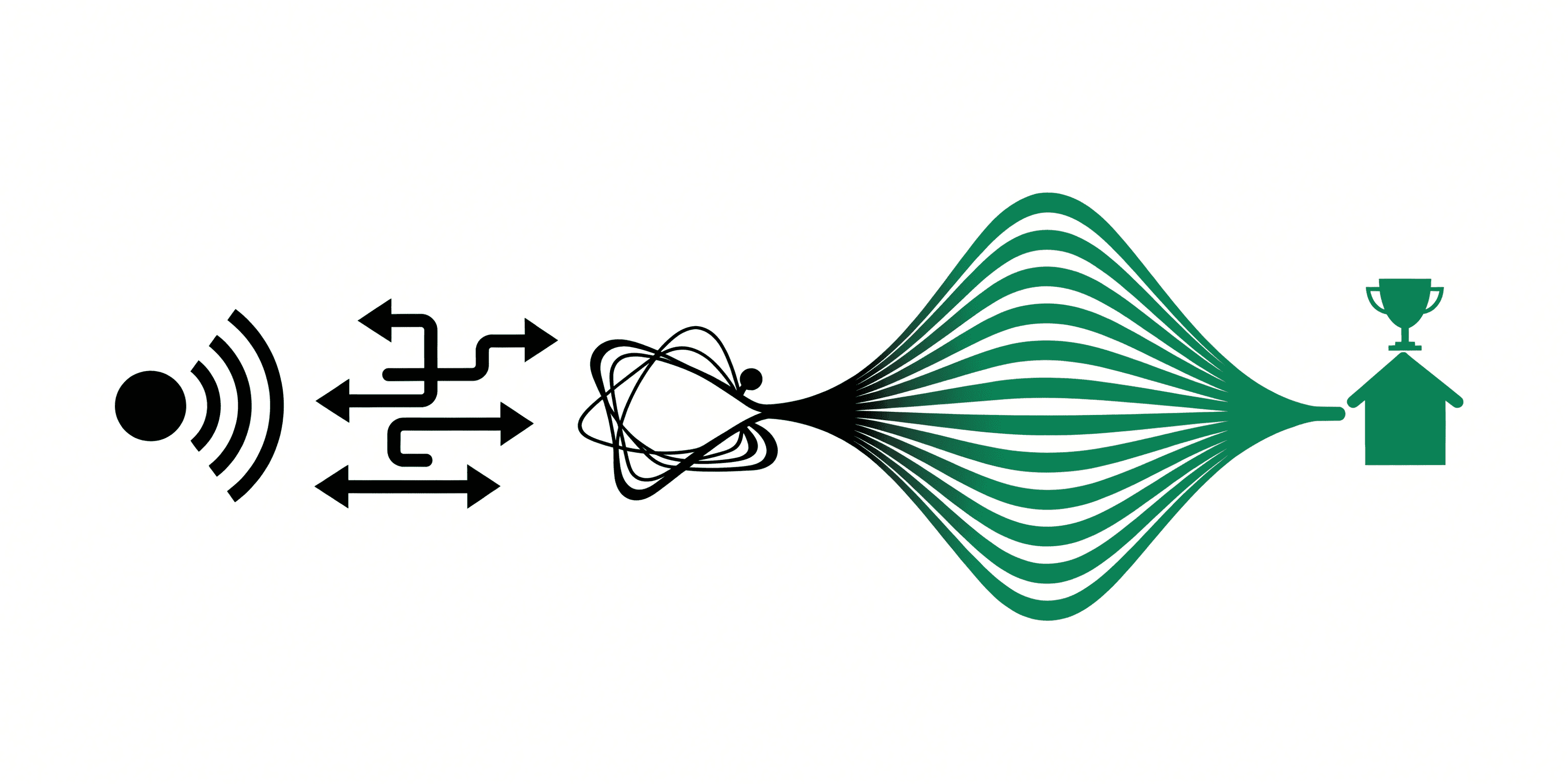
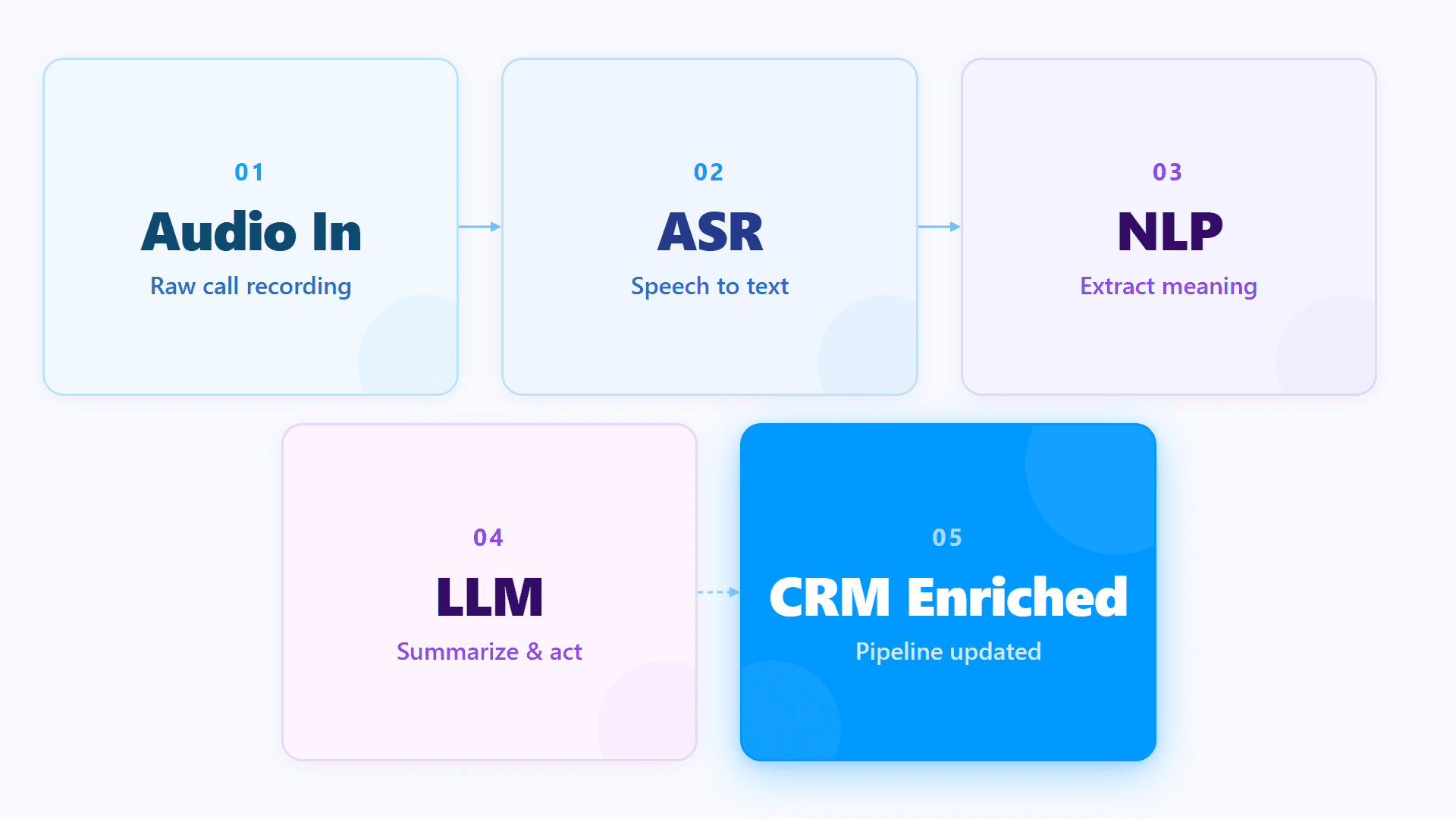
Four steps run on every call: join and record, read the transcript for meaning, write the summary, and put the structured output somewhere. Only the fourth step differentiates anybody. The first three are close to commodity in 2026.
Step 1: Join the call
The platform joins as a silent participant, usually a bot attendee in Zoom, Google Meet, or Teams. It records audio, converts it to text, and tracks who is speaking at each moment. Some platforms record natively from the rep's machine instead, which means no bot appears in the participant list. Prospects notice the difference.
Step 2: Read for meaning
From the transcript, the software reads for meaning: which topics came up, how the prospect responded to each, what objections landed, whether a competitor was named, and what both sides committed to. Speaker separation matters more than raw word accuracy here. Attributing the buyer's hesitation to the rep produces a confidently wrong summary.
Step 3: Write it up
After the call, the platform writes the summary, the action items, and the next steps. Better platforms also draft the follow-up email while the context is still loaded.
Step 4: Put it somewhere that matters
This is the step that separates products. Some platforms deposit the summary in their own interface and wait for someone to read it. Some push structured fields into the CRM so the deal record is current before the rep opens a tab. If the answer to where does the summary go is a dashboard inside the tool, you bought a recorder with good writing. That gap is the same one behind reps not updating the CRM in the first place.
What are the core use cases for conversation intelligence?
Five workflows carry most of the value: coaching, voice of customer, quality assurance, meeting documentation, and forecasting. Coaching is the one with the clearest before-and-after, because most teams start from close to zero coverage.
Sales coaching
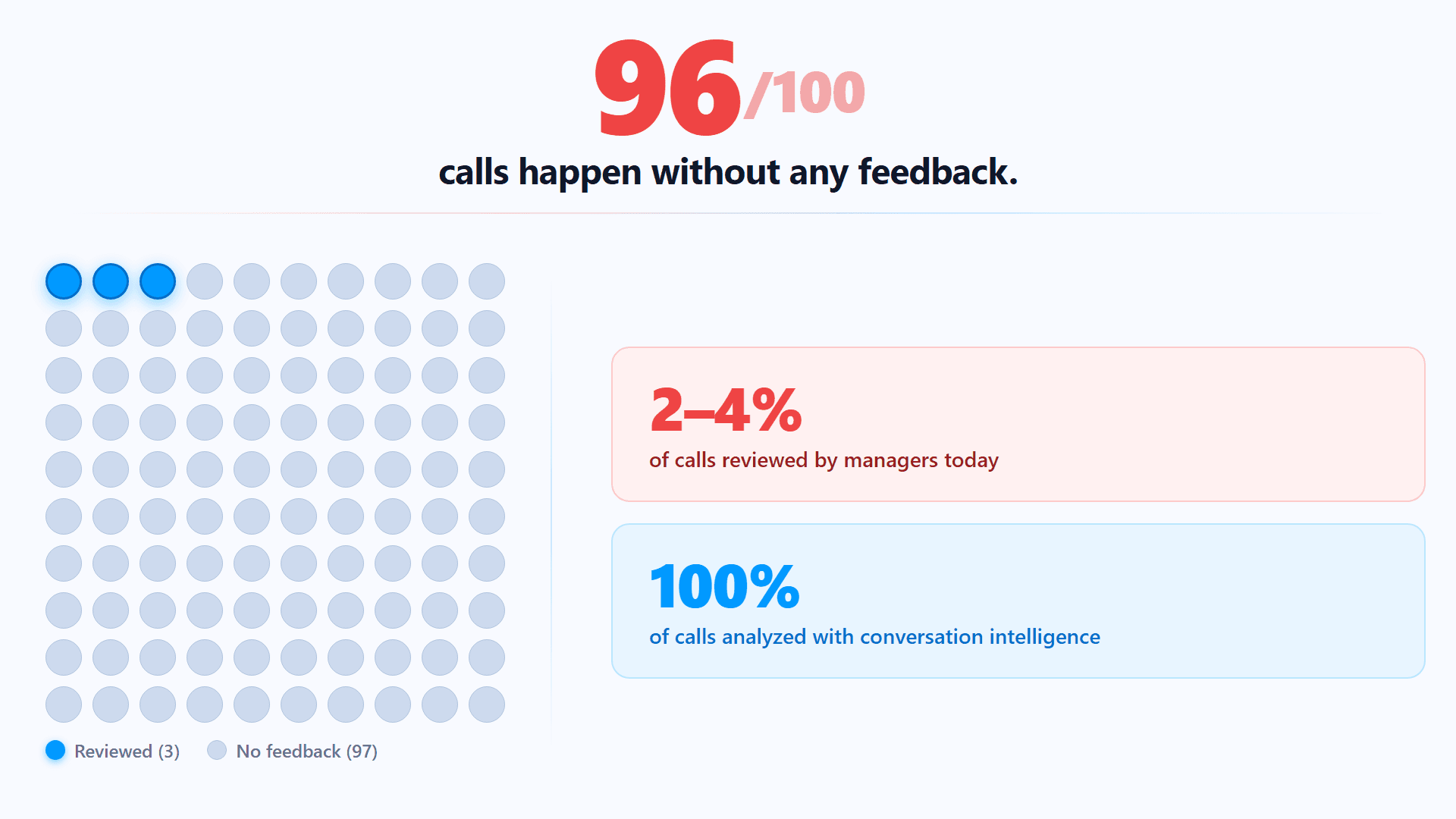
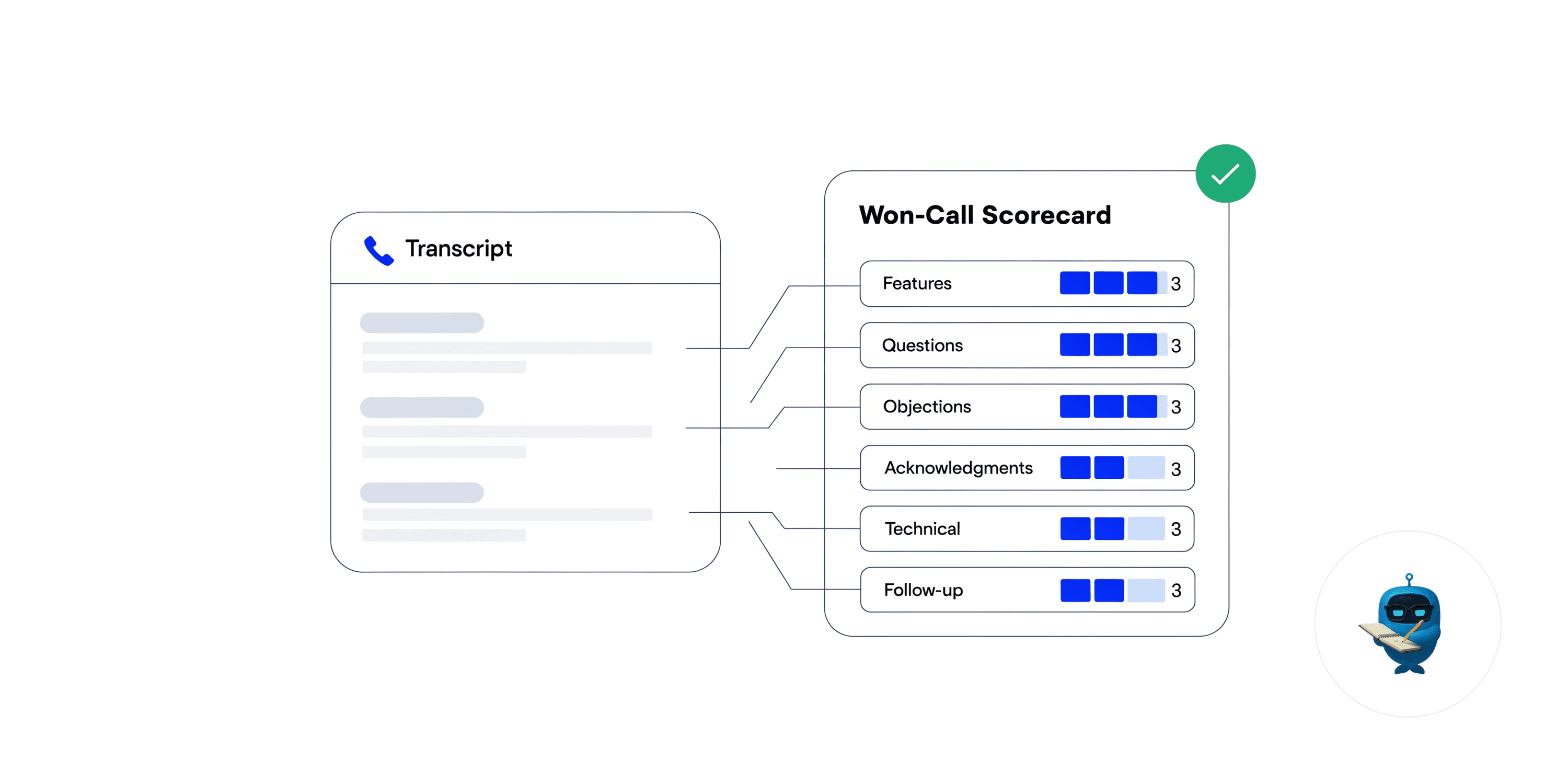
Coverage is the argument, not sophistication. Most managers review a rounding error's worth of the calls their team runs, and the rest happens without feedback of any kind. AssemblyAI's July 2026 write-up cites McKinsey for the figure that teams capture as little as 3 percent of sales interactions without AI in the loop. Recording every call and scoring talk-to-listen ratio, question frequency, monologue length, and objection handling moves that number to full coverage, which is a real change even before anyone gets better at selling.
What coaching data cannot do is coach. The tool produces a searchable library of real calls and a set of numbers per rep. A person still has to sit down with a rep and work through a specific moment on a specific call. Teams that skip that part own a very well-organized archive.
Voice of customer
Post-call surveys are answered by a small and unrepresentative slice of customers. Call analysis captures what customers actually said across hundreds of conversations: feature requests, recurring complaints, pricing objections, and competitor comparisons, in their own words. Product and marketing get input they cannot get any other way, including the buying signals that never show up in a form field.
Contact center quality assurance
Traditional QA samples a few percent of calls and extrapolates. Automated monitoring covers every call and flags compliance gaps, sentiment drops, and escalation signals before they turn into complaints. This is the use case where regulated industries buy first, and it is also the use case Cresta and the contact center vendors are built around rather than B2B sales.
Meeting documentation and CRM hygiene
Post-call admin is the most countable win in the category. Structured summaries, action items, CRM field updates, and follow-up drafts all get produced without a rep retyping anything. Count the hours your team currently spends on it before you buy, because that number is the one line of your business case nobody can dispute later.
Revenue forecasting
CRM stages are self-reported, which makes them optimistic. Conversation data is not. A prospect who hedges across three calls, pushes the timeline twice, and names a competitor that never gets addressed is a deal in trouble regardless of the stage field. Flagging that early is worth more than any manually entered probability, and it is the part of pipeline health reps cannot fake.
The vendor comparison, checked page by page
Five products are genuinely competing for the conversation intelligence purchase in 2026: Gong, Chorus by ZoomInfo, Avoma, Jiminny, and Cresta. Everything in this table came off those vendors' own pages in July 2026, not off a comparison blog. Two things stand out. Only Avoma publishes a price. And the two biggest names have both stopped leading with the category label.
| Vendor | What its own page calls it | Published price | Where the output lands | Honest fit |
|---|---|---|---|---|
| Gong | A Revenue AI OS. Conversation intelligence is a component of the pitch, not the pitch | None. Licenses priced per user, plus a platform fee based on the number of users supported | Gong's own deal and forecast views, then out to the CRM | Enterprise revenue orgs with a deal-analytics mandate and low price sensitivity |
| Chorus by ZoomInfo | The fastest growing conversation intelligence product in existence, on 14 patents. The Copilot page never names it, and ZoomInfo's nav lists the capability generically | None published | ZoomInfo's Copilot surface and the CRM | Teams already paying ZoomInfo for data, where call analysis rides along |
| Avoma | An all-in-one AI meeting assistant, collaboration, and intelligence platform | $19, $29, or $39 per recorder seat per month annually. Conversation intelligence is a separate $29 per seat add-on, revenue intelligence another $29 | Meeting notes first, CRM second | Mid-market teams who want the notetaker and will pay extra for the analytics layer |
| Jiminny | A conversation and revenue intelligence platform that captures emails, phone and video calls | None. No pricing page and no pricing link anywhere in its navigation | Coaching views plus CRM sync | Mid-market revenue teams buying coaching more than forecasting |
| Cresta | The only unified platform for human and AI agents. Contact center CX, not B2B sales calls | None published. The /pricing path returns a 404 | Contact center QA and live agent assist | Contact centers and support orgs. Wrong shape for a 10-person sales team |
| Intempt Meetings | Calls inside one GTM workspace, not a separate conversation intelligence product | Published seat-based pricing: free, then $24, $49, or $99 per seat per month | The deal record, the follow-up draft, and the pipeline, after a human approves | One to 10 person revenue teams who do not want a sixth tool to reconcile |
Read the second column down the page and the pattern is hard to miss. Gong describes an operating system. ZoomInfo describes a Copilot. Avoma describes a meeting assistant with intelligence sold separately. Cresta describes a platform for human and AI agents. Conversation intelligence stopped being a category anybody wants to be the leader of, because it turned into a capability that ships inside four different kinds of product. That is the same absorption pattern that signal-based selling went through, one category earlier.
What is deliberately not in that table, and why
- Otter is a notetaker. Its own pricing page calls it an AI Notetaker, at $8.33 to $19.99 per user per month, and advertises transcription, summaries, action items, and CRM sync. It never claims deal analytics or deal-risk scoring. It is cheaper because it does less, which is the right trade if notes are what you need.
- Salesloft Rhythm is a prioritization engine. Salesloft's own page describes Rhythm as telling sellers what to act on first. Conversations is the separate Salesloft product that analyzes calls. Comparing Rhythm to Gong compares a to-do queue to a call analyzer.
- The test that keeps a comparison honest: does the tool score a deal, or does it summarize a meeting? Both are worth money. They are not the same purchase, and a table that mixes them tells you nothing about either.
What the ROI numbers actually support, and what they do not
The direction is real and the figures are not traceable. An earlier version of this post opened with 236 percent ROI over three years, attributed to a 2025 Forrester Total Economic Impact study. That attribution does not hold up, and the correction is worth more than the number was.
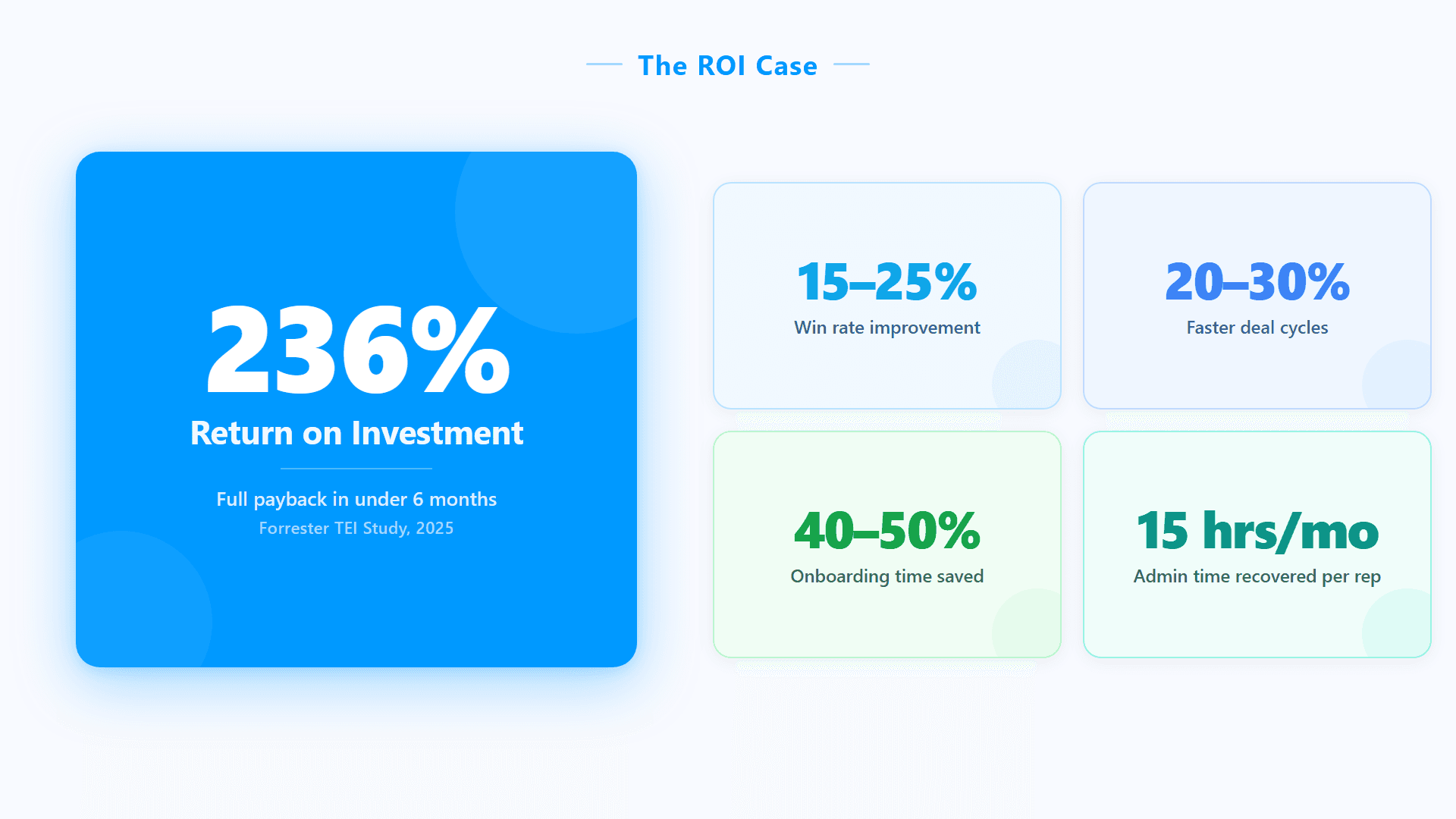
Here is what the trail looks like when you walk it. The page this post cited for the figure has since redirected to an unrelated site, so the original source can no longer be checked at all, which is its own answer: a stat that repeats across the category but traces to a page that no longer exists is not a stat you can cite. Gong's own resource library and pricing page carry no matching figure either. Two other stats an earlier version of this post carried, a 15 to 25 percent win rate lift and a jump in quota attainment from 18 to 58 percent at an unnamed SaaS company, are on their cited pages but sourced to nothing.
None of that means conversation intelligence does not pay off. It means the category's headline ROI claims are circular, and a business case built on them is one skeptical CFO question away from collapsing. The same problem shows up in gtm platform pricing generally: when nobody publishes a rate, everybody quotes each other.
Build the case on numbers you can count in your own systems instead. Hours of post-call admin per rep per month, measured for two weeks before you buy anything. The share of calls that currently receive any coaching feedback. Median time from call end to CRM record updated. Median time from call end to follow-up sent. Those four are checkable, defensible, and specific to your team, and they move fast enough to see inside a quarter.

Which conversation intelligence metrics matter most, and what to do with them
Every platform surfaces roughly the same metrics. The difference is whether anybody acts on them. The benchmarks below are the rules of thumb the category publishes, not audited research, so treat them as starting points and recalibrate against your own won deals.
| Metric | What it measures | Commonly cited benchmark | What to do with it |
|---|---|---|---|
| Talk-to-listen ratio | How much the rep talks versus listens | Roughly 43 percent talk, 57 percent listen | Coach reps who sit consistently above 60 percent talk time |
| Monologue duration | Longest stretch without the prospect speaking | Under two minutes | Flag calls with four-minute-plus monologues for review |
| Question rate | How often the rep asks questions | 11 to 14 questions per discovery call | Put question frequency on the scorecard, not just in the pep talk |
| Sentiment trajectory | Whether tone warms or cools across the call | Positive trend by the close | Find the exact moment sentiment drops, then ask why |
| Competitor mention rate | How often competitors come up, by stage | Varies by market | Compare win rate on deals with and without mentions |
| Topic coverage | Whether pricing, timeline, and next steps got covered | Depends on call type | Build required-topic checklists per call stage |
| Deal risk score | Composite signal from conversation patterns | Directional only | Use as a leading indicator in forecast review, never as the forecast |
| Buyer engagement | How much the prospect actually participated | Higher is better | Flag deals where the buyer barely spoke, regardless of stage |
How is the conversation intelligence category evolving?
One direction, over about a decade: from tools you review to tools that act. Four stages, and most of the market is still selling stage two while describing stage four.
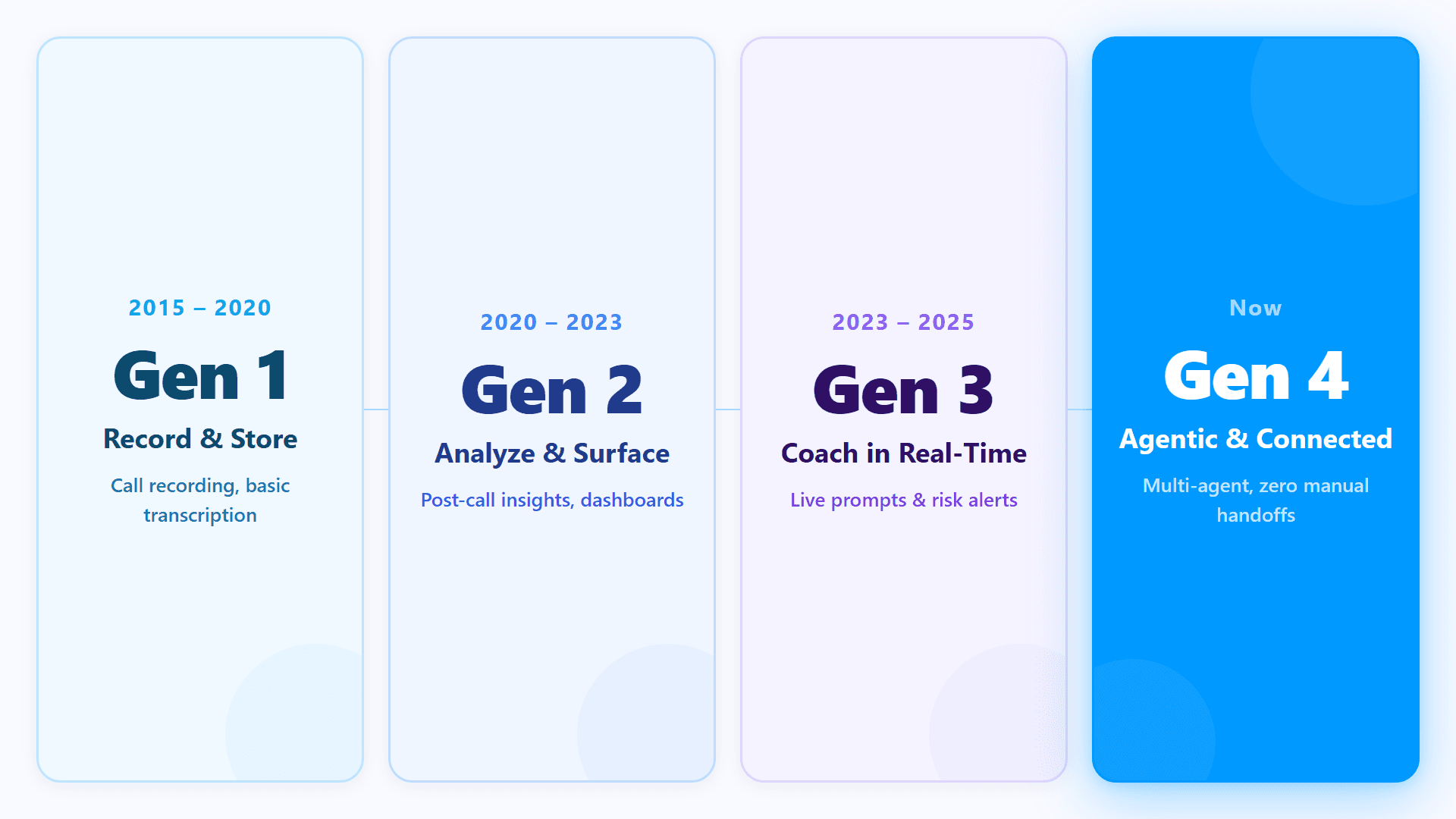
Stage 1: Store and replay
The call ends, a recording gets stored, a manager listens when there is time. Useful for compliance and the occasional coaching session. Passive by design.
Stage 2: Analyze and report
Gong and Chorus built the dashboards that defined this stage: talk ratios, keyword trends, deal signals. Managers could finally see across every call instead of the handful they had time to hear. This is where most of the installed base still sits.
Stage 3: Coach in real time
Live guidance during the conversation. A battle card when a competitor gets named, a nudge when the monologue passes two minutes, a prompt for the discovery question that got skipped.
Stage 4: Act, then ask for approval
The current shift is not better analysis. It is the platform doing the post-call work. Twenty to thirty minutes of admin per call, done before the rep reopens their laptop: summary written, CRM fields updated, follow-up drafted, deal reflagged if something sounded off. The rep reviews and sends. That review step is the part worth insisting on, and it is also the difference between an agent that drafts and one that sends on its own.
Whether a vendor is at stage two or stage four is answerable in one question, and it is the same question from earlier: after the call, where does the structured output go? A dashboard is stage two wearing stage four's copy.
Where Intempt fits
Intempt does not sell a conversation intelligence product, and that is the position rather than a gap. Clay enriches. Outreach sequences. Gong records. Apollo dials. Five tools, zero connection from intent to close. Calls are one input to a deal, and the value of analyzing them collapses the moment the analysis lives in a different system from the deal, the sequence, and the website behavior that started it.
So Meetings sits inside the agentic GTM platform next to pipeline, inbox, and scheduling, which makes three practical differences. The desktop app records natively on the rep's machine, so no bot appears in the participant list. The pre-call brief, the live assist, and the post-call summary all read from the same customer profile as the rest of the workspace, so there is no sync to maintain. And the Account Executive drafts the summary and the follow-up, then holds both for the rep to edit and approve before anything touches the CRM. Nothing syncs on its own.
The honest limits: this is not the tool for a contact center, and it is not the tool for a 400-rep org that needs Gong's depth of deal analytics and has the budget for a platform fee. It is built for the one-to-10-person revenue team that would otherwise be reconciling a recorder, a sequencer, and a CRM by hand, which is the same argument as running GTM without hiring for every role.
What conversation intelligence cannot do
Five limits, all of them survivable, none of them fixable by buying a better platform.
Replace judgment. Data surfaces patterns without context. A high talk ratio is a failure on discovery and correct on a technical demo. Someone has to read the why.
Fix a broken process. The tool is a diagnostic. It shows exactly where deals stall. Only new playbooks and actual coaching conversations change the outcome.
Succeed without trust. Used as monitoring rather than development, it produces distrust and skewed data, in that order. Adoption is a framing problem before it is a features problem.
Handle compliance for you. From all-party consent states to GDPR, the legal exposure is yours even when the platform automates the disclosure.
Guarantee accuracy. Jargon, accents, and bad audio degrade transcription, and speaker mix-ups degrade everything downstream of it. Test on your own recordings before signing.
What this post does not claim
- Not that Gong is overpriced. Nobody can say, because Gong publishes no price. That is the point being made about it.
- Not that Chorus is dead. Its product page is live and branded. The claim is narrower: ZoomInfo has stopped foregrounding the name.
- Not that Avoma's add-on pricing is a trick. Unbundling is honest, and Avoma is the only vendor here you can price without a sales call.
- Not that Cresta is a weak product. It is a strong product for contact centers, which is a different buyer than a B2B sales team.
- Not that Otter is bad value. It is good value for notes, and it never claimed to score deals.
- Not that conversation intelligence returns nothing. Only that the specific ROI figures circulating in this category cannot be traced to a study.
- Not that recording every call is automatically the right call. Consent law and rep trust both put real limits on it.
Open the vendor pages yourself, which is the only part of this that will not go stale. Gong publishes its category self-description and its refusal to publish a price on the same page. ZoomInfo's own navigation shows what happened to the Chorus brand. Avoma publishes the numbers. Jiminny and Cresta publish nothing. Read those five pages in an afternoon and the market becomes legible in a way no comparison table can make it. Then ask the one question that has survived every stage of this category: after the call ends, where does the structured summary go? If the answer is a dashboard, you are buying a recorder. If it is the deal record, the follow-up, and the forecast, you are buying conversation intelligence that actually moves the pipeline, which is what Intempt builds it into.
Frequently asked questions. Answered.
Conversation intelligence is software that records, transcribes, and analyzes spoken sales calls, customer success meetings, and support interactions, then turns them into structured data: who spoke, which topics came up, what objections were raised, how sentiment moved, what was committed to, and what needs to happen next. That structured output is pushed into CRM records, coaching workflows, and pipeline forecasts. The category is now mostly sold as a layer inside a larger revenue platform rather than as a standalone product, which changes the buying question from which recorder to where the output lands.