You're looking at a pipeline full of accounts right now. Some visited your pricing page. Some requested a demo. Some downloaded a competitor comparison guide and went completely quiet.
Most of them are still in-market. Just not actively talking to you.
Buying signals are the actions that prospects take that tell you exactly where they are in a decision. The problem is most teams aren't tracking them: they're sorting leads by source and job title while high-intent accounts take actions nobody's watching, right up until they sign with someone else.
6sense surveyed nearly 4,000 B2B buyers for its 2025 B2B Buyer Experience Report and found that first contact with a seller now happens 61% of the way through the buying journey. Most of the research is finished before you hear from anyone. By the time a prospect is ready to talk, they've already formed strong preferences, and you likely weren't part of that process.
Reps give up early, too. Most B2B deals involve 6–10 decision-makers, and no buying committee gets convinced by a single touch. The cost of being slow is the part that has actually been measured: the Lead Response Management study, run with Professor Oldroyd at MIT across more than 15,000 leads and over 100,000 call attempts, found the odds of qualifying a prospect drop 21-fold when response time stretches from 5 minutes to 30.
That gap, between what your team tracks and what actually signals buying intent, is where deals disappear every week.
Quick summary
- Buying signals are behavioral, engagement, firmographic, and product actions that indicate a prospect is actively considering a purchase.
- Signal stacking (2–3 signals from the same account in a short window) converts 5–10x better than single-action triggers.
- Sales and marketing need to read from the same signal definitions or deals fall through the gap between them.
- The top 5 buying signals: demo requests, repeated pricing page visits, multi-stakeholder account engagement, firmographic triggers, and competitive research activity.
- Most teams lose deals because signals never reach the rep, not because the rep handles them badly.
- Intempt unifies contact events, traits, and account-level stitching so signal stacks are visible in one place, not scattered across tools.
- Journeys and real-time segmentation in Intempt automate the detection-to-response loop so reps act on warm accounts within hours, not days.
Expected Results
If you build a real buying signal system, here's what changes:
- Rep response time on high-intent accounts drops from days to under 2 hours.
- Pipeline quality improves because reps are working accounts that are actually ready, not just contacts that fit an ICP on paper.
- You stop losing warm deals to competitors who move faster.
- Marketing and sales align on the same intent signals instead of arguing over lead quality.
- Conversion rates on signal-triggered outreach run significantly higher than cold sequences.
- You get visibility into where deals actually go quiet, so you can fix the gap instead of guessing.
- Free trial and product usage data stops being a product metric and starts driving real sales conversations.
- Your team spends less time chasing cold accounts and more time closing ones that are already moving toward a decision.
- Signal decay logic keeps your pipeline clean, so reps aren't wasting time on accounts that showed interest three weeks ago and have since gone completely cold.
What Are Buying Signals?
Buying signals are behaviors, actions, or contextual events that indicate a prospect is actively considering a purchase. They're the moments when someone moves from passively aware of your product to actively evaluating it.
The keyword here is "actively." A one-time blog visit is not a buying signal. A pricing page visit, followed by a free trial signup, followed by a second stakeholder from the same company downloading your comparison guide? That's a buying signal stack. And that stack means something.
Buying signals exist because buyers rarely announce intent directly. They signal it through behavior. Your job is to read those signals before your competitors do.
Types of Buying Signals
Not all signals carry the same weight. Breaking them into categories helps you prioritize response time and actions.
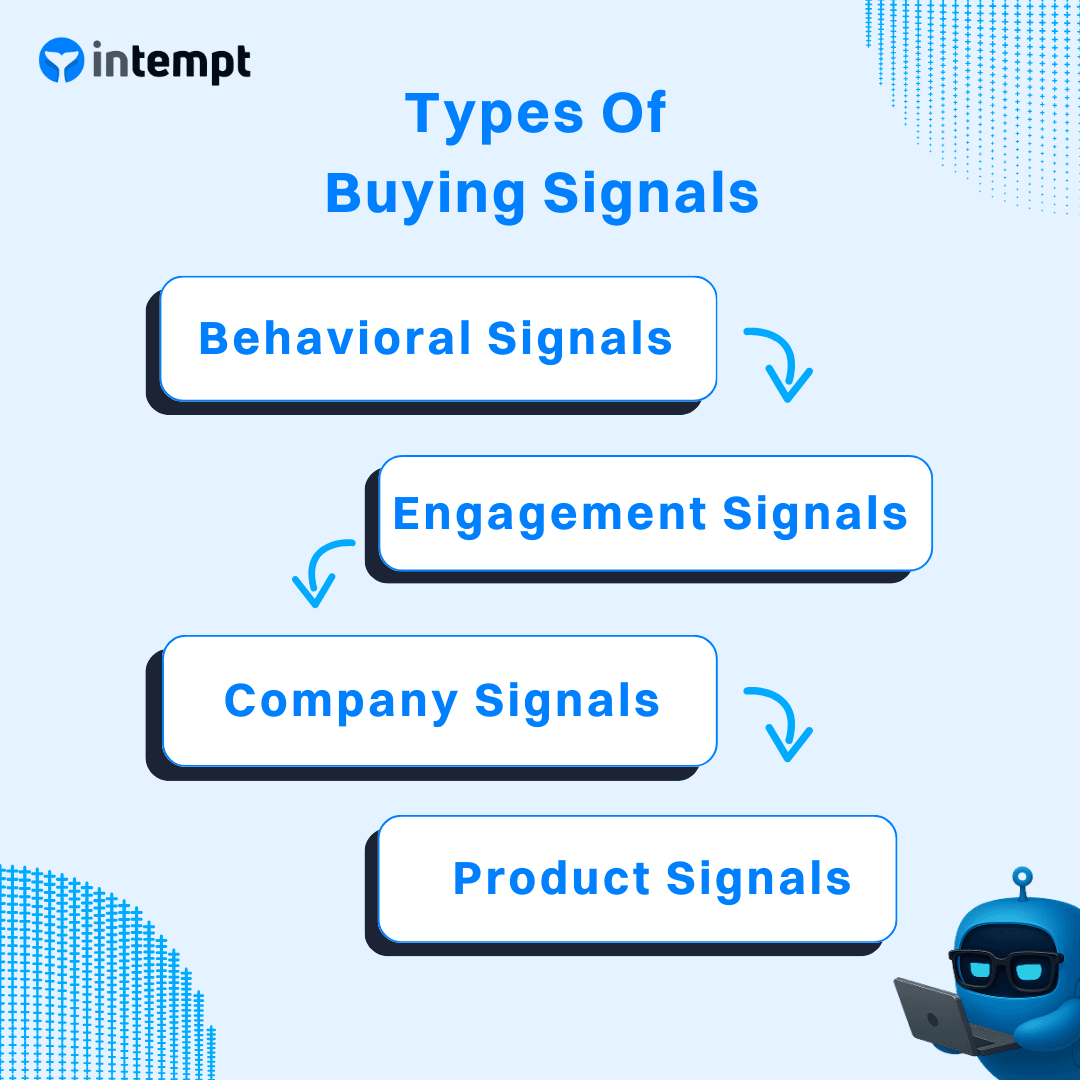
1. Behavioral Signals
Behavioral signals are actions a prospect takes directly on your owned properties. Pricing page visits, free trial signups, demo requests, repeated visits to product feature pages, and time spent on your documentation.
These are the strongest signals because the prospect came to you. They didn't stumble across a mention of your product in a newsletter. They deliberately navigated to your site and took action. That intent is explicit, and it's yours to act on.
The thing most teams miss is pattern recognition. One pricing page visit is curiosity. Three visits in seven days, combined with time spent on your integrations page, is someone building a business case. The action itself matters less than the pattern behind it.
2. Engagement Signals
Engagement signals are how prospects interact with your outbound. Email opens, link clicks, webinar attendance, content downloads, and social interactions with your posts.
On their own, engagement signals are weak. An email open tells you almost nothing. But when an account that has already visited your pricing page twice starts opening every email your rep sends and clicking through to your case studies, that's a different story entirely.
Think of engagement signals as confirmation, not discovery. They don't tell you a prospect is ready. They tell you that a prospect who was already showing behavioral intent is still paying attention. That combination is what justifies picking up the phone.
3. Company Signals
Company signals come from what's happening at the prospect's organization, not from their direct actions with you. A funding round closed. A new VP of Sales joins. A key competitor shuts down a product line. The company posts 15 new engineering roles in a month.
These signals matter because they tell you when conditions are right for a purchase decision, even before the prospect has started researching solutions. A company that just raised a Series B has a budget. A company that just hired a new CMO has someone trying to prove impact fast. A company expanding headcount in a specific department has a growing problem that your product might solve.
The window on company signals is short. A funding announcement stays warm for 48–72 hours. A new executive hire stays relevant for 60–90 days before their priorities are locked in. If you're not monitoring these triggers and acting on them quickly, you're handing first-mover advantage to whoever is.
4. Product Signals
Product signals come from inside your platform. A user hits a usage limit. A free account invites five teammates in a week. Someone exports data repeatedly or starts accessing features outside their current plan.
These are Product-Qualified Leads in action, and they convert at a higher rate than almost any other signal type because the prospect has already experienced value. They're not evaluating whether your product works. They're outgrowing what they currently have access to.
The right response to a product signal is not another onboarding email. It's a human conversation about what they're trying to do and what removing the friction would look like. That conversation, triggered at the right moment, is where some of the fastest and cleanest expansions and upgrades happen.
Buying Signals in Sales vs. Marketing
Sales and marketing both use buying signals, but they care about different types at different moments.
Buying signals in sales
Sales reads signals to decide who to call, when, and with what context. A rep who knows a prospect visited the pricing page three times, started a free trial, and had two teammates open the same email thread isn't making a cold call. They're walking into a warm conversation with real advantage.
The signal tells them this account is in active evaluation mode, who the stakeholders might be, and what the prospect cares about enough to research on their own.
That context changes everything about how the conversation opens and where it goes. A signal-informed rep doesn't pitch. They ask the right questions at the right moment because they already know what's been happening on the other side.
The real problem is that most teams don't share signal data across functions. Marketing sees engagement in one tool. Sales sees CRM notes in another. Neither team sees the full picture. A prospect who downloaded a comparison guide, attended a webinar, and ignored two outreach attempts looks completely different when you see all three together versus any one alone. That's the gap where deals go quiet, and nobody knows why.
Buying signals in marketing
Marketing reads signals to decide what to send and when. An account that just visited your pricing page for the second time this week should not receive a top-of-funnel nurture email about industry trends.
That account is past awareness. They need a case study from a company like theirs, a direct comparison guide, or an ROI calculator.
Marketing's job is to match content to where the signal says the prospect actually is, not where the campaign calendar says they should be. When marketing ignores signals and runs everyone through the same sequence, they burn warm accounts with irrelevant messaging and wonder why engagement is dropping. The signal tells you what the prospect is ready for. Use it.
How to Identify Buying Signals?
Identification breaks down the moment you treat every action the same. A single email open is not a signal. A pricing page visit from three weeks ago is not a signal. Intent has a shelf life, and it compounds when you know what to stack.
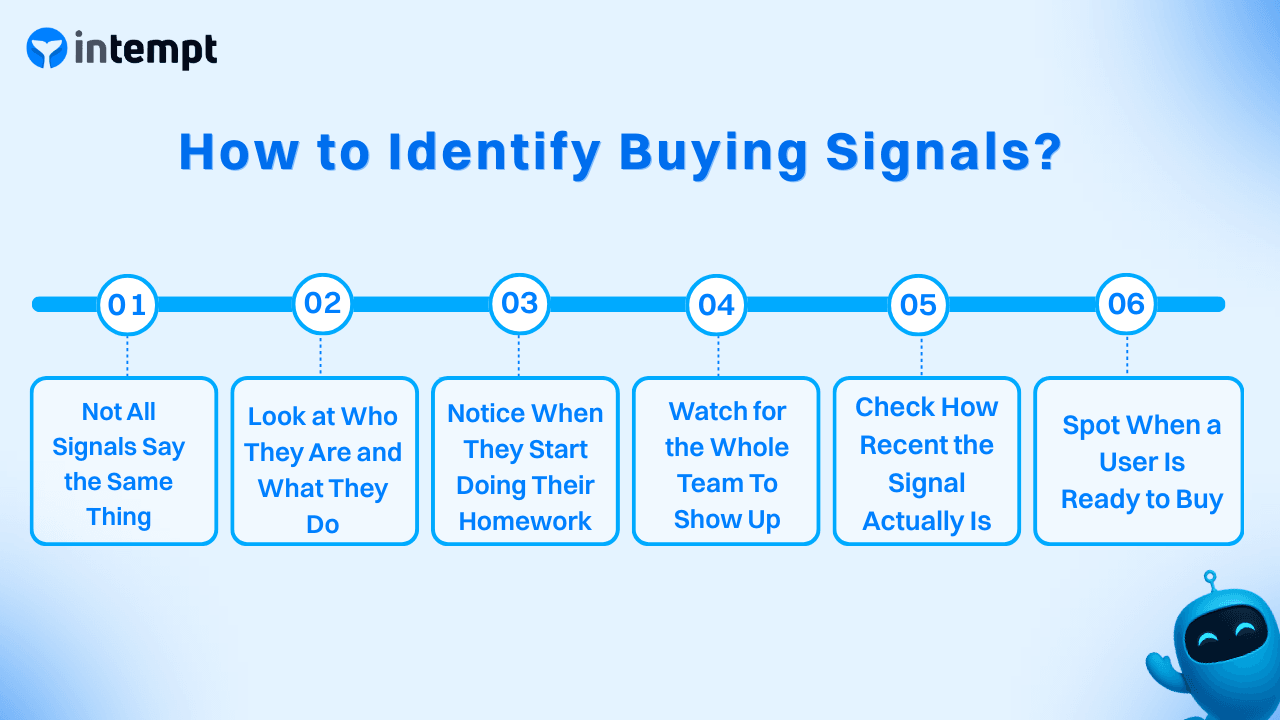
Here's how to identify signals that actually mean something.
1. Not All Signals Say the Same Thing
Direct expressions of intent are the clearest. A prospect asks about contract terms. They request a demo. They submit an RFP. These need immediate response, not a nurture sequence.
Then there are behavioral patterns that indicate interest without the prospect saying so directly. Repeated product page views. Extended time on a comparison page. A competitor review read on G2. These need context before they mean anything. Stack them with direct signals, and the picture gets clear fast.
2. Look at Who They Are and What They're Doing
Who they are tells you if they're the right fit. Industry, company size, tech stack, budget indicators, geography. What they're doing tells you if the timing is right. Feature usage, page visits, content engagement, and team adoption.
Neither alone is enough. A high-fit account with zero activity is just a name on a list. A highly active account with a poor fit wastes rep time. When both align at the same time, the signal is real.
3. Notice When They Start Doing Their Homework
One of the clearest pre-purchase patterns is when a prospect shifts from reading about your product to verifying it's safe to buy. Implementation guides. Security documentation. Onboarding timelines. SLA pages. Shipping and return policies.
This behavior means they've already decided they want the solution. Now they're building internal confidence to pull the trigger. That's a late-stage signal dressed up as passive browsing. Don't treat it like early awareness.
4. Watch for the Whole Team To Show Up
When two or more people from the same company engage with your content, emails, or product within a 10-day window, the buying committee is active. That's not a coincidence.
The average B2B buying group involves 6–10 decision-makers. When multiple contacts from one account independently show intent, the organization has moved from awareness to evaluation. One contact engaging is a signal. Three contacts from the same company engaging is a decision in progress.
5. Check How Recent the Signal Actually Is
A pricing page visit from 48 hours ago is high-priority. The same visit from 18 days ago with no follow-up activity is background noise.
If an account showed strong signals two weeks ago and has gone dark since, treat it as cold until new activity stacks. Prioritizing stale signals as fresh ones is one of the most common ways rep time gets wasted. Build score decay into your process so old signals don't crowd out live ones.
6. Spot When a User Is Ready to Buy
Product activity is its own category of buying signal, and it's one of the highest-converting ones. A user who invited teammates, hit a usage limit, adopted core features, or started accessing premium previews is not a passive user. They're a sales conversation waiting to happen.
This looks different from engagement-based signals. A product-ready user needs a conversation about getting more value. An engagement-ready user needs a conversation about fit and outcomes. Mixing up the approach wastes the moment entirely.
Why Traditional Signal Tracking Breaks?
Here's the thing: most revenue teams already know buying signals exist. The problem isn't awareness. It's execution.
Traditional signal tracking breaks in three predictable ways.

1. Signals Live in Too Many Places
Your website analytics is in one tool. Email engagement is in your sequencing platform. CRM activity is somewhere else. Product usage is in a separate dashboard. Company data comes from a third-party enrichment service.
No single rep can stitch that together in real time. So they don't. They work their lists, miss the signals, and wonder why conversion rates feel inconsistent.
2. There's No Account-Level View
Most sales tools are built around contacts, not accounts. But buying committees are made of multiple people. When three people from the same company are independently engaging with your content and no one notices, you miss the clearest signal a B2B deal generates.
Sound familiar? Every revenue team we've talked to has this problem. It's not a rep problem. It's a data architecture problem.
3. Response Timing Is Broken
A rep who responds to a demo request three days later is not working a warm lead. They're doing damage control. The Lead Response Management study found that the odds of qualifying a prospect fall more than sixfold across the first hour alone, and 21-fold when response time slips from 5 minutes to 30.
But most teams don't have the infrastructure to trigger that kind of response. Signals come in, sit in a queue, and get addressed when someone remembers. By then, the window is gone.
Why Buying Signals Are Important?
Here's the uncomfortable truth: your pipeline isn't just competing on product quality. It's competing on speed and timing.
Buyers who are actively in the market usually evaluate 3–5 vendors simultaneously. The vendor who identifies the signal and responds with relevant, contextualized outreach first wins a disproportionate share of those conversations. Not because they're better. Because they showed up when it mattered.
The cost of ignoring buying signals isn't theoretical. It shows up as late-stage deal losses to competitors who moved faster, wasted rep time on cold outreach while warm accounts go unworked, and marketing spend that generates intent you never capture.
For SaaS companies specifically, product signals are sitting on revenue you've already earned. A user who invites colleagues, hits a usage limit, or returns daily for two weeks is not a marketing problem. They're a sales opportunity that needs a human conversation, not another onboarding email.
If you're not building a real buying signal system in 2026, you're not competing on the same playing field as teams that are.
Top 5 Examples of Buying Signals
These are the buying signals that convert. Listed in order of intent strength.
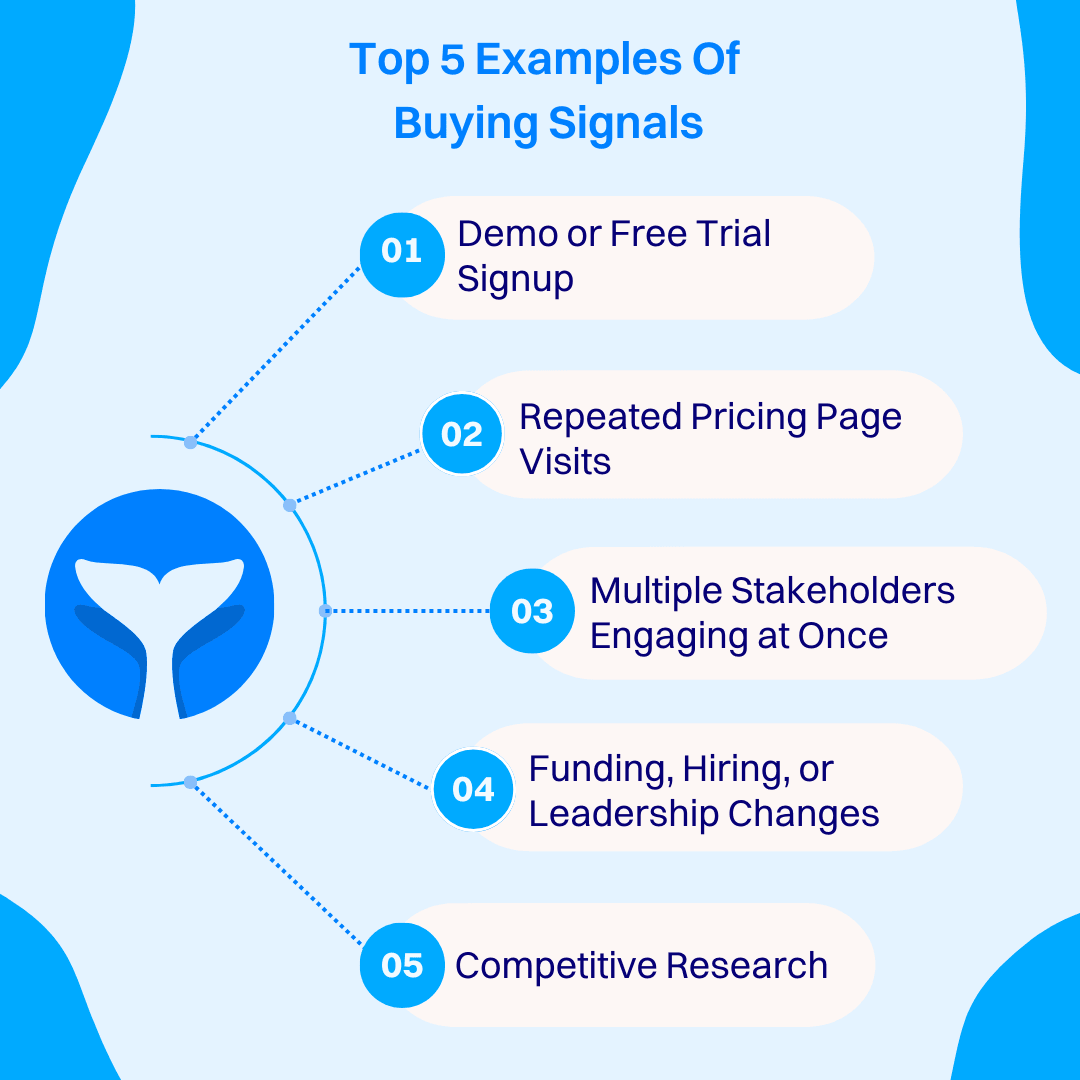
1. Demo or Free Trial Signup
The clearest, highest-intent buying signal that exists. The prospect is actively evaluating your product and has committed time to it. Respond within the hour if you can. Anything slower than same-day is a serious disadvantage. This signal alone should trigger an immediate sales workflow, not an automated nurture sequence.
Pro tip: Don't just respond fast. Respond smart. Before the first call, pull everything that the account has done leading up to the signup. Which pages did they visit? How long did they spend on your pricing page? Did other people from the same company engage with anything? That context turns a generic demo into a conversation the prospect feels was built specifically for them.
2. Repeated Pricing Page Visits
One pricing page visit could mean anything. Three visits from the same account in a week, combined with an email asking about contract terms? That prospect has you on a shortlist and is building an internal business case. The combination of page visits plus a direct question is a Tier 1 signal that needs immediate rep attention.
Pro tip: Set up an alert for any account that hits your pricing page more than twice in a 7-day window. Don't wait for them to fill out a form. Have your rep reach out proactively, referencing that they've been exploring pricing, and offer to walk them through options based on their team size and use case. That kind of proactive outreach lands very differently than a generic follow-up sequence.
3. Multiple Stakeholders Engaging at Once
When a VP of Marketing, a Director of Revenue Ops, and an SDR Manager from the same company are all opening your emails, attending your webinars, or visiting your product pages within the same 10-day window, the buying committee is in active evaluation mode. This is one of the strongest indicators of near-term deal potential in B2B.
Pro tip: Map every engaging contact back to their account and check for overlap. If two or more people from the same company have engaged within a 10-day window, escalate that account immediately, regardless of where individual contacts sit in your scoring model. Multi-stakeholder engagement beats a perfect lead score every time.
4. Funding, Hiring, or Leadership Changes
A prospective company announces a Series B. A new CMO joins. The company posts 12 new sales roles in a week. These signals mean available budget, strategic momentum, and a decision-maker who wants fast wins. Funding news has the shortest window, 48–72 hours, before that budget gets allocated elsewhere. A new executive hire stays relevant for 60–90 days while their priorities are still forming, and a hiring spike is worth acting on within about a week.
Pro tip: Don't lead with your product when responding to company signals. Lead with the trigger. An opening line like "Saw the Series B announcement, congrats. Wanted to reach out because companies scaling at this stage often run into [specific problem you solve]" lands far better than a standard pitch. It shows you were paying attention, and it frames the conversation around their current reality, not your features.
5. Competitive Research
A prospect downloads your competitor comparison guide, visits your G2 profile, or reads your "alternatives to [competitor]" content. They're in-market. They haven't found you yet, or are comparing you directly. This is a signal that warrants personalized outreach referencing the specific content they engaged with. Generic follow-up here wastes the opening.
Pro tip: Build a specific outreach sequence triggered by competitive research activity. Reference the comparison content they engaged with directly. "Noticed you were looking at how we compare to [competitor]. Happy to walk you through exactly where the differences matter for a team your size." That level of specificity is disarming. It tells the prospect you understand where they are in the process and that you're not going to waste their time with a discovery call that should have been an email.
Best Practices for Acting on Buying Signals
| Best Practice | What It Means | Why It Matters |
|---|---|---|
| Stack signals before triggering outreach | Wait for multiple actions from the same account within a short time window before routing to a sales rep. | Reduces false positives and ensures reps spend time on prospects showing real intent. |
| Use tiered response protocols | Categorize signals by urgency. Tier 1 signals like demo requests or trial signups require a fast response. Tier 2 signals, such as funding news or hiring spikes, should be followed up on within days. Tier 3 signals, like single content engagements, should be monitored until more signals appear. | Helps teams prioritize high-intent prospects and respond at the right speed. |
| Personalize follow-up based on the signal | Tailor outreach to the action the prospect took. For example, reference a pricing page visit, a usage limit, or a competitive comparison download. | Makes outreach more relevant and increases the likelihood of engagement and conversion. |
| Align marketing and sales on signal definitions | Ensure both teams use the same definitions for "hot leads," intent thresholds, and scoring rules. | Prevents misrouted leads and keeps revenue teams operating from the same playbook. |
| Build signal decay into workflows | Set expiration rules for signals so outdated actions are not treated as fresh intent. | Keeps outreach timely and prevents reps from pursuing stale opportunities. |
How to Follow Up on Each Type of Buying Signal
Follow-up on a buying signal should be timed to the signal, not to your sequence calendar. A demo request needs a reply inside the hour. A single content download needs no follow-up at all until a second signal stacks on it. The table below maps every signal type in this post to an urgency tier, a follow-up window, and what the follow-up should actually say.
| Signal type and example | Tier | Follow-up window | What the follow-up should do |
|---|---|---|---|
| Behavioral: demo request or free trial signup | Tier 1 | Under one hour | Skip the nurture sequence entirely. Pull the account's full page history first, then open with what they were already looking at. |
| Behavioral: three or more pricing page visits in seven days | Tier 1 | Same day | Reach out proactively without waiting for a form. Reference the pricing exploration and offer options based on their team size. |
| Behavioral: security, SLA, or implementation docs read | Tier 1 | Within 24 hours | This is late-stage validation, not research. Send proof and reference customers, not education. Offer to answer procurement questions directly. |
| Engagement: two or more contacts from one account inside 10 days | Tier 1 | Within 24 hours | Escalate the account, not the contact. Follow up with each stakeholder on the specific thing that person engaged with. |
| Engagement: repeat case study clicks from an account already showing behavioral intent | Tier 2 | Within two business days | Treat it as confirmation of intent you already saw. Send a customer story from their segment, then ask for the call. |
| Engagement: single email open or one content download | Tier 3 | No follow-up yet | Hold. Monitor the account until a second signal stacks, then follow up on the pair rather than the single action. |
| Company: funding round announced or new executive hired | Tier 2 | 48 to 72 hours for funding, 60 to 90 days for a new exec | Lead with the trigger, not the product. Frame the follow-up around what changes at their company now, and let them connect it to the problem you solve. |
| Company: hiring spike in a department you sell into | Tier 2 | Within one week | Follow up on the growing problem the headcount implies. Ask what breaks first as that team doubles. |
| Product: usage limit hit or teammates invited | Tier 1 | Same day | Send a human, not another onboarding email. Ask what they're trying to do and what removing the friction would be worth. |
| Product: premium feature preview accessed | Tier 2 | Within two business days | Follow up on that exact feature. Offer a walkthrough of the tier it belongs to instead of a generic upgrade pitch. |
| Competitive research: comparison guide download or alternatives page visit | Tier 2 | Within 24 hours | Name the comparison content they engaged with and say where the differences actually matter for a team their size. |
| Any signal older than 14 days with no new activity | Expired | Don't follow up on the old signal | Let score decay drop it out of the queue. The account re-enters only when fresh activity stacks. |
The most common follow-up mistake is treating speed as the only variable. Teams either chase every signal at once or batch all of them into the same weekly cadence. Neither reads the signal. Tier 1 follow-up is measured in minutes and built from the account's real history. Tier 3 follow-up is patience and nothing else.
Buying Signal Tools: What They Track
Most buying signal tools specialize in one signal source. Third-party intent vendors read research activity happening off your site. Enrichment and prospecting tools read firmographics and de-anonymize your traffic. Few stitch first-party behavior, product usage, and account context into one profile, which is why follow-up still ends up manual.
| Tool | What it tracks | Where the signal comes from |
|---|---|---|
| 6sense | Account-level buying stage, web de-anonymization, third-party intent | Its own data layer combined with your first-party web traffic. Predictive models score which accounts are in-market and suggest how to engage them. |
| Bombora | Topic-level research surges at the account level (Company Surge) | A consented data co-op of 5,000+ B2B publisher sites, measuring how often and how deeply an organization researches a topic. Account-level only, not contact-level. |
| Clearbit (now part of HubSpot) | Company and contact firmographics, form enrichment | A B2B data provider HubSpot acquired. Mostly used to enrich records already in the CRM so your scoring rules have something to score. |
| Apollo | Buyer intent signals, anonymous visitor identification, form enrichment | A database of 240M+ contacts and 30M+ companies paired with multichannel sequences, so the signal and the follow-up live in the same tool. |
| Clay | Job changes, promotions, hiring, and other trigger signals | Waterfall enrichment across 200+ data providers, plus agents that monitor accounts for a reason to reach out. Signals feed a native sequencer. |
Intempt sits in a different spot in the stack. It isn't another intent feed to plug in. Contact events, traits, product usage, and account-level stitching land in one profile in real time, so a signal stack is visible as a stack instead of five rows in five tools. Real-time segmentation catches the stack the moment it completes, and the follow-up fires from there with the full history attached.
The honest limit: Intempt reads first-party and product signals. It doesn't sell third-party research data. If your motion depends on knowing that an account is reading about your category on sites you don't own, you still want Bombora or 6sense feeding that in alongside. What Intempt replaces is the manual stitching between your site, your product, your emails, and your CRM, which is where most follow-up dies.
How to Track Buying Signals with Intempt?
Intempt is the agentic GTM software that combines CDP capabilities, real-time analytics, and lifecycle orchestration in one place. For signal tracking, that matters because the problem with buying signals isn't detection, it's unification. Here's how to set it up.
Step 1: Define and Track Key Events
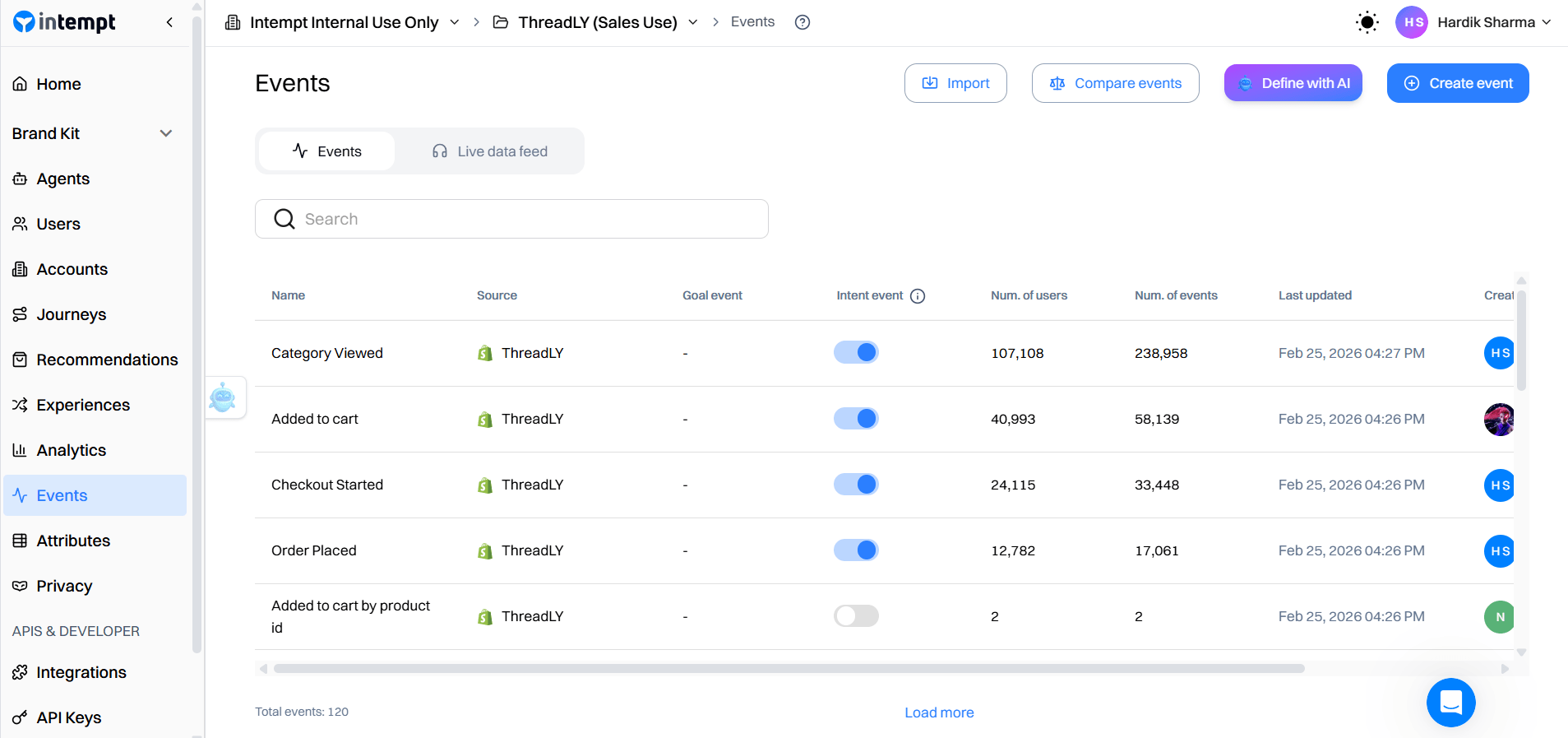
Start by identifying the actions that actually indicate purchase intent and instrumenting them as events in Intempt. These typically include "viewed product page," "added to cart," "started checkout," "clicked on product," and "entered payment info."
Use Intempt's JavaScript SDK to implement event tracking across your site or product. The quality of everything downstream depends on clean event data here. If you skip this or do it halfway, your signals will be noisy, and your segments will be wrong.
Step 2: Identify User Actions to Track
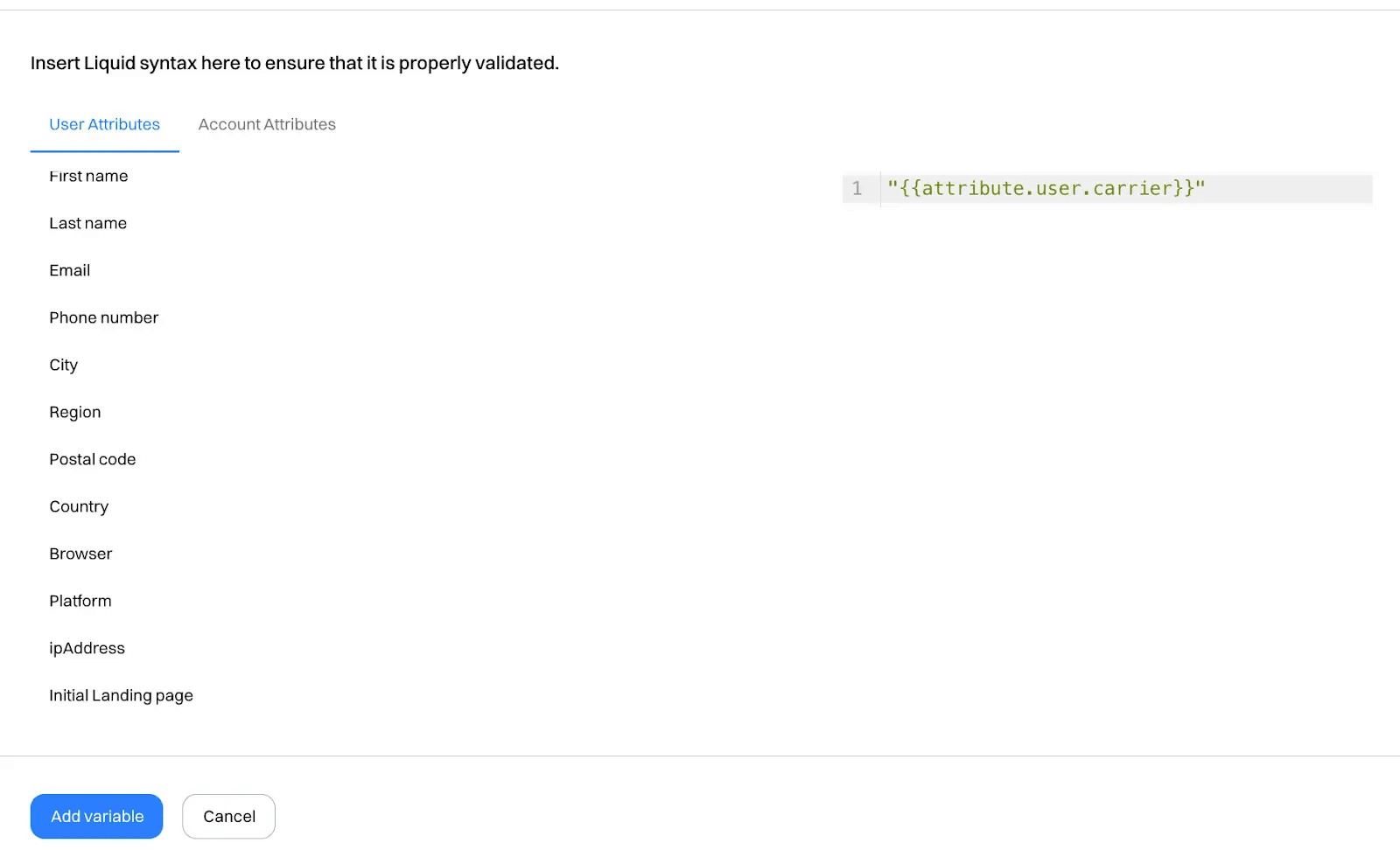
Map your full customer journey and decide which behaviors at each stage signal buying intent versus casual browsing. Focus on actions with predictive value: frequent product views within a session, cart additions followed by extended browsing, time spent on comparison or shipping pages, and return visits to the same product category.
You're not tracking everything. You're tracking the behavioral pattern that precedes a purchase, so you can act before the moment passes.
Step 3: Set Up Proper Event Tracking
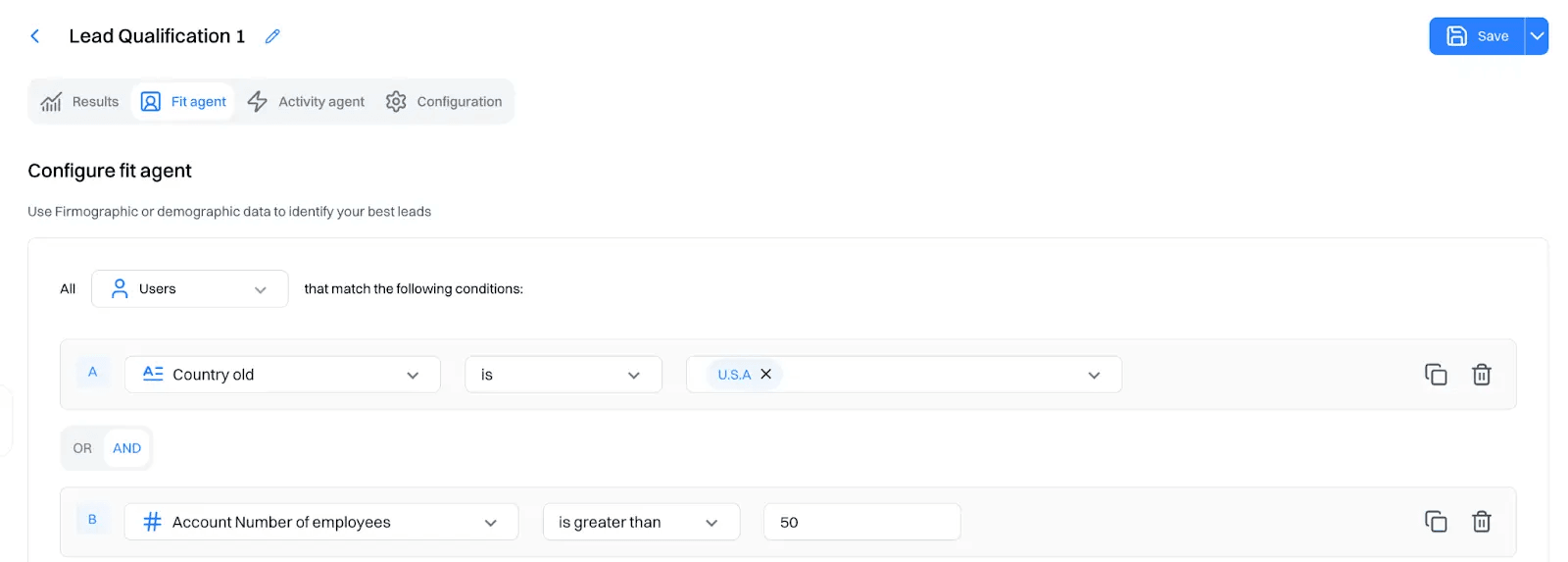
Once your journey is mapped, create custom events in Intempt for each meaningful behavior. Funnel events like "viewed product page," "entered shipping info," and "entered payment info" give you visibility into exactly where prospects are in the decision process.
Intempt's SDK handles this instrumentation, and you can layer in traits (company size, ICP fit, lifecycle stage) alongside events so that every signal has context. A checkout abandonment from a high-fit account means something different than one from an unqualified visitor.
Step 4: Build Sales-Ready Segments
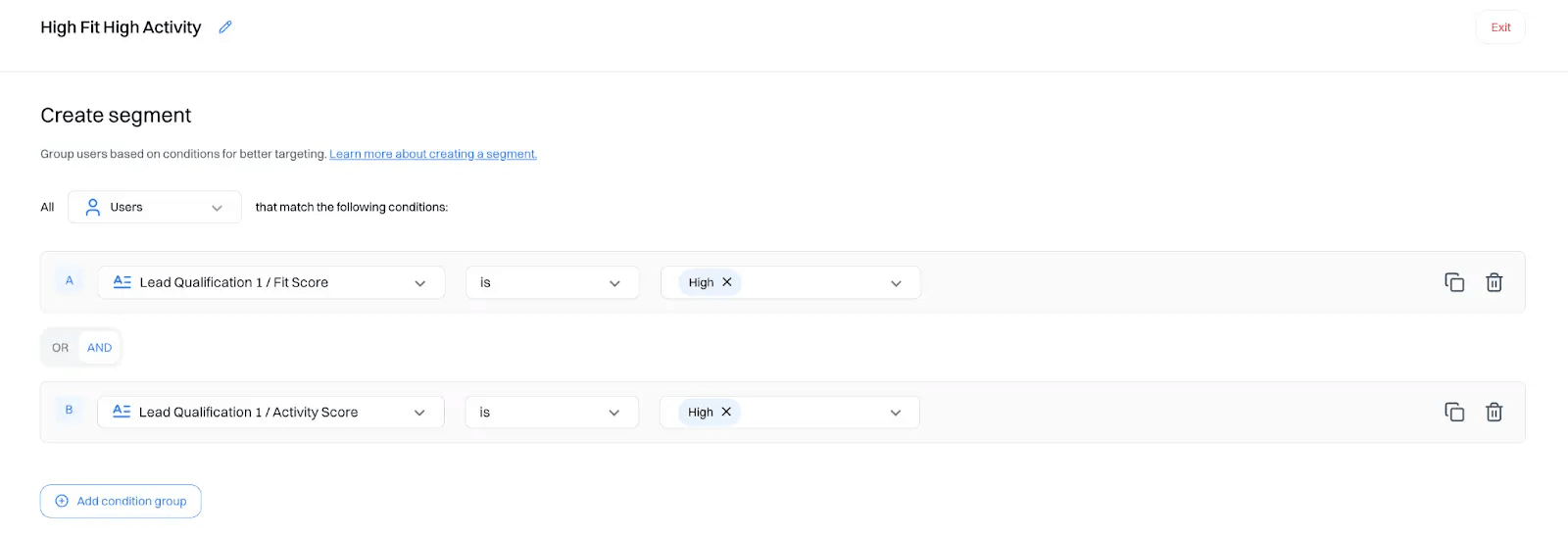
With events and traits in place, build dynamic segments that reflect actual purchase readiness. A segment like "High Fit + High Activity" captures accounts where ICP criteria and behavioral engagement both cross your threshold simultaneously.
These are your hottest prospects. Intempt's real-time segmentation updates these segments as new events fire, so the list reflects current intent rather than a static export from last week. You can layer in additional criteria like recency (activity within the last 7 days) or depth (three or more key funnel events completed) to sharpen the signal further.
Step 5: Turn Signals into Outreach
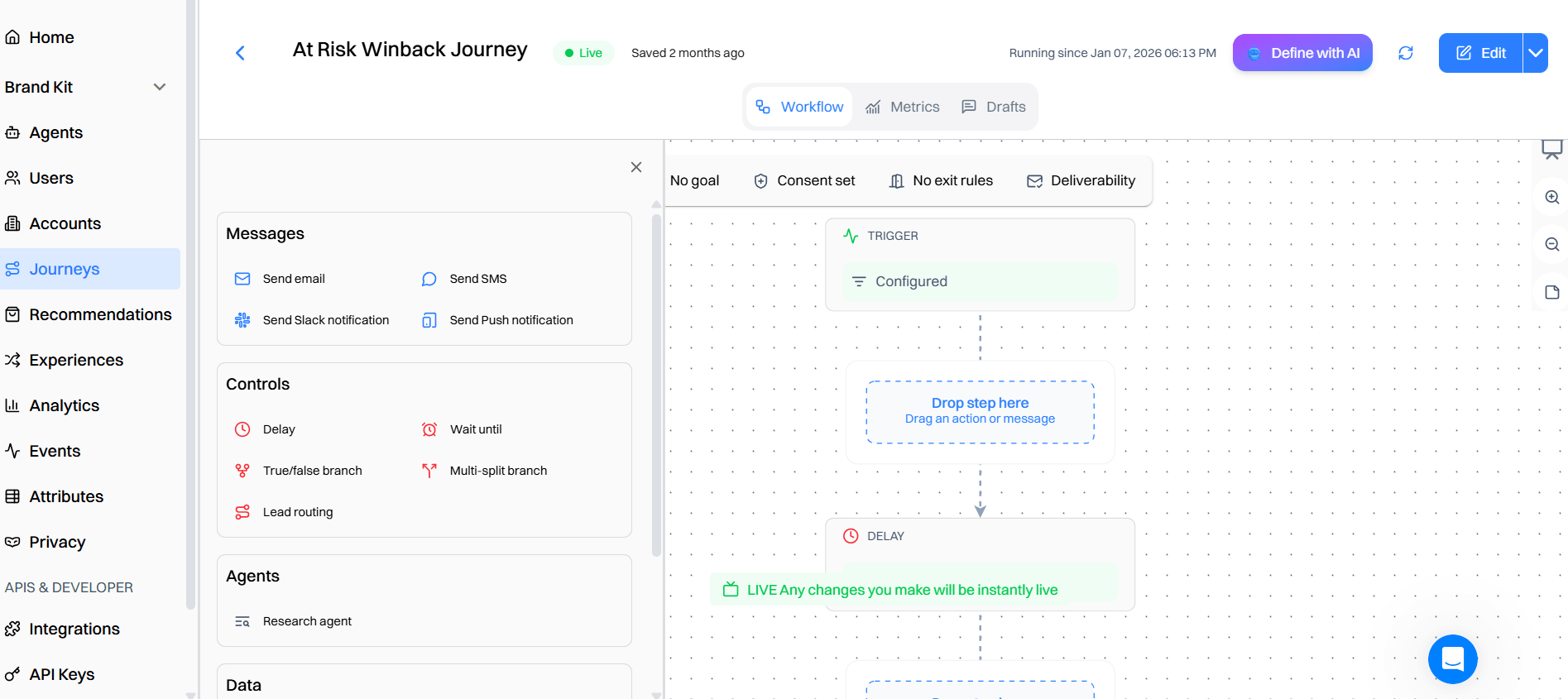
Once your top segments are defined, launch targeted Journeys with personalized messaging built around the exact behaviors that qualified each contact. A prospect who abandoned checkout after entering shipping info gets a different message than one who viewed the pricing page three times but never started a trial.
Intempt's Journeys let you trigger multi-channel sequences based on segment membership, with the Lifecycle Marketer generating context-specific copy that references what the prospect actually did. The signal drives the message. Not a generic follow-up. A relevant, timed conversation that shows you were paying attention.
Step 6: Measure and Tighten the Loop
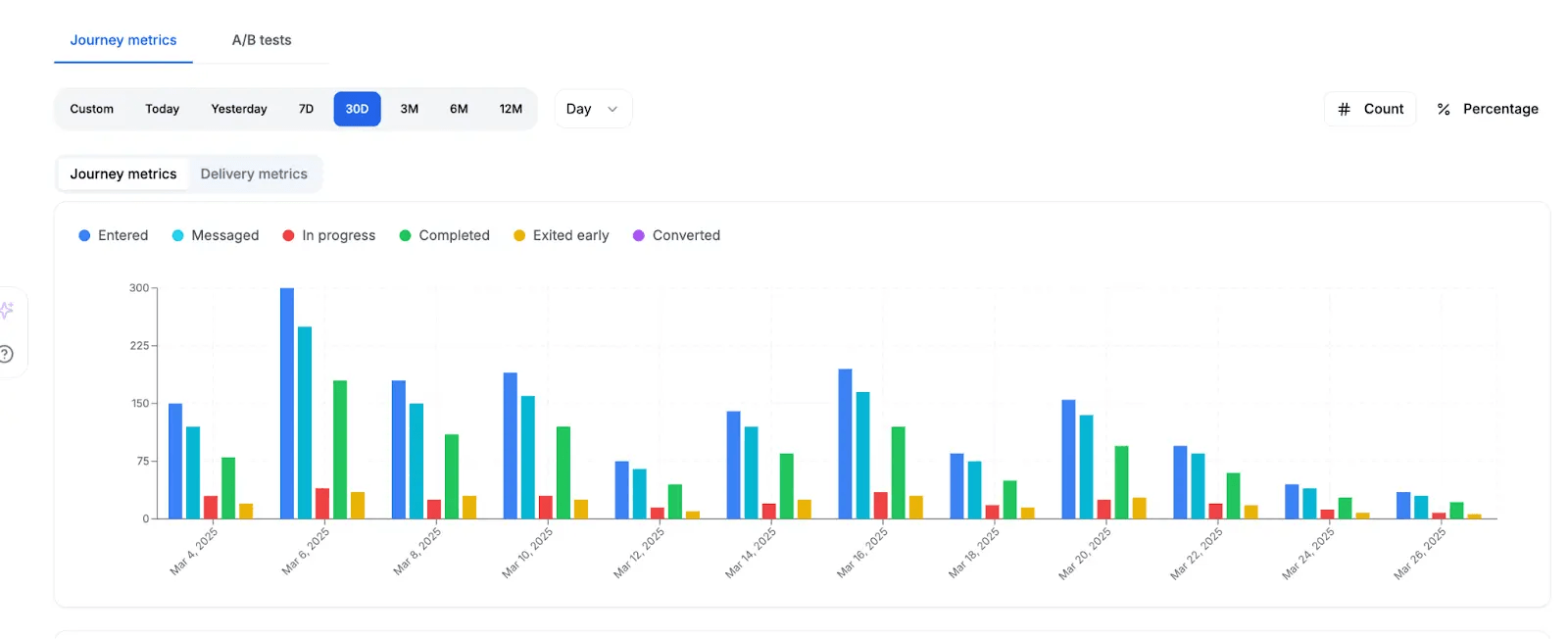
In Journey Analytics and Dashboards, look at: replies, meetings created, cycle time, and opportunities/wins by readiness level. Notice which signals show up most often before a meeting, and adjust your Agent weights or segment rules accordingly.
The Honest Tradeoff
Building a real signal tracking system takes time. You need clean event instrumentation, account-level data stitching, and workflows that automate the detection-to-response loop. If your data is messy or your sales and marketing teams are not aligned on signal definitions, the system breaks before it starts.
The concrete next step: audit your current stack and identify where high-intent signals are currently dying. If you're finding them in three or more disconnected tools with no automatic routing, that's the gap to close first. Start with Intempt's unified profiles and real-time segmentation to bring your signal data into one layer, then build your scoring and journey logic from there.
Frequently asked questions.Answered.
- Buying signals are prospect behaviors that indicate active purchase intent. Examples include requesting a demo, visiting a pricing page multiple times, or having multiple stakeholders from the same company engage with your content in the same timeframe.