- AI e-commerce personalization adapts the shopping experience per visitor using ML and behavioral data across recommendations, search re-ranking, homepage content, and post-purchase triggers.
- Per McKinsey's Next in Personalization 2021, companies excelling at personalization generate 40 percent more revenue than average competitors, Amazon's recommender drives an estimated 35 percent of total revenue, and personalized search lifts conversion 1.8x over keyword-only.
- Treat those numbers as directional benchmarks, not fresh 2026 data. Measure your own lift against a real holdout.
AI e-commerce personalization is the use of real-time behavioral data, machine learning, and AI agents to adapt the shopping experience to each individual visitor, covering product recommendations, intelligent search, homepage content, category page ranking, and post-purchase email flows. According to McKinsey's Next in Personalization 2021 study - still the most-cited source in the category - companies excelling at personalization generate 40 percent more revenue than average competitors, and 71 percent of consumers now expect personalized experiences.
This guide covers what AI e-commerce personalization is, how the technology works, the four types every store should implement, how to measure it, and how leading brands use it today.
What is e-commerce personalization?
E-commerce personalization is the process of dynamically changing what a shopper sees based on who they are, what they have done, and what they are likely to do next.
The distinction from customization matters. Customization is shopper-driven: the user sets a preference or applies a filter. Personalization is store-driven: the system uses behavioral data to automatically adapt the experience without any input from the shopper.
In 2026, it runs on first-party behavioral data collected from every session: pages viewed, search queries, items added and removed from cart, purchase history, and time spent on each product. That data feeds machine learning models that predict intent and update the experience in real time.
What it is not: a "recently viewed" widget. That is entry-level. Modern personalization means the search results, the homepage layout, the product recommendations, the email content, and the category page order are all different for every visitor.
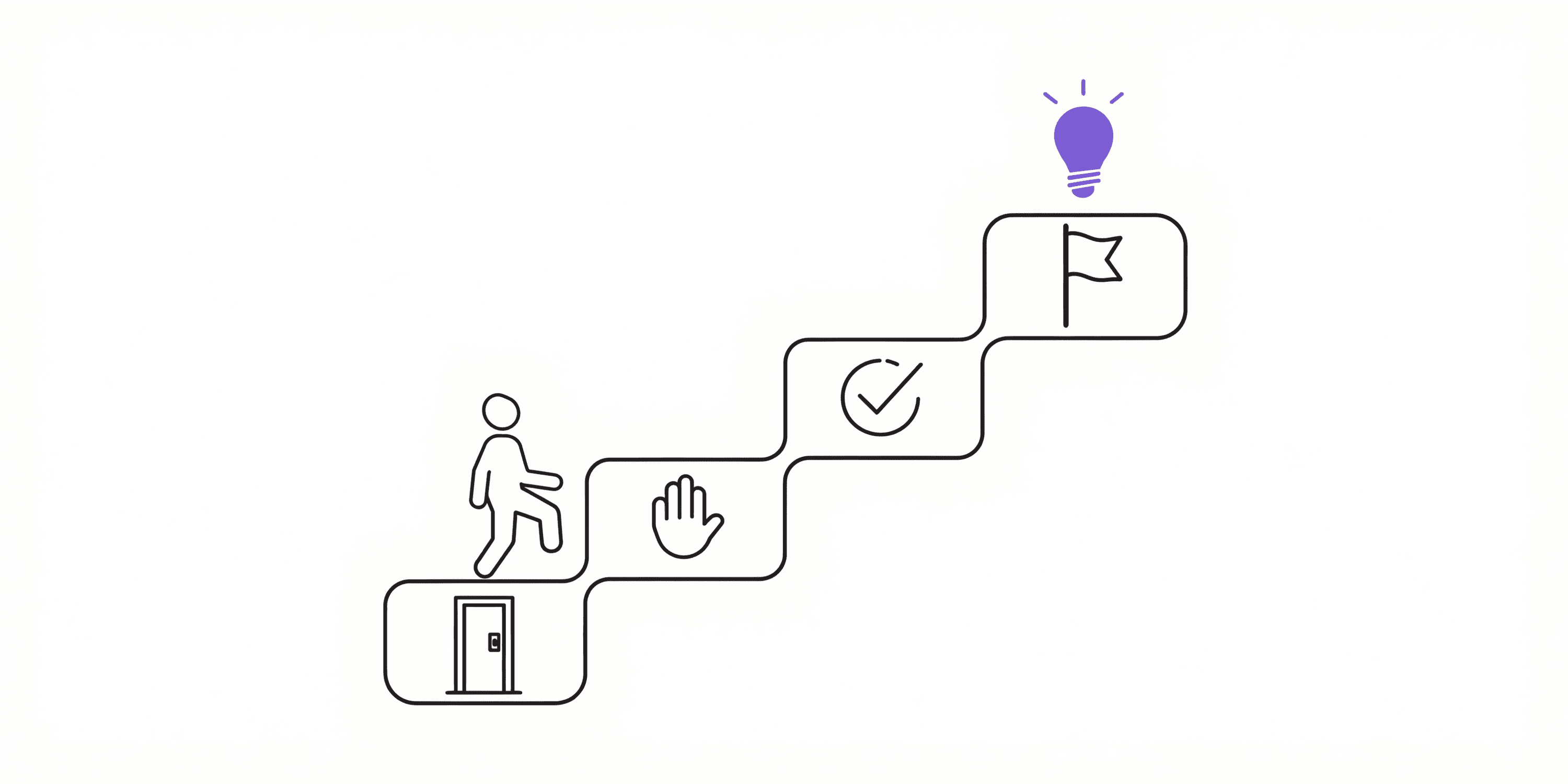
- Level 0 - Static store: Everyone sees the same experience. No behavioral adaptation.
- Level 1 - Surface personalization: Reactive features like recently viewed and cart abandonment emails. Isolated widgets, not connected journeys.
- Level 2 - Behavioral personalization: The store responds to real-time activity. Intelligent search re-ranking, dynamic homepage modules, personalized email triggers.
- Level 3 - Journey orchestration: Behavior connects across every session and device. Real-time intent scoring reshapes the entire store experience in milliseconds.
How does AI e-commerce personalization actually work?
The technology stack has three layers that work together to deliver a unique experience to every visitor.
- Data layer: Every visitor interaction generates events - page views, clicks, add-to-cart, search queries, purchases. First-party data from your store, combined with zero-party data shoppers voluntarily share through quizzes or preference centers, builds a behavioral profile for each visitor. Anonymous visitors start from session signals; identified visitors draw on full history.
- Decisioning layer: Machine learning models analyze those profiles to predict what a visitor is most likely to buy next. Collaborative filtering (what similar users bought), content-based filtering (product attribute matching), and propensity modeling (likelihood to convert) run in parallel to produce a ranked output.
- Delivery layer: The ranked output updates the experience in real time - product recommendation widgets, search result ordering, homepage modules, email product blocks, and category page layouts. The same logic that powers your on-site widgets also drives your browse abandonment and post-purchase email content.
What are the four types of AI e-commerce personalization?
1. Product recommendations
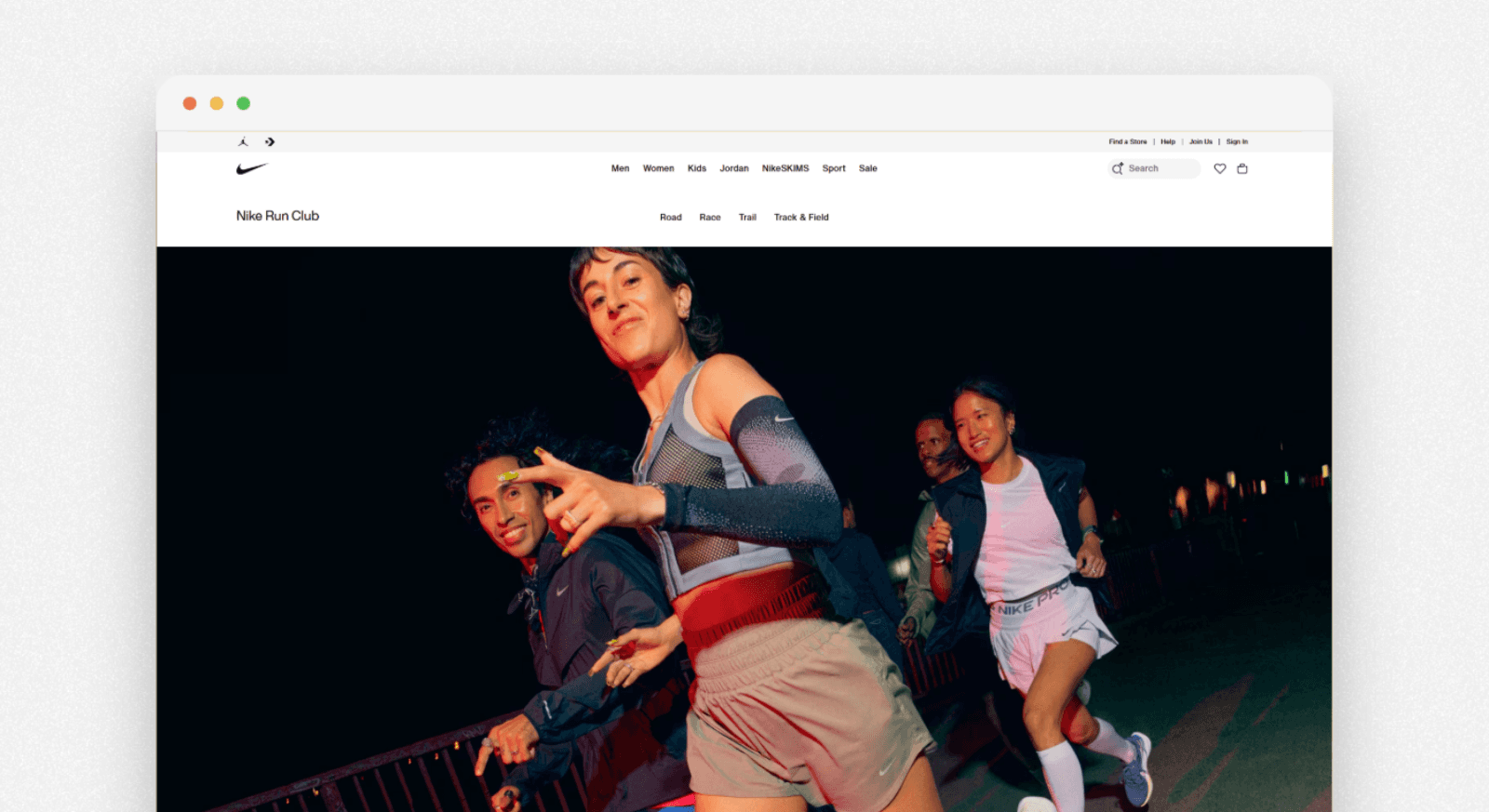
The most visible form. Recommends products based on purchase history, browsing behavior, and what similar shoppers bought. Amazon generates an estimated 35 percent of its revenue from its recommendation engine. The key variants: purchased together (cross-sell on the cart page), people also viewed (collaborative filtering on product pages), similar items (attribute-based alternatives), and recently viewed (session-based re-engagement).
2. Search personalization
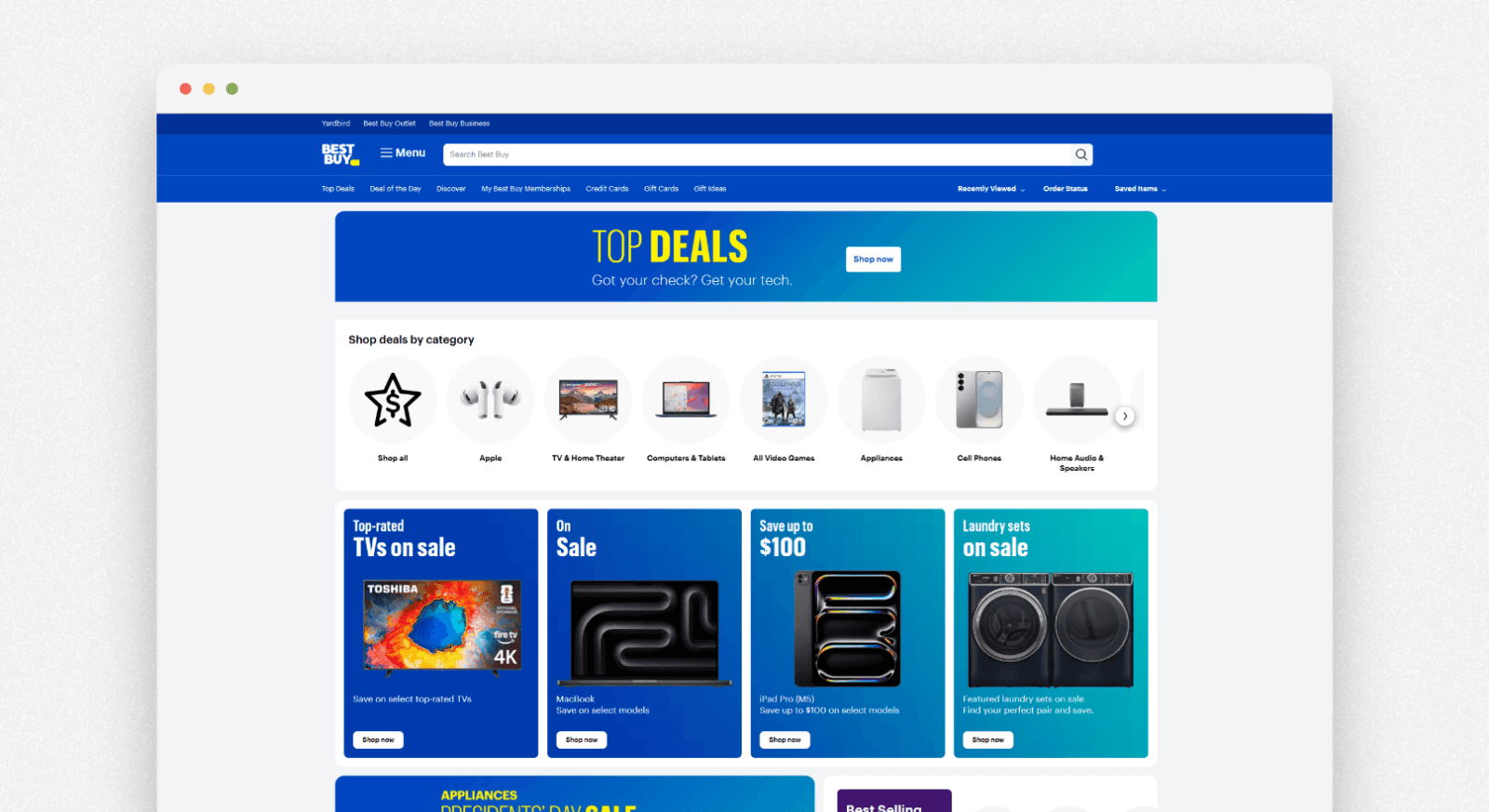
Re-ranks search results based on a shopper's known affinity rather than returning identical results for every user. A shopper who consistently buys premium products sees those ranked higher. Natural language processing handles intent-based queries rather than just keyword matching. Personalized search delivers a 1.8x higher conversion lift than keyword-only search.
3. Homepage and landing page personalization
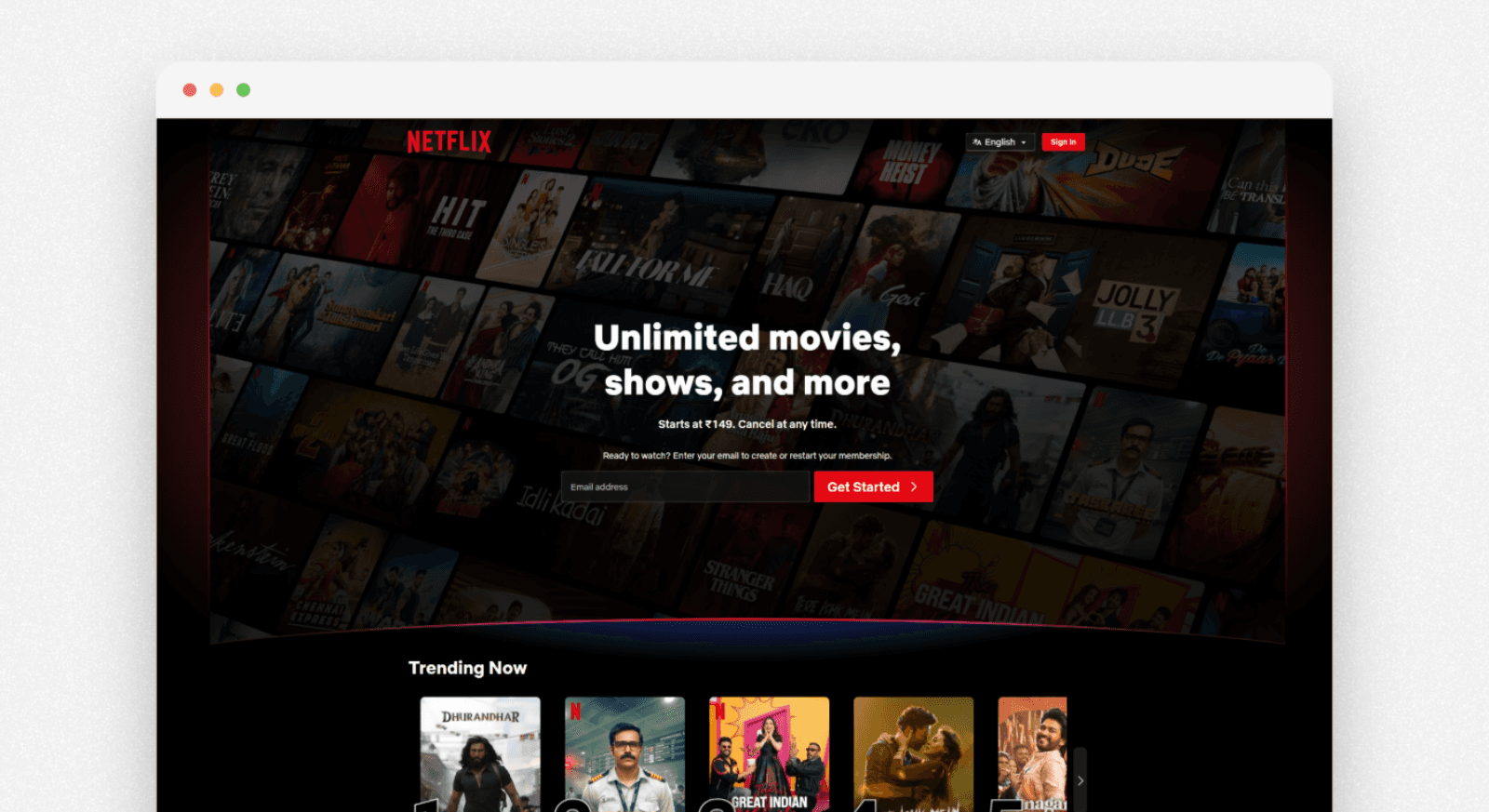
Different visitors see different hero content, featured categories, and promotional banners based on their lifecycle stage, past behavior, or acquisition source. A returning customer sees content relevant to their purchase history. A first-time visitor from a paid ad sees the category from that ad. A churned user who returns sees what has changed since their last visit.
4. Email and cross-channel personalization
Behavioral triggers replace fixed schedules. Browse abandonment emails fire when a visitor views a product and leaves without adding to cart. Post-purchase sequences use the specific item bought to generate relevant education and cross-sell content. Replenishment emails trigger based on each customer's actual consumption cycle. The result is email that feels relevant because it responds to what the customer actually did.
Why does AI e-commerce personalization matter in 2026?
Five data points explain why personalization has moved from a nice-to-have to a competitive requirement for ecommerce brands.
- 71 percent of consumers expect personalized experiences. 76 percent feel frustrated when they do not get them (McKinsey Next in Personalization 2021).
- Companies that lead on personalization generate 40 percent more revenue from those activities than the average competitor.
- Personalized search delivers a 1.8x higher conversion lift compared to keyword-based search.
- 60 percent of shoppers say they are likely to buy again after a personalized experience.
- Customer acquisition costs have risen over 40 percent in the last two years. Personalization is the only conversion lever that improves revenue without increasing ad spend.
How are leading brands using AI e-commerce personalization?
Amazon: recommendations as a revenue engine
Amazon's recommendation engine runs on collaborative filtering at scale. Every product page, cart page, and email surfaces items that similar buyers went on to purchase. The order confirmation email includes a "Customers also bought" section placed after the transactional content, at the moment of highest purchase intent, without feeling like a pitch. The result: an estimated 35 percent of Amazon's total revenue flows through its recommendation engine.
Netflix: the homepage as a personalized product
Netflix's homepage shows materially different content for every user. Thumbnails for the same title change based on viewing history. The same URL delivers a different experience to every visitor. E-commerce stores apply the same logic to hero banners, featured categories, and promotional modules.
Sephora: cross-channel continuity
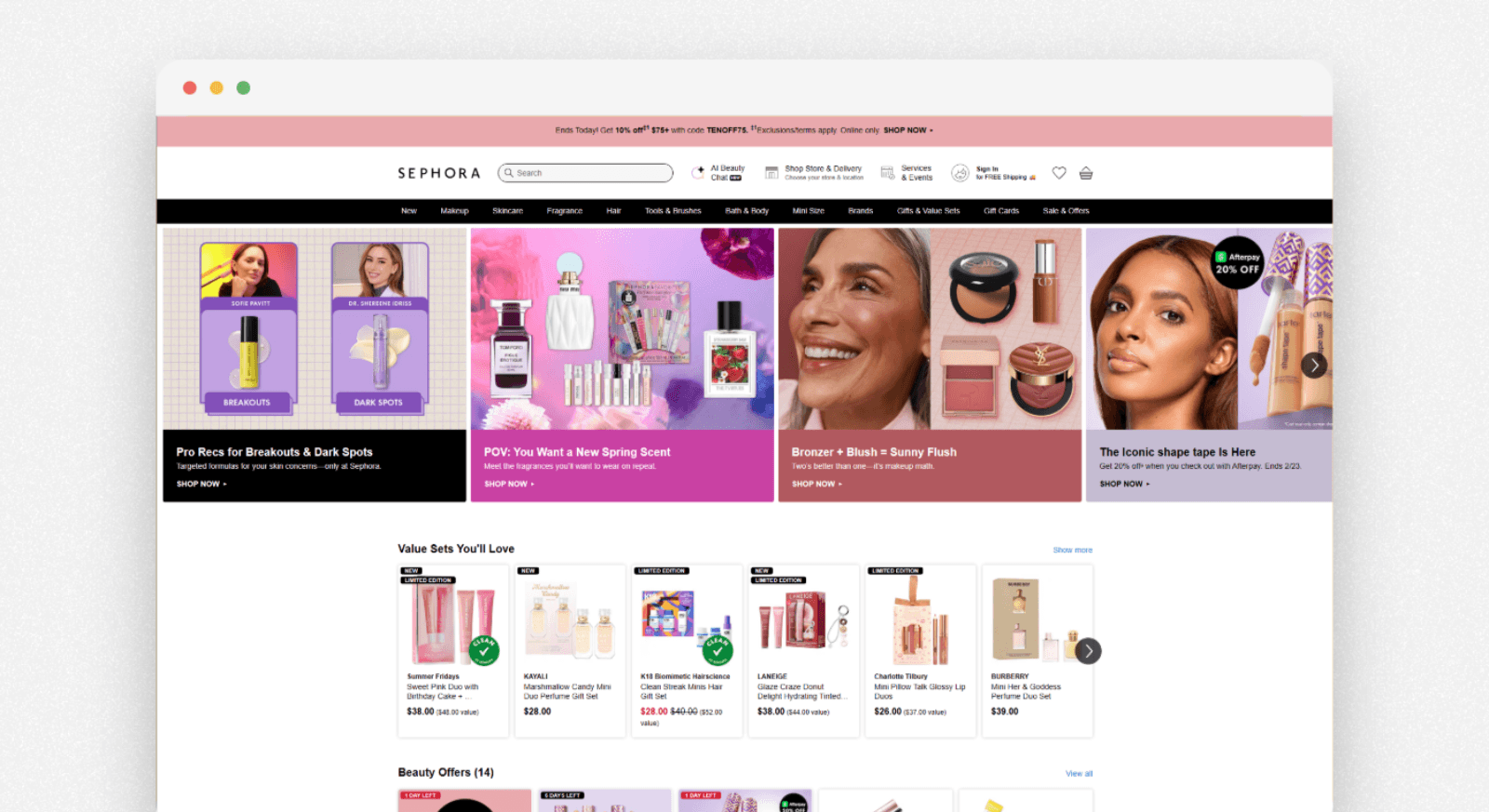
Sephora's Beauty Quiz on the mobile app updates the desktop homepage immediately. An abandoned cart email includes the exact shades from the quiz. The 40 million member Beauty Insider program accounts for 80 percent of North American sales. Every channel is aware of what happened on every other channel, a blueprint for unified customer data driving personalization across all touchpoints.
How do you measure AI e-commerce personalization?
Personalization that is not measured is decoration. These five metrics tell you whether your investment is driving real revenue.
| Metric | What it measures | Why it matters |
|---|---|---|
| Revenue Per Visitor (RPV) | Total revenue divided by total visitors | The north star. Accounts for both conversion rate and order value in one number. |
| Incremental lift | RPV of personalized group vs. 5 percent control group | Isolates the actual dollar value driven by personalization, not correlation. |
| Search-to-cart velocity | Time from search query to add-to-cart | Shorter means better AI relevance and less friction in the find. |
| Second purchase window | Days between first and second order | Shows whether personalization is shortening the repurchase cycle. |
| Return rate | Product returns as a percentage of sales | Better fit recommendations reduce returns. Each 1 percent drop directly protects margin. |
Two patterns from running personalization for real stores
Recommendation quality decays without a feedback loop. The initial deployment of a recommendation engine usually produces a lift. Six weeks later, the lift is smaller. The cause is almost always the same: the model kept optimizing on early winners past the point they were still relevant, because no one wired the "did they buy" signal back into the ranker. If recommendations are being deployed, the "did they convert" feedback is not optional.
Homepage personalization is over-invested in relative to search personalization. Homepage is high traffic but low intent. Search is lower traffic but far higher intent. The conversion lift per unit of engineering effort is materially higher on search than on the homepage, and the sequencing most teams choose is wrong.
AI e-commerce personalization is not a single feature. It is a data infrastructure that makes every surface of your store responsive to who the visitor is and what they are likely to do next. The brands winning on personalization are not spending more on traffic, they are converting more of the traffic they already have. Every percentage point improvement in conversion rate compounds across every visitor you already paid for. Connect your store to Intempt and deploy your first personalization experience. The geo-targeted offer personalization recipe is a real example of that responsive-surface infrastructure. Related reading: Post-Purchase Email Sequence - behavioral triggers to drive the second purchase. Repeat Purchase Rate - how to calculate, benchmark, and improve using RFM segmentation.
Frequently asked questions.Answered.
- AI e-commerce personalization is the use of machine learning, real-time behavioral data, and AI models to dynamically adapt the shopping experience for each individual visitor, covering product recommendations, intelligent search re-ranking, homepage content, category page ordering, and post-purchase email flows. According to McKinsey's Next in Personalization 2021 study, 71 percent of consumers expect personalized experiences and 76 percent feel frustrated when they do not get them. Companies that excel at personalization generate 40 percent more revenue than average competitors. Amazon's recommendation engine drives an estimated 35 percent of total revenue. Personalized search delivers a 1.8x conversion lift compared to keyword-only search.