You finally win the customer. The ad worked, the landing page worked, the checkout worked, and then the customer disappears. That's how most broken sales pipelines actually operate, not because of bad copy or weak ads, but because teams keep treating symptoms instead of the system.
When outbound slows, the instinct is always to push harder on the same domain. More volume, same approach. Reply rates drop below 1%, emails hit spam, and meetings dry up. Fixing deliverability first, capping sends, rotating inboxes, and timing emails by timezone gets you back in the inbox.
Then, a research agent pulling context from LinkedIn and company sites makes every message actually relevant, and replies jump from under 1% to past 12%. But conversion after the reply stays inconsistent until inbound, outbound, CRM, routing, and product signals stop living in separate systems.
The real lift comes when growth is treated as one coordinated system. That's revenue orchestration, and that's the actual fix.
What Is Revenue Orchestration in 2026?
Revenue orchestration in 2026 is the shift from channel-based growth to coordinated systems. It unifies buyer signals, seller actions, and lifecycle logic into one operating layer.
Instead of managing disconnected tools, teams are moving toward integrated revenue platforms that connect marketing engagement, sales activity, forecasting, and customer data into a single workflow. Gartner has formalized this category under Revenue Action Orchestration, describing it as technology that uses AI to connect signals across the revenue lifecycle and recommend next best actions across teams.
That definition matters because it reflects the shift happening in B2B pipeline generation. Growth is no longer about running better sequences. It's about coordinating signals, timing, routing, and suppression in one system so revenue teams act on context, not guesswork.
1. From Channel-Based Growth to Coordinated Systems
Outbound isn't broken. Outbound in isolation is broken.
Buyers don't move linearly anymore. They click an email, visit your site, share it internally, sign up on their own, and sometimes pay without ever taking a meeting.
If your outbound system can't see that, it keeps sending messages it shouldn't.
That's how you create spam complaints, low-quality meetings, and brand damage. You also miss the highest-leverage moment: when inbound behavior confirms timing and intent.
2. The Unified Signal Layer
A modern pipeline system treats replies, clicks, return visits, demo bookings, and product activity as one unified signal layer.
It doesn't ask, "Did they open?" It asks, "Are they ready?"
The shift is subtle but powerful. Instead of generating reports about past engagement, the system connects buyer signals with immediate next actions. It translates behavior into decisions, so teams respond to real intent in real time rather than operating on static lists and delayed updates.
3. Fit + Activity as the Sales Readiness Model
Sales readiness in 2026 is simple: Fit plus Activity.
Fit tells you who they are. Activity tells you what they're doing right now.
Lead scoring best practices consistently separate demographic fit from behavioral engagement because deals close when both align.
Why Traditional B2B Pipeline Generation Breaks?

Most pipeline strategies don't fail because of bad effort. They fail because they're built on disconnected motion.
Marketing runs campaigns. Sales runs sequences. Product tracks usage. None of them shares real-time context.
When growth is managed as separate channels instead of a coordinated system, friction compounds quietly. You don't notice it in open rates. You notice it when reply rates collapse, meetings feel unqualified, and customers get messaged after they've already converted.
That's where traditional B2B pipeline generation breaks.
1. Volume-Based Outbound Burns Deliverability
Mailbox providers reward consistency, not spikes.
If you rapidly increase volume from one domain, you damage the sender's reputation. Domain warm-up best practices recommend gradual increases and controlled ramping specifically to protect deliverability.
Volume without discipline kills access.
2. Personalization Without System Coordination
Personalization can lift replies. It doesn't guarantee revenue.
If someone replies, visits pricing, or signs up, and your outbound keeps running blindly, you break context. The conversation resets instead of progressing.
Reply rate is not pipeline.
3. Fragmented Systems Create Brand Damage
We've seen this firsthand. A teammate signed up and paid for a product. A day later, an SDR from that same company was prospecting them to "try the platform."
That's not a rep problem. That's a system problem.
If CRM, outbound, and product signals lived in one layer, suppression rules would have fired automatically. Context would've been shared. The brand would've been protected.
Core Pillars of Revenue Orchestration

Revenue orchestration only works when the foundation is operational, not theoretical. These pillars are not tactics you layer on top. They are system rules that prevent leakage, protect brand equity, and turn signals into revenue movement.
1. Deliverability Discipline
When the team we worked with increased volume too fast on one domain, deliverability collapsed, and reply rates fell under 1%. The fix wasn't better copy. It was controlled sending. We reduced daily sends, ramped gradually, and enforced smart limits so no prospect was hit repeatedly.
Deliverability is infrastructure. Not a tactic. If you lose inbox access, nothing else matters.
2. Context-Driven Personalization
One meaningful line beats ten generic ones.
The research agent we deployed pulled context from LinkedIn, company websites, and public signals. It added one relevant insight per prospect. Reply rate jumped past 12%.
But the real win wasn't creativity. It was proof of relevance. When outreach reflects real context, it earns attention instead of demanding it.
3. Unified Signal Sync
Inbound visits. Demo bookings. Product events. Replies.
They must update one profile in real time.
If someone visits your site twice, checks pricing, or books a demo, outbound should immediately know. Without unified signals, systems continue blindly. That's how you create awkward overlaps and unnecessary touches.
A coordinated signal layer ensures every action updates the same source of truth.
4. Sales Readiness Scoring
Fit + Activity becomes your operating filter.
Fit tells you whether the account matches your ICP. Activity tells you whether the timing is right. When both align, readiness is real.
Reps don't chase everyone. They focus on "why now." That reduces wasted effort and increases meeting quality.
5. Predictive Routing and Exit Rules
Predictive routing decides who acts. Exit Rules decide who stops.
When someone replies, converts, or becomes a customer, sequences must pause automatically. When high intent shows up, the right rep must get notified instantly.
Without Exit Rules, you prospect existing customers. Without predictive routing, you lose momentum.
Both are non-negotiable in a coordinated revenue system.
High Impact Use Cases of Revenue Orchestration

1. Intent-Driven Outbound Sequences
Outbound should not run blindly based on static schedules.
Increasing volume without coordination damages deliverability. Even when reply rates improve through personalization, the deeper issue is timing and system alignment.
Revenue orchestration ensures outreach happens when intent is visible. If someone clicks an email, visits the site, returns, or shows repeat behavior, that activity influences when and how outreach continues.
The sequence adapts to signals. It does not operate in isolation.
2. Real-Time Inbound to Outbound Sync
One of the biggest failures in traditional outbound is continuing to message prospects who have already taken meaningful action.
When inbound behavior is connected to outbound motion, the system reacts instantly. If someone visits the site, returns multiple times, or books a demo, that activity is recognized in real time.
The system identifies the account, routes it to the right rep, and stops outbound from continuing blindly.
This prevents awkward overlaps, duplicate messaging, and unnecessary brand damage.
3. Product-Led Qualification
A modern pipeline system treats product activity as part of the same signal layer as replies and clicks.
Buyers may click an email, explore the product, invite teammates, hit usage milestones, or sign up independently.
Revenue orchestration captures these behaviors and treats them as intent signals. Instead of relying only on replies, readiness is determined by what someone is doing inside the product.
4. Dynamic Journey Branching
Buyers do not move in straight lines. They click, visit, share internally, return, and sometimes convert without ever taking a meeting.
Revenue orchestration allows journeys to adjust based on that behavior. If engagement increases, routing accelerates. If intent strengthens, reps are notified. If activity drops, outreach slows down or adjusts.
The system responds to signals, not calendar dates.
5. Sales-Ready Segmentation
Sales readiness in 2026 is defined by Fit plus Activity.
Revenue orchestration turns this into living segments such as High Fit + High Activity and High Fit + Medium Activity.
These segments update automatically as behavior changes. Instead of working static lists or prioritizing based on reply volume alone, reps focus on accounts that show both strong ICP alignment and real, current intent.
How to Get Started with Intempt?
You've already seen the core logic: signals, readiness, routing, and measurement.
Now the real question is this. Can you operationalize that without building a messy stack where outbound lives in one tool, inbound in another, product data somewhere else, and reporting in spreadsheets?
You can implement revenue orchestration with Intempt by treating pipeline generation like a system:
- Track events that define intent and stage movement.
- Train a model on what "sales ready" actually looks like.
- Build dynamic segments based on Fit plus Activity.
- Launch journeys tied to real signals, not arbitrary timelines.
- Measure progression and continuously tighten the loop.
Step 1: Define and Track Goal Events
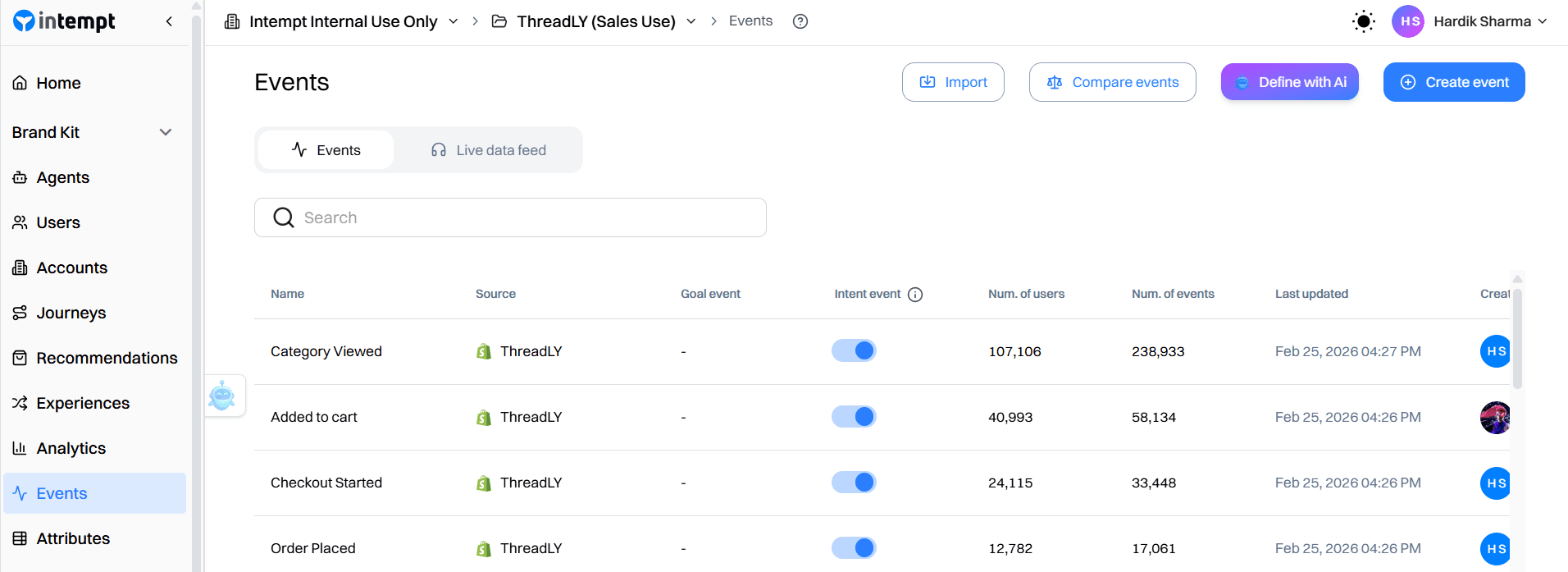
Check or define key Events to confirm the following are tracked: 'added to cart', 'clicked on product', 'started checkout'. Create new events if any are not readily available from 'create event'.
Step 2: Bring in Leads and Add Only Useful Context
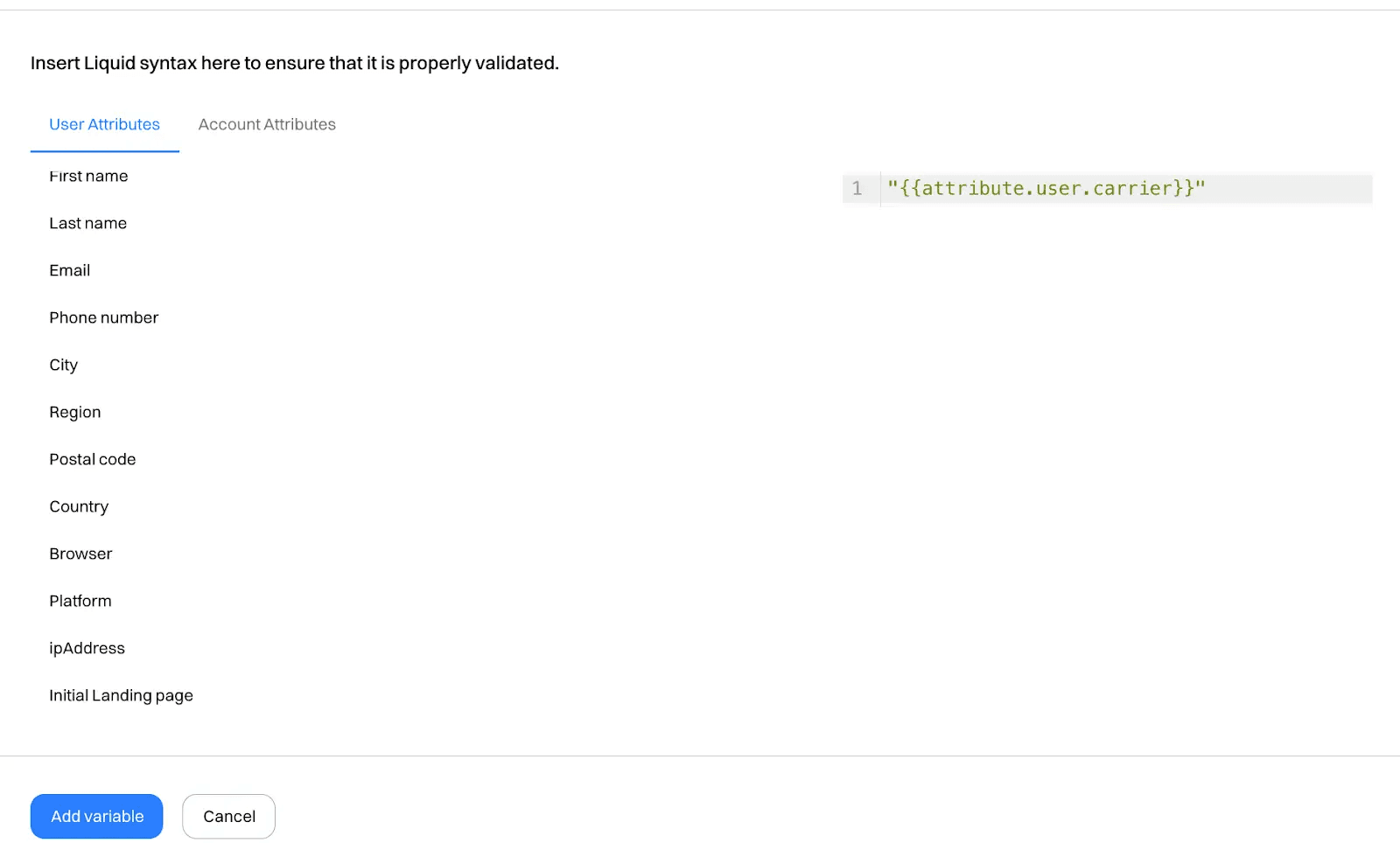
Import users/accounts from your list or connected sources. Use a Research Agent to enrich the few fields that change how you write or route (role, seniority, tech stack, industry). If contact details are missing, fill just what you need for the first touch.
Step 3: Define "Ready" with Fit + Activity

Create a Qualification Agent that scores Sales Readiness using Fit (firmographics and ICP traits such as company size, industry, and stack match) and Activity (recent, high-signal behavior such as viewed pricing, invited teammates, or hit usage thresholds).
Step 4: Build Sales-Ready Segments
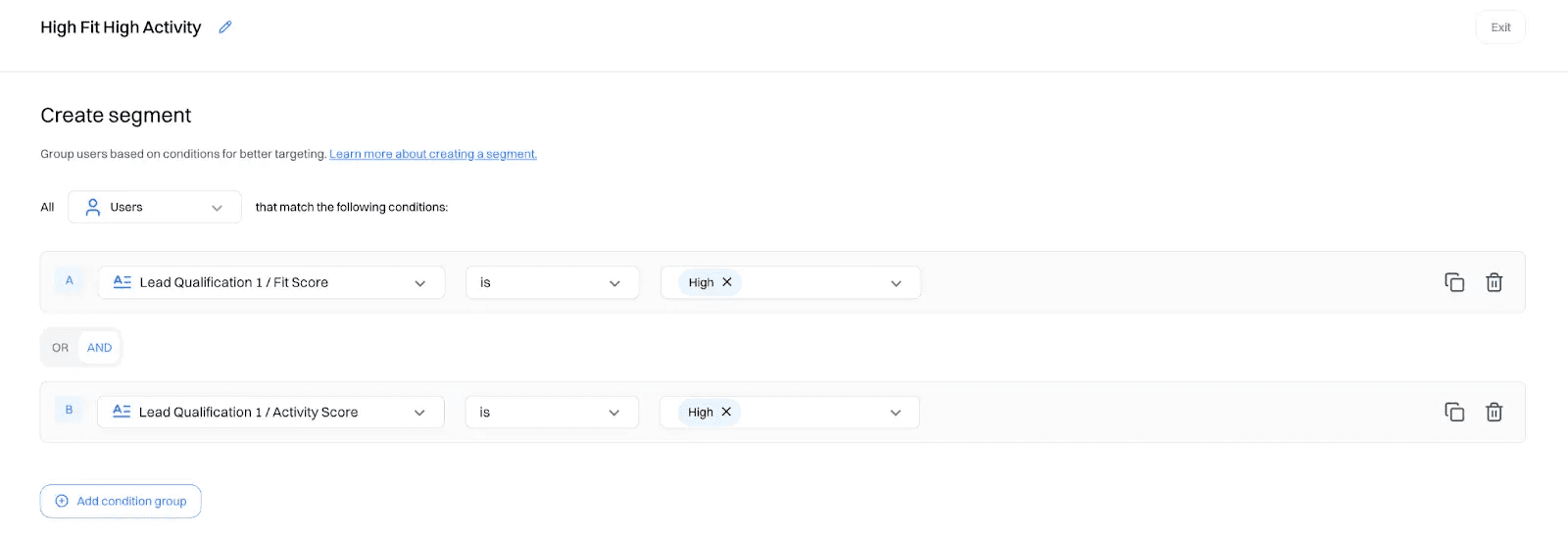
Create segments like 'High Fit + High Activity' and 'High Fit + Medium Activity'.
Step 5: Turn Signals into Outreach with Journeys

Launch a Journey for your top segment. Keep it short: two or three steps with natural spacing. Branch on behavior: if they engage, move them forward; if they don't, slow down or re-score.
Use Smart Snippets to pull research fields into the message. Notify the human with lightweight alerts on replies or meeting bookings.
Step 6: Measure and Tighten the Loop
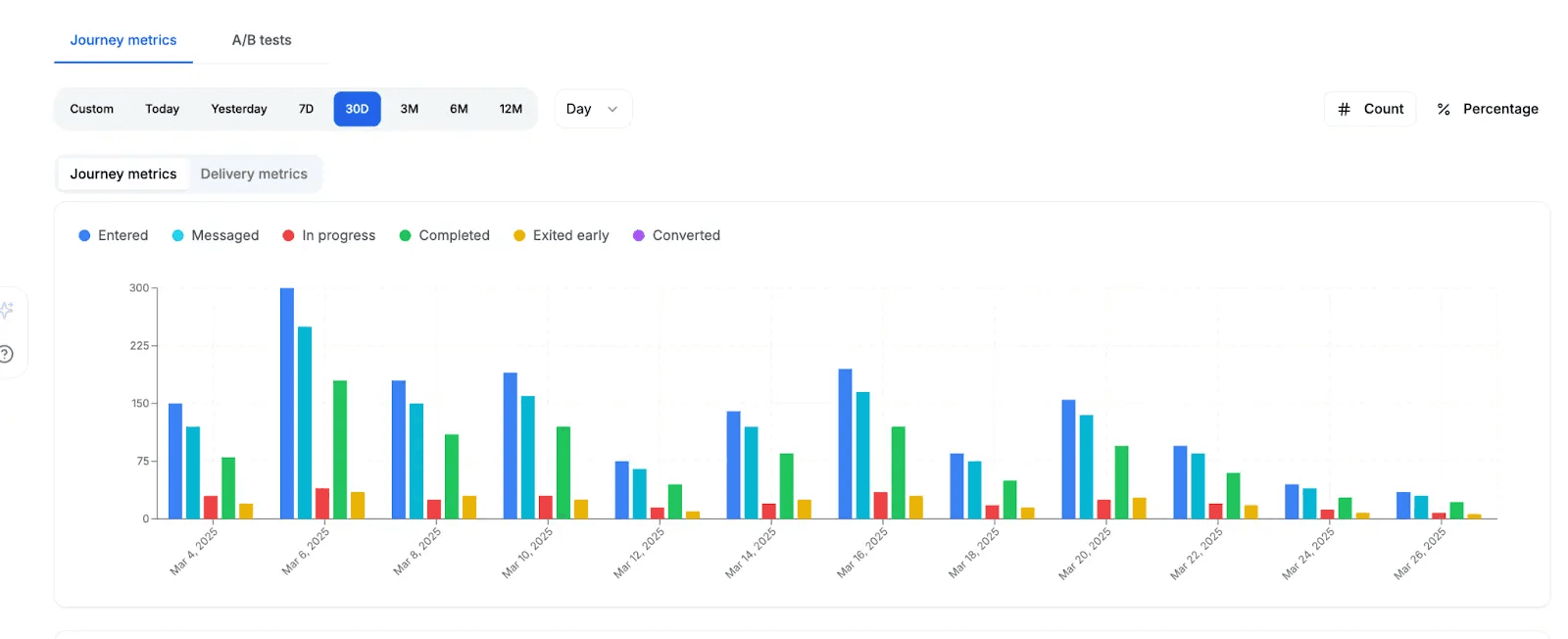
In Journey Analytics and Dashboards, look at replies, meetings created, cycle time, and opportunities or wins by readiness level.
Notice which signals show up most often before a meeting. Adjust your Agent weights or segment rules accordingly.
Bottom Line
Revenue orchestration wins when your job is to generate a qualified B2B pipeline without damaging deliverability, overwhelming reps, or confusing prospects.
Choose it when you have inbound signals, outbound motion, and product data, but no unified layer connecting them.
The lift does not come from better copy. It comes from coordination.
TL;DR
- Revenue orchestration aligns outbound, inbound, product signals, and routing into one coordinated system instead of isolated channels.
- In 2026, winning teams rely on unified signal layers, Fit plus Activity readiness scoring, intelligent suppression, and dynamic journey branching.
- The biggest pipeline gains usually come from fixing deliverability discipline and synchronizing inbound behavior with outbound motion.
- Reply rate alone doesn't equal revenue. Conversion after reply depends on routing, context sharing, and system coordination.
- Intent-driven outreach outperforms volume-driven outreach because timing beats frequency.
- Measuring stage progression and revenue impact matters more than tracking email volume or open rates.
- Revenue orchestration reduces wasted touches, protects brand equity, and increases pipeline efficiency without increasing send volume.
- If your outbound, inbound, and product data don't update one shared profile in real time, you don't have revenue orchestration yet.
Frequently asked questions. Answered.
Because reply rate is not revenue. If inbound activity, routing, CRM updates, and suppression rules don't sync, conversations stall after the first response. Intempt connects replies, site visits, and product signals into one profile so follow-up, routing, and next actions happen with full context instead of guesswork.
It's the coordination of outbound, inbound, CRM, and product signals into one system. Instead of running separate campaigns, you connect signals to actions so timing, routing, and suppression work together.
Yes, but only when it's signal-driven. Volume-based outbound burns reputation and attention. Intent-driven outbound creates conversations that feel timely and relevant.
Unify CRM and product signals with suppression rules. If someone converts or becomes a customer, outreach must stop immediately. Intempt keeps one source of truth so customer status updates suppress outbound automatically.
Running channels in isolation. Outbound, inbound, and product signals must coordinate. When they don't, you create duplicate touches, confused prospects, and missed intent windows.
Use Fit plus Activity. Fit tells you if they match your ICP. Activity tells you if timing is real. Intempt's Qualification Agent scores readiness using both, so reps focus on accounts that have both profile alignment and live intent.

About the author
Hardik Sharma
Growth Marketer
Hardik researches and writes about marketing tools, sales technology, and customer engagement platforms. His work helps teams evaluate software with honest feature and pricing breakdowns.
LinkedIn
.png&w=3000&q=75)