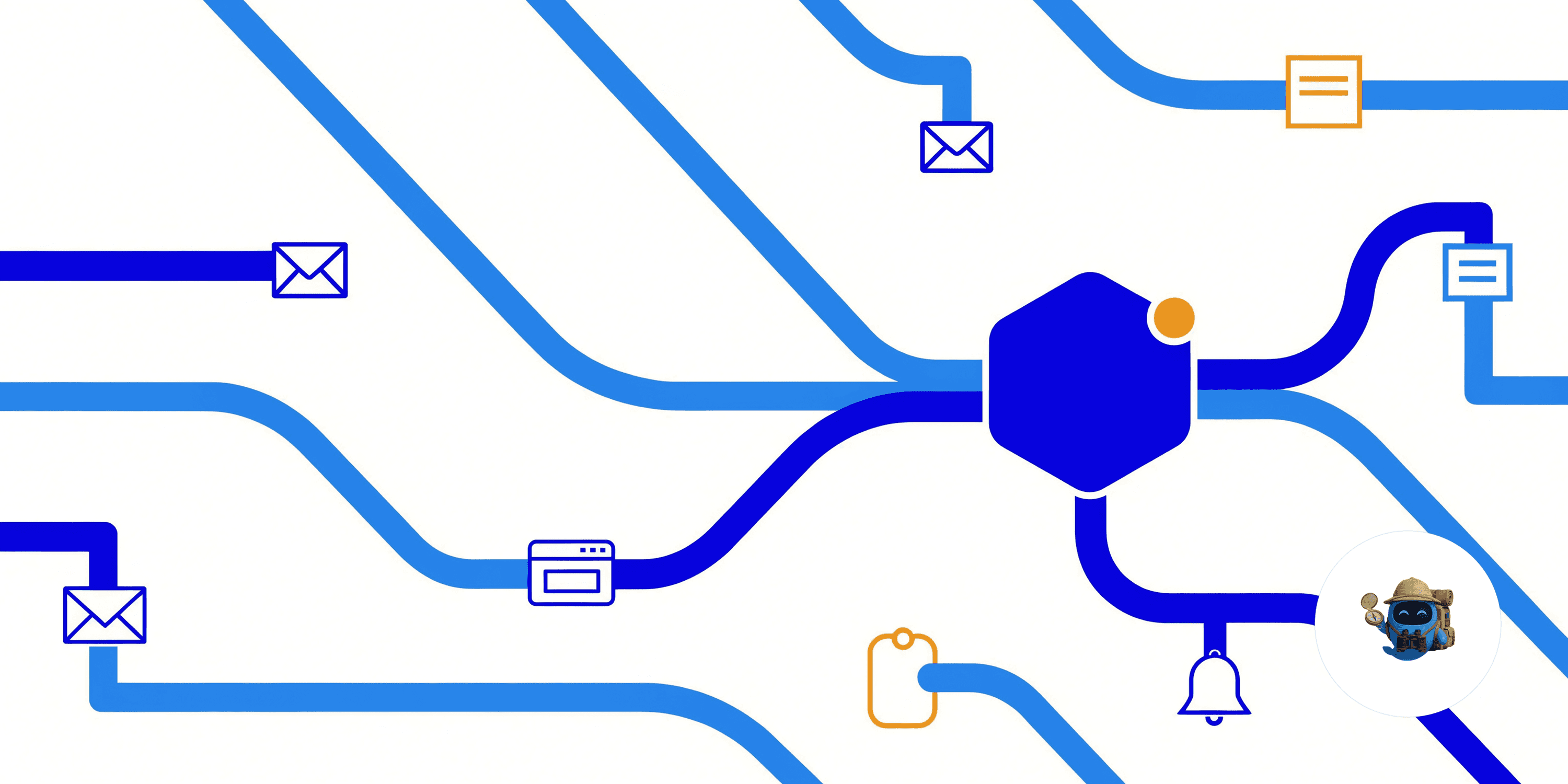
Your customer journey orchestration strategy is working in silos. The welcome email fires. The retargeting ad runs. The in-app message triggers. But none of those touchpoints know what the others are doing. So the same customer gets a 'We miss you' email one hour after purchasing. Or a cold sales outreach three days into onboarding. Or a cart abandonment SMS for a product they already bought.
That's not a people problem. That's a systems problem. The brands that get this right don't just run better campaigns. They build a coordinated operating layer that reads customer behavior in real time and responds with the right message, on the right channel, at exactly the right moment. The global customer journey orchestration market is forecast to grow from $12.4 billion in 2024 to $88.5 billion by 2034.
What Is Customer Journey Orchestration?
Most marketing systems are built around when you want to talk to customers, not when customers are actually ready to hear from you. That gap is where you lose them.
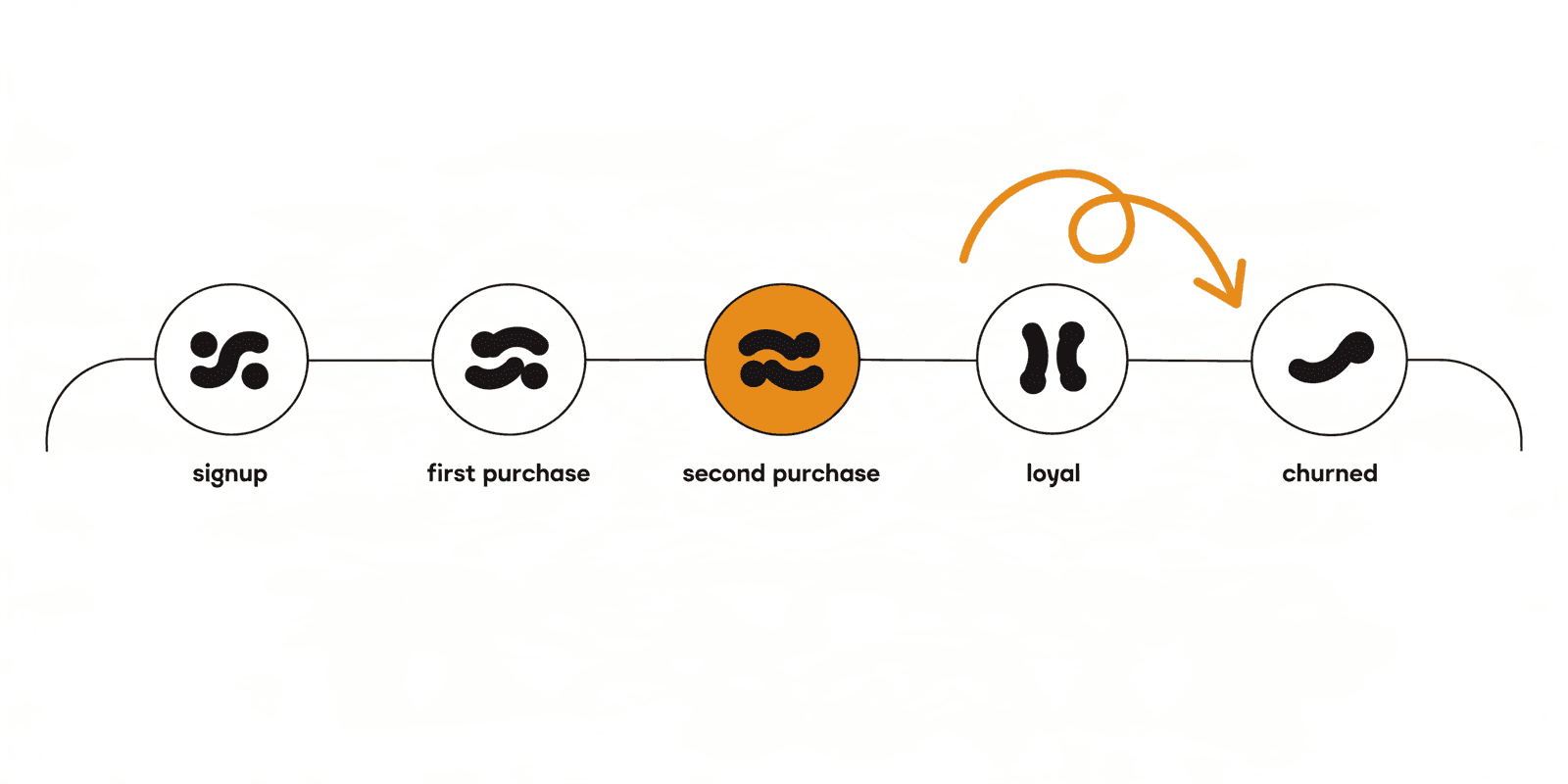
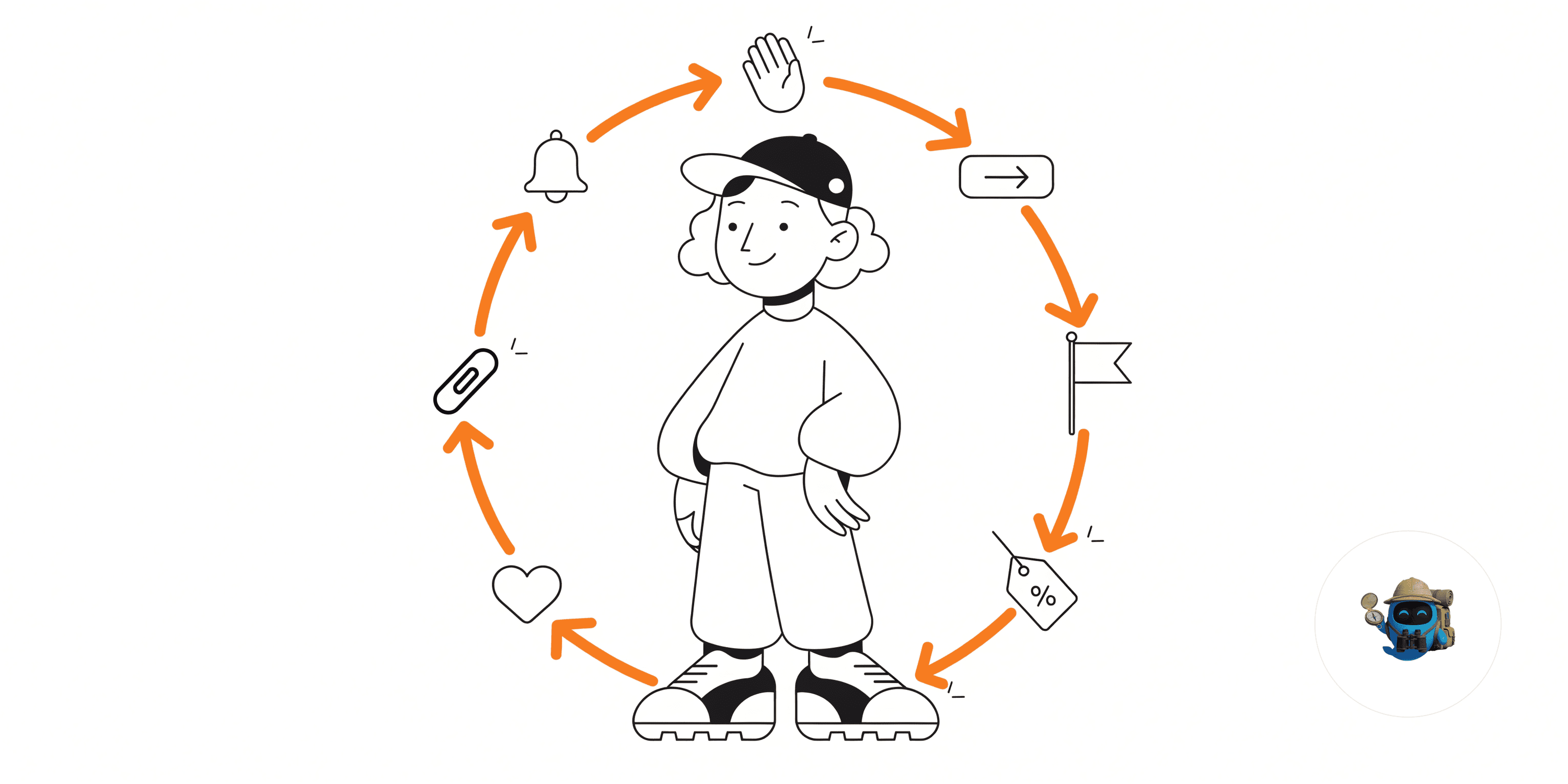
Customer journey orchestration is the practice of coordinating every interaction across channels and lifecycle stages using real-time data and automated decision logic. Instead of sending campaigns on a schedule, you respond to what customers actually do: when they visit, what they click, where they drop off, and what signals indicate they are ready to move forward.
The difference between traditional campaign management and customer journey orchestration is the engine running underneath. Campaign management is a push - you decide what message goes out, to which list, on which day. Orchestration is pull - customer behavior automatically triggers the next action, and the system suppresses messages that no longer apply.
Why Static Journey Strategies Break
Your team doesn't fail at customer journey orchestration because of bad creative or the wrong tools. They fail because the organization was never designed to do it.
1. The Organization Is the Bottleneck
OKRs at most companies point toward acquisition: MQLs, demo requests, trial starts, and new ARR. Expansion revenue and retention metrics sit with Account Management or Customer Success. Marketing's job, in most org designs, ends at the handoff. The gap between those three teams is where expansion revenue dies quietly every quarter.
2. Journeys Run on Stale Segments
Static lists age fast. A segment you built last Tuesday based on last month's behavior no longer reflects what that customer did this morning. They converted, churned, upgraded, or went cold. But your campaign doesn't know that. It keeps firing messages into a void, or worse, at customers who've already taken the action you're pushing them toward.
3. Channels Don't Talk to Each Other
Email says one thing. SMS says another. The in-app message fires regardless of what happened in email. When channels run independently, customers experience a fragmented, repetitive mess. This is why 65% of senior marketing leaders report adopting journey tools but only use 43% of available capabilities.
4. No Exit Rules, No Suppression
When someone converts, they should immediately exit the funnel pushing them to convert. Without automated suppression rules tied to real-time behavioral data, your onboarding journey and your acquisition campaign run simultaneously. You prospect existing customers. You welcome people who've been active for 60 days.
5. Rules-Based Logic Can't Scale
Manual if-then journey rules work for three segments. They collapse at thirty. Every new product, channel, or persona requires someone to manually build and maintain new rules. AI-powered customer journey orchestration replaces brittle rule trees with adaptive decisioning that updates based on actual customer behavior.
Customer Journey Orchestration vs. Customer Journey Mapping
Customer journey mapping is a research and alignment tool. Customer journey orchestration is an execution system. Confusing the two leads teams to invest heavily in beautiful journey maps that never translate into coordinated customer experiences.
| Dimension | Customer Journey Mapping | Customer Journey Orchestration |
|---|---|---|
| Purpose | Visualize and understand the customer experience | Automate and coordinate cross-channel interactions |
| Output | Static diagram or document | Live, triggered workflows and journeys |
| Data | Qualitative research, interviews, surveys | Real-time behavioral data and event streams |
| Timing | Point-in-time exercise | Always-on, continuously updating |
| Personalization | Persona-level assumptions | Individual-level behavior |
| Channel awareness | Describes channels | Coordinates across channels simultaneously |
| Decision-making | Human-reviewed | Automated, rules + AI-driven |
| Scalability | Limited by team bandwidth | Scales with data volume |
Why Customer Journey Orchestration Matters
Customers do not experience your marketing by channel. They experience your brand as one continuous interaction. When that interaction feels disjointed, they leave without telling you why.
Cart abandonment alone represents approximately $4.6 trillion in lost revenue annually, with a global average abandonment rate of 70.19%. Recovering even 10 to 20% of those carts requires a coordinated, real-time response across email, SMS, and push. Customers engaged through consistent, personalized experiences are 1.8 times more likely to pay a premium and 2.3 times more likely to complete a purchase confidently, according to a 2024 Gartner survey.
Where Most Teams Actually Stand
Most teams rate themselves at Level 2 or 3 on lifecycle maturity. Most are at Level 1.
| Level | Name | What It Looks Like | Est. % of Market |
|---|---|---|---|
| 0 | Silent | Customer converts. Silence. | ~30% |
| 1 | Scripted | 14-day email drip, then nothing | ~40% |
| 2 | Triggered | Event-triggered flows exist, built manually in siloed tools | ~20% |
| 3 | Unified | CDP-powered, cross-channel, but every campaign still requires a human to build | ~8% |
| 4 | Agentic | Unified profile + AI agents that generate content, construct journeys, and fire campaigns autonomously | <2% |
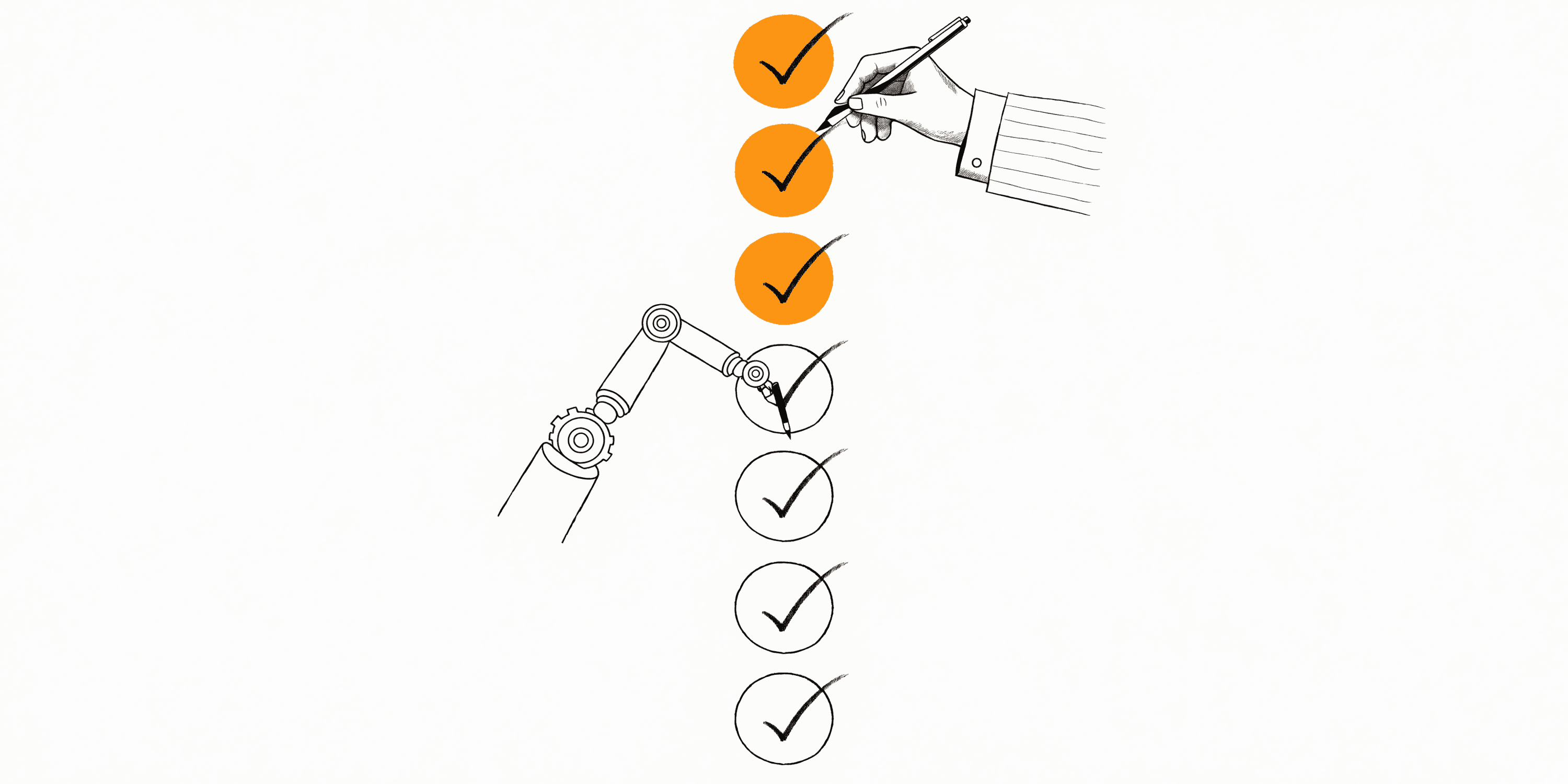
The transition from Level 3 to Level 4 is the real category break. At Level 3, you have unified data, but the human is still the bottleneck. At Level 4, AI collapses those six steps (interpret signal, decide action, write content, build workflow, configure targeting, measure result) into one.
Examples of Customer Journey Orchestration
1. Welcome Journey for New Customers
A welcome journey does more than send a 'thanks for signing up' email. Done right, it identifies what type of customer just joined, what they've done in their first session, and delivers a personalized onboarding sequence that matches where they are.

Real-world example: ProdPad rebuilt its welcome journey by segmenting new users based on activity signals rather than sending the same onboarding sequence to everyone. Users who connected their first integration received a different path than users who hadn't yet. The result: a 100% increase in conversion rate from trial to paid, achieved purely through behavioral segmentation in the onboarding journey.
2. Abandoned Cart Recovery
Cart abandonment is not a customer intent problem. Most customers who abandoned had genuine purchase intent. A coordinated cart recovery journey uses real-time behavioral triggers to sequence messages across email, SMS, and push, with escalating personalization based on what the customer browsed.
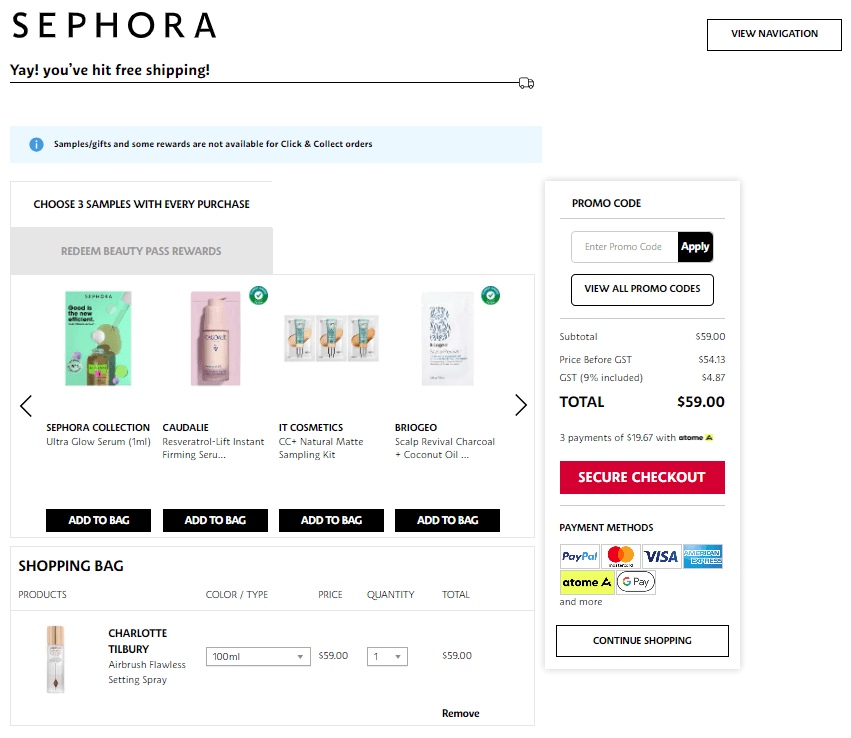
Real-world example: Sephora's investment in omnichannel customer journey orchestration drove their revenue from $4 billion to $6 billion between 2017 and 2019 - a 50% increase directly attributed to their omnichannel CJO investment. Their AI personalizes recommendations and recovery flows using skin type, purchase history, and real-time browsing behavior.
3. Proactive Customer Support
Reactive support is expensive. A customer who hits a wall, can't figure something out, and opens a ticket costs more to resolve than one you caught before they got frustrated. Proactive customer support uses real-time behavioral signals to identify customers heading toward friction and intercepts them before they need to reach out.
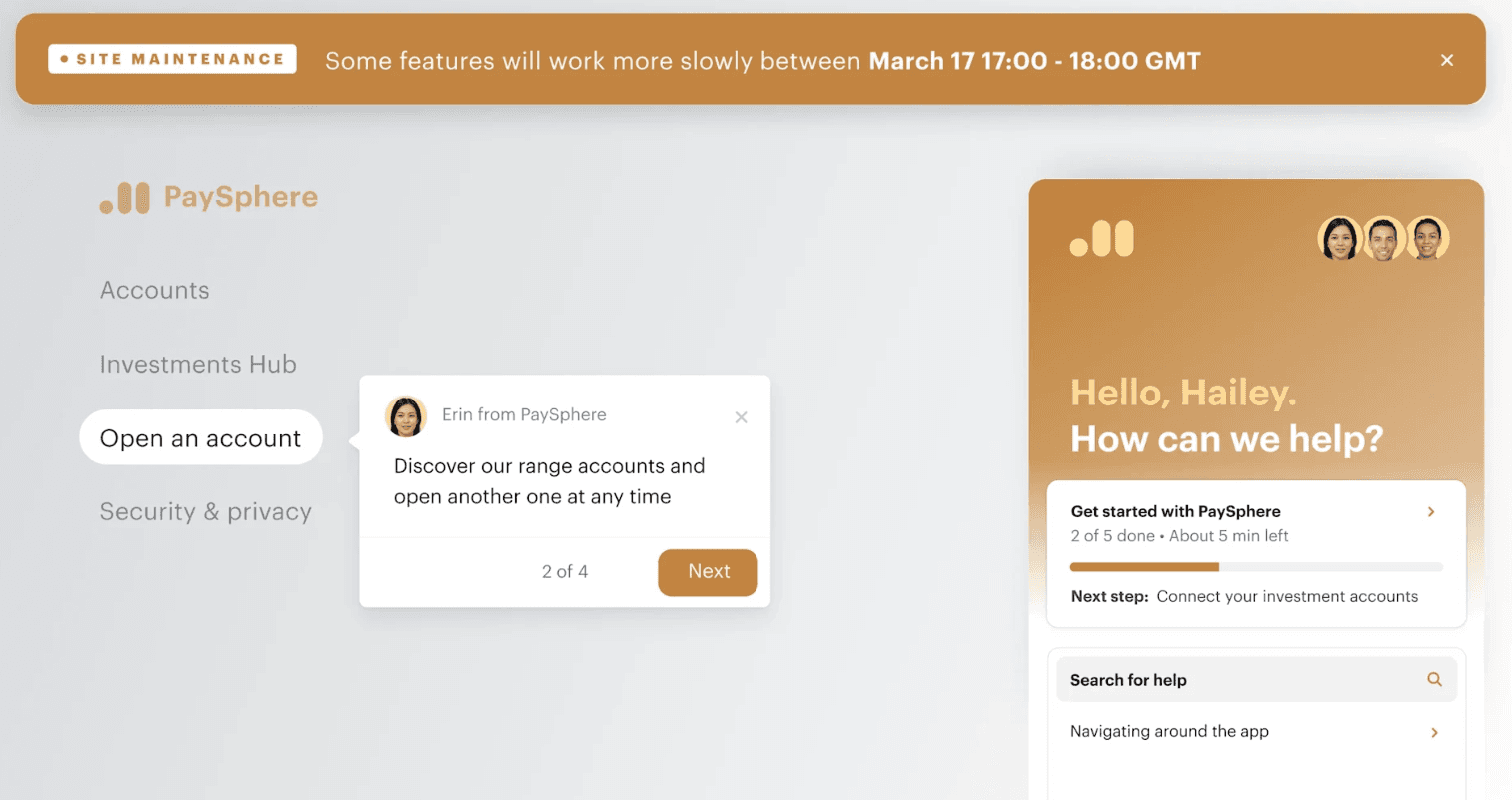
Real-world example: Intercom uses its own platform to deploy proactive in-app messages triggered by friction signals. When behavioral data shows a user has repeatedly visited the same help article or stalled at a key onboarding milestone, an automated message triggers with context-specific help. AI reduces average cost per interaction by 68%, from $4.60 down to $1.45.
4. Personalized Product Recommendations
Generic product recommendations convert at commodity rates. The real opportunity is in recommendations that account for what a customer browsed this session, what they've purchased in the past, what they explicitly said they prefer, and what contextual signals indicate about their current intent.
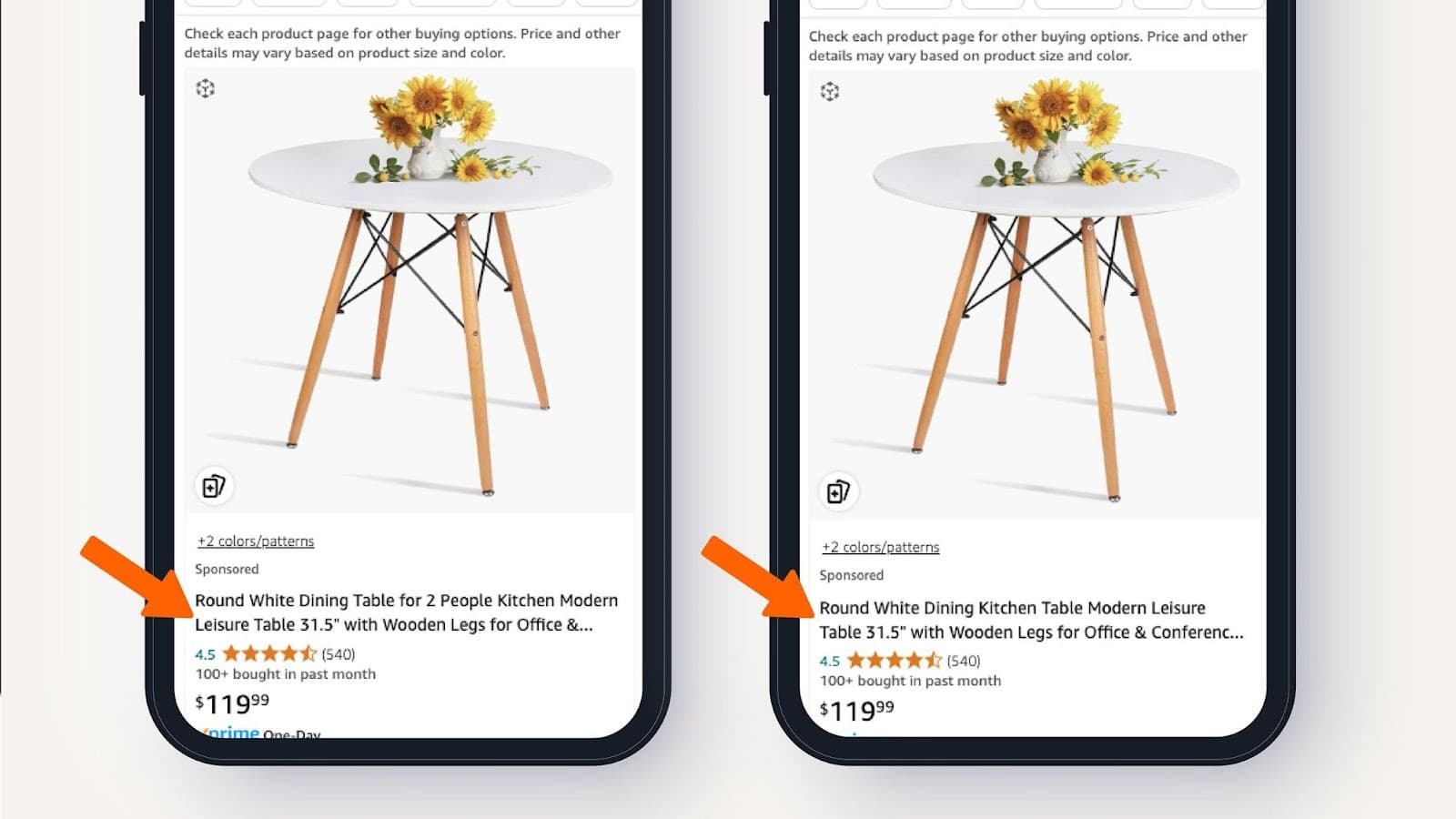
Real-world example: Amazon generates 35% of its total revenue from AI-powered recommendation engines. Amazon's recommendation layer reads browsing behavior, purchase history, cart additions, search queries, and time-on-product-page signals to surface what each individual customer is most likely to buy next - across homepage, product pages, emails, and push notifications.
5. Loyalty Programs
Orchestrated loyalty programs use purchase history, engagement signals, and predictive data to deliver personalized offers, exclusive access, and recognition at moments that actually matter to individual members.
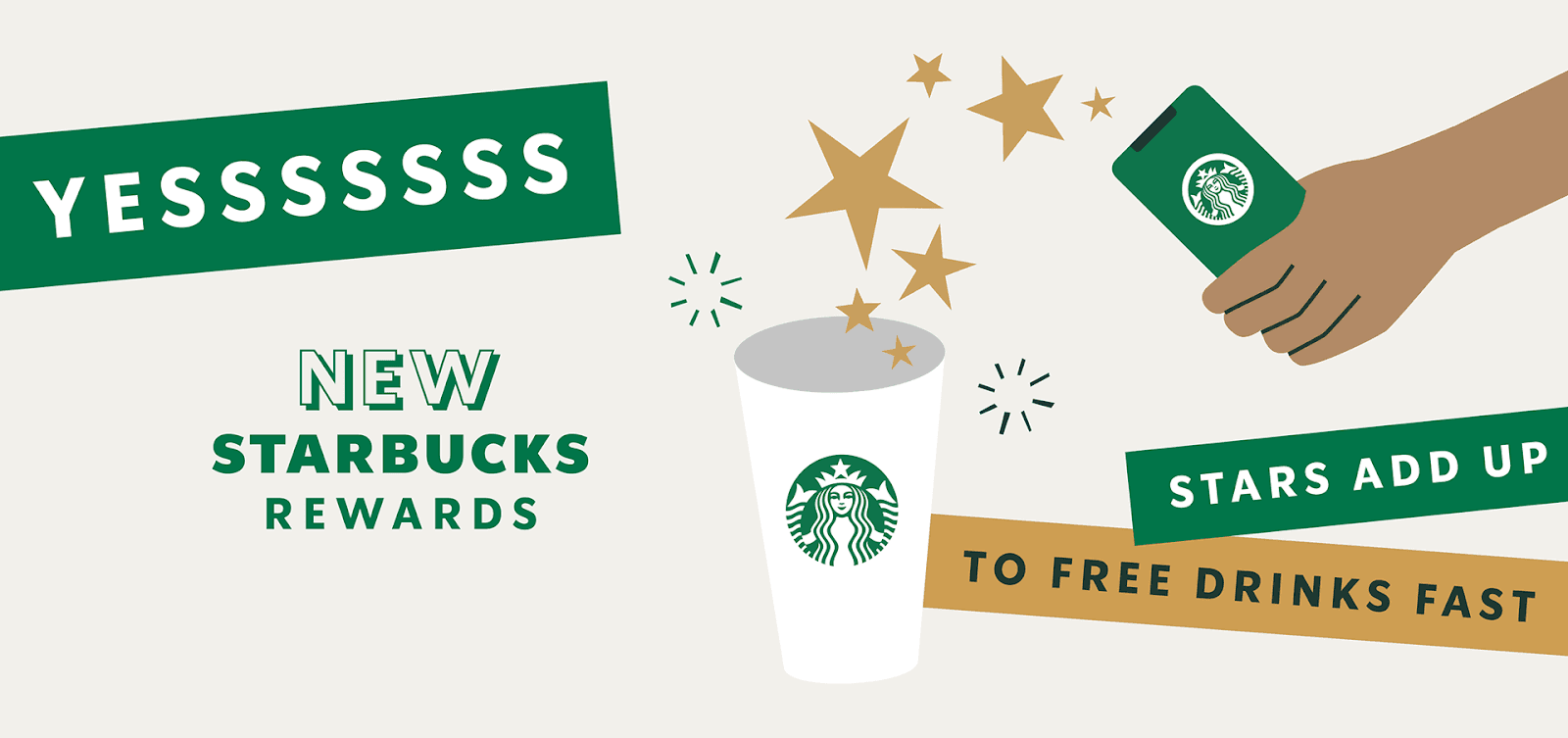
Real-world example: Starbucks operates one of the most sophisticated loyalty orchestration systems in retail. Their Deep Brew AI engine personalizes offers using weather, time of day, and individual purchase history. The results: 34.6 million active U.S. Rewards members as of Q1 2025, growing at 13% year over year. Loyalty members account for 57% of Starbucks U.S. sales.
AI-Powered Customer Journey Orchestration with Intempt
Turning a behavioral signal into a coordinated campaign previously required six manual steps: interpret the signal, decide the action, write the content, build the workflow, configure the targeting, measure the result. Six steps, each requiring different skills, often different tools, sometimes different teams.
Intempt changes the economics of this. It's the only platform where the customer profile and the execution layer are the same system. The unified profile - built from product behavior, CRM data, web engagement, and purchase history - is not a data layer that feeds a separate automation tool. It is the execution layer.

Step 1: Connect Your Data Sources
Connect your data sources and define the events that represent meaningful customer actions. Intempt ingests these through native integrations (Shopify, Stripe, HubSpot) and its SDK.
- Acquisition and signup: page_viewed, signup_started, signup_completed, referral_clicked
- Onboarding: onboarding_step_completed, feature_first_used, invite_sent, integration_connected
- Engagement: session_started, product_viewed, search_performed, feature_used, help_article_viewed
- Revenue: cart_added, checkout_started, purchase_made, subscription_upgraded, subscription_renewed
- Churn and friction signals: cart_abandoned, session_frequency_drop, help_article_viewed (3+), cancel_initiated
Step 2: Build Your Real-Time Customer Segments
Go to Segments and build the audience for each journey you want to run. Intempt segments update in real time off the live event stream with the help of AI-powered RFM segmentation. The moment a customer's behavior changes, they move automatically into or out of a segment.
Step 3: Map Your Journey Touchpoints and Channels
Go to Journeys and define the trigger, channel sequence, and timing for each journey. For each journey, define: entry trigger, channel sequence, wait conditions, and exit rules. The moment a customer converts, every downstream step is automatically suppressed.
Step 4: Set Up Personalized Experiments per Segment
Personalized experiments in Intempt let you test different message versions, content variants, or timing sequences across each journey. Run a 50/50 traffic split for any variant you're testing against a control. Set your experiment duration based on sample size before you launch.
Step 5: Define Your Success Metrics
Connect each journey to a downstream business metric, not an activity metric. Opens and clicks are data points. Revenue and retention are outcomes. Intempt's native revenue tracking through Stripe, Shopify, and HubSpot means you can tie journey performance directly to MRR and AOV without building a separate attribution model.
Best Practices for Customer Journey Orchestration
| Best Practice | What It Means in Practice |
|---|---|
| Unify your data first | No AI or automation can fix bad or siloed data. Connect all behavioral, transactional, and profile data into one real-time source before building journeys |
| Define exit rules before launch | Every journey needs a condition that removes customers automatically when they convert, churn, or change status. Missing exit rules create brand damage at scale |
| Start with one high-impact journey | Pick the journey with the clearest trigger and measurable outcome (abandoned cart, welcome sequence). Prove the model before scaling to five journeys simultaneously |
| Measure downstream, not upstream | Open rate is not success. feature_activated, purchase_made, and subscription_renewed are success. Set your primary metric before launch |
| Use real-time segments, not static lists | Segments should update the moment customer behavior changes. Batch-updated lists create timing gaps that kill relevance |
| Coordinate channels, don't duplicate them | Each channel step should add new context, not repeat the previous message. Email, SMS, and push should progress the conversation, not echo it |
| Test one variable at a time | If you're running an experiment, change one element per variant (timing, subject line, offer, channel sequence) |
| Build suppression logic across journeys | A customer in the cart abandonment journey should not simultaneously receive a product recommendation journey push |
The takeaway
The handoff is where revenue goes to die. The moment a customer converts is the moment most marketing organizations stop talking to them. OKRs point toward acquisition. Expansion gets orphaned between AM, CS, and Marketing.
Intempt's approach - where the profile and the execution layer are the same system - is what makes customer journey orchestration actually happen instead of remaining a strategy document commitment. A 2-person team can run lifecycle programs that previously required 20.
Start with one high-impact journey, define the trigger event, build the segment, and set a clear success metric. Start with abandoned cart recovery or welcome onboarding. Both have well-defined triggers, measurable outcomes, and fast feedback cycles. Once the first journey performs, the model is proven. From there, you scale toward a system that runs lifecycle marketing the way it was always described but rarely executed.
Frequently asked questions.Answered.
- Customer journey orchestration is the practice of coordinating cross-channel customer interactions automatically, using real-time behavioral data and triggered workflows. Instead of sending campaigns on a schedule, orchestration responds to what customers actually do - delivering the right message on the right channel at the right moment. It replaces manual campaign management with a live system that reads customer signals and acts on them continuously.