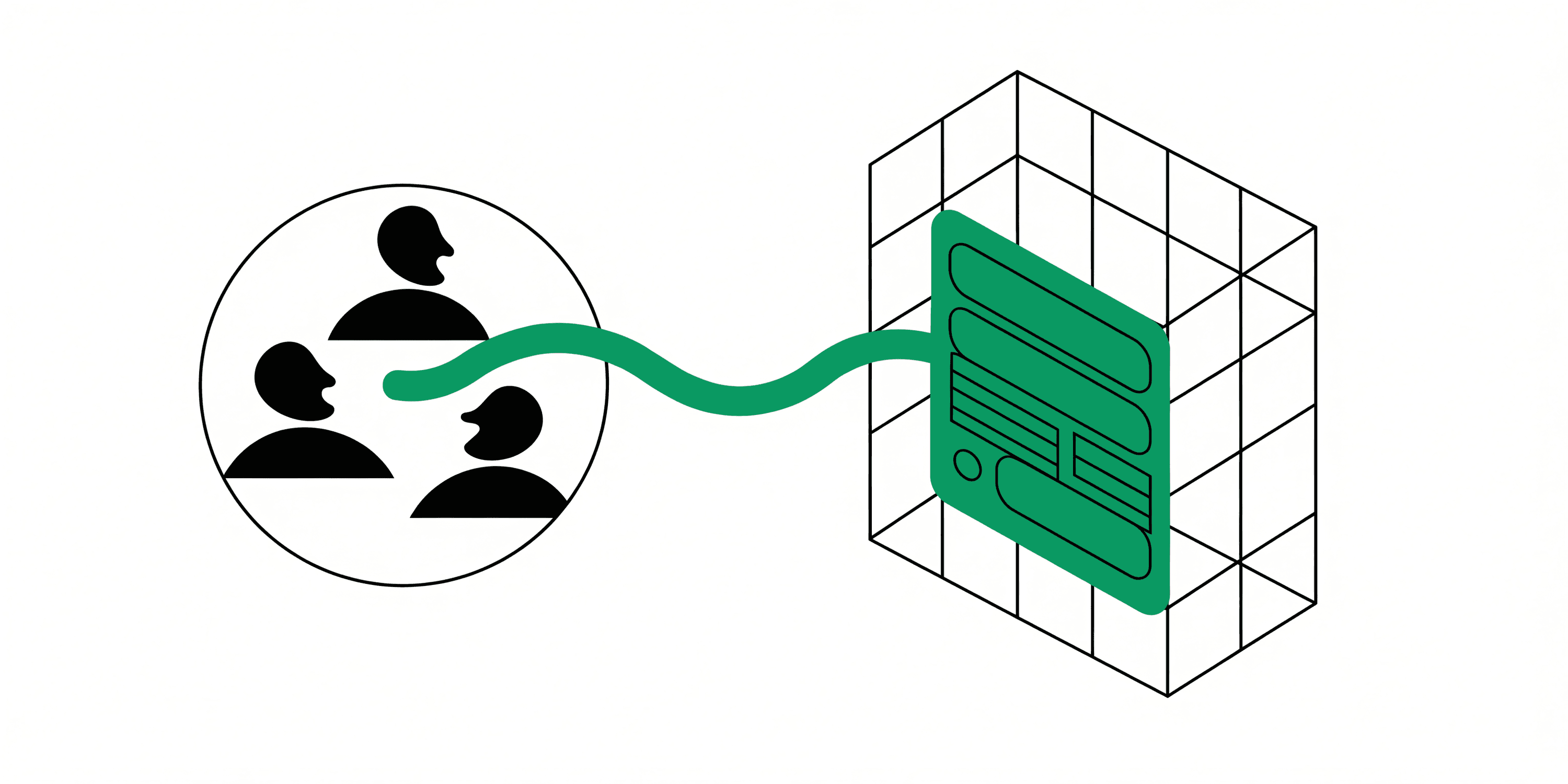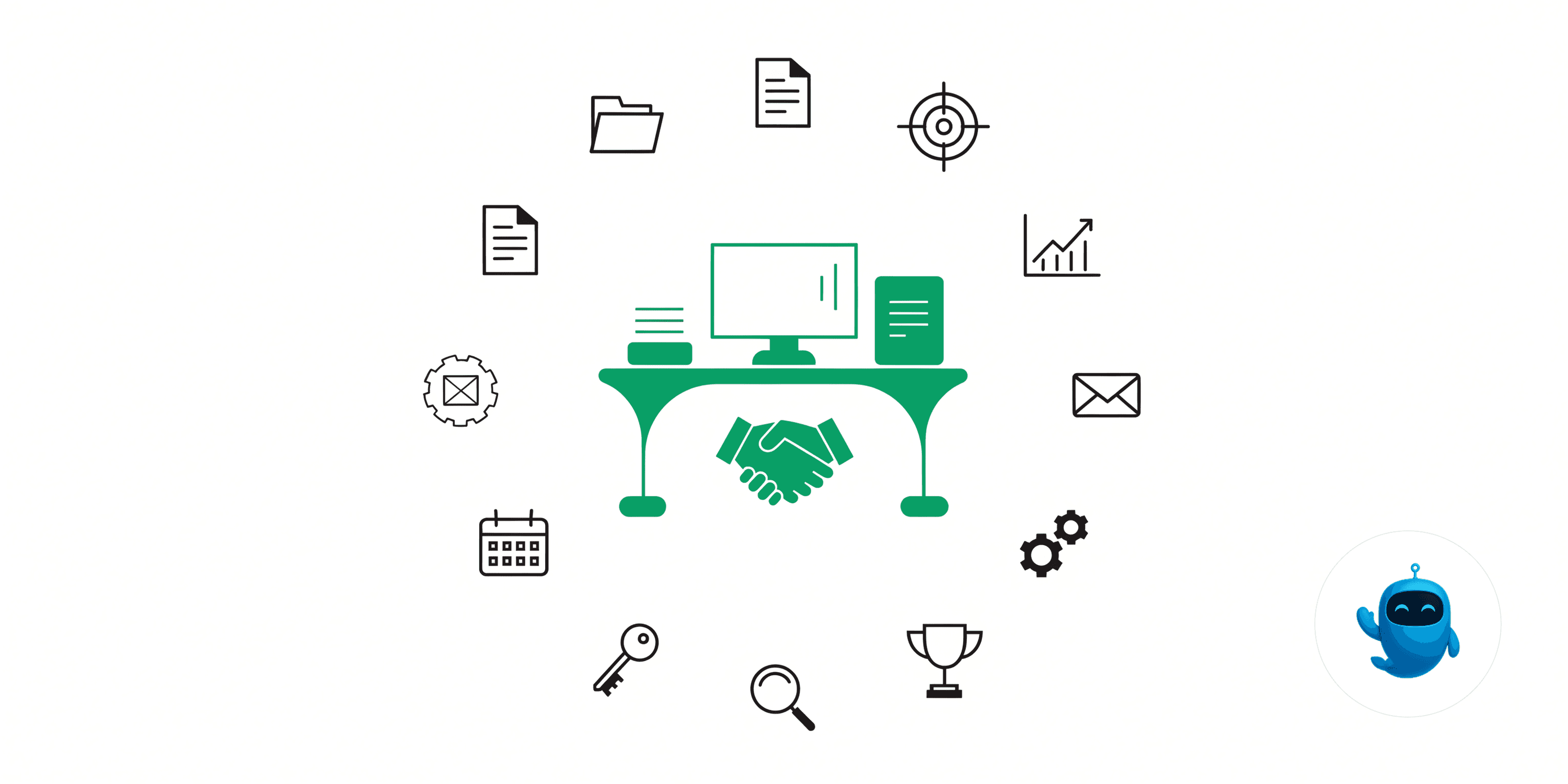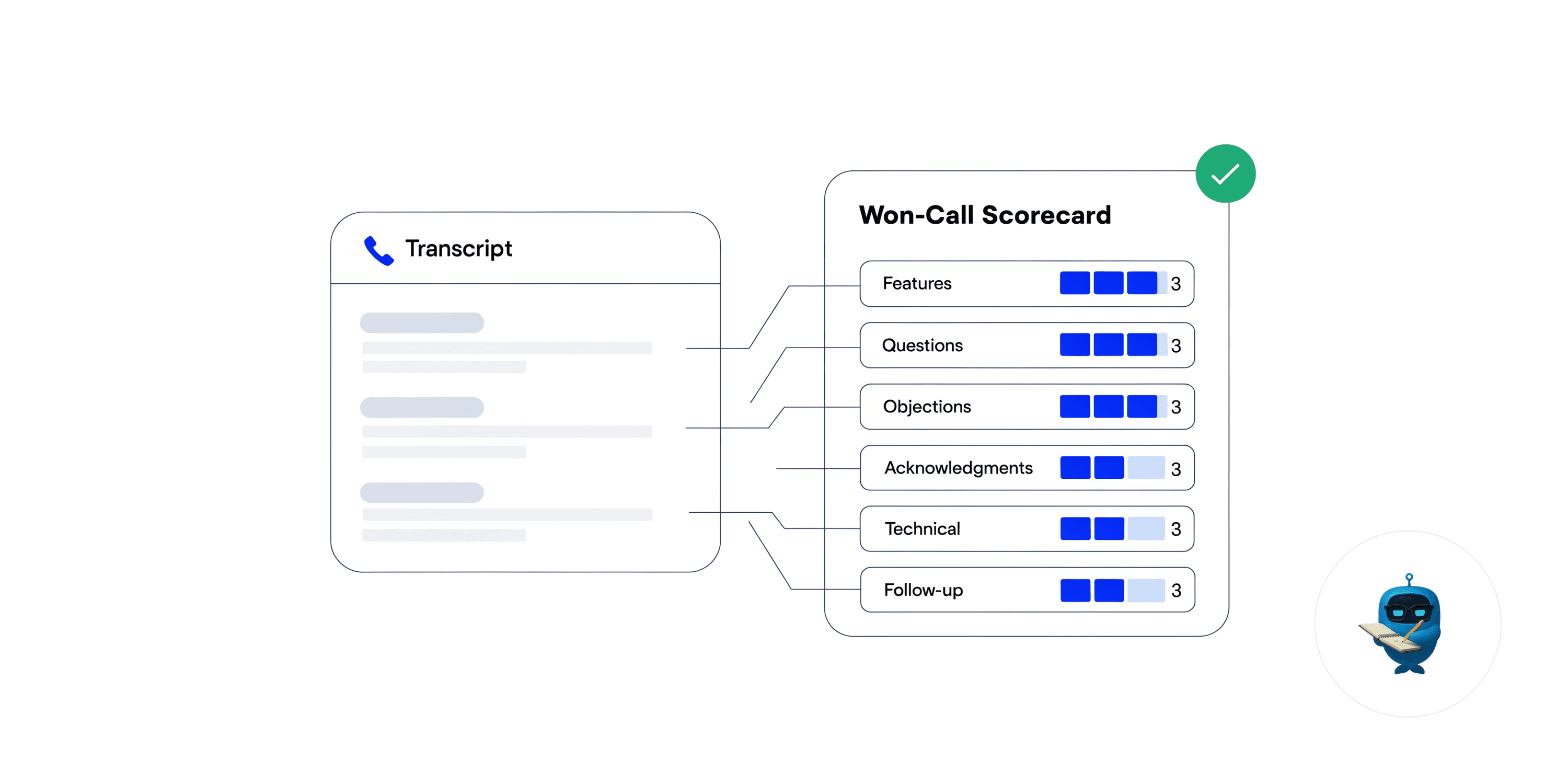
- CRM adoption does not fail because reps are lazy. It fails because the architecture asks a human to act as integration middleware between nine tools while also selling.
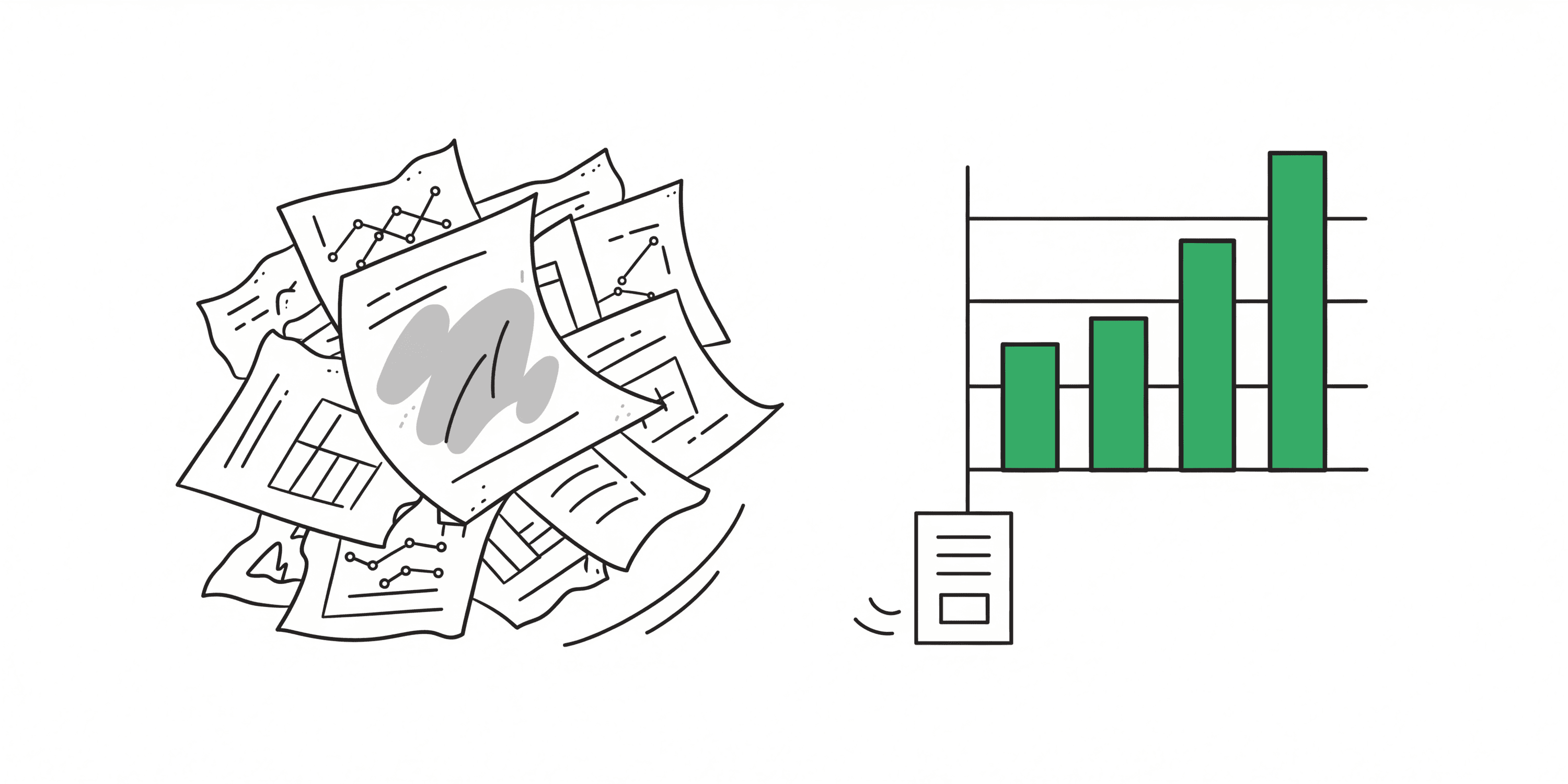
- 79 percent of deal data never reaches the CRM, 37 percent of reps fabricate entries to satisfy required fields, and reps spend 28 minutes selling out of every hour.
- Stop fixing this with training or pressure. Move to a unified behavioral profile so the system does the integration and the rep does the selling.
If your reps aren't logging deals properly, the instinct is to fix the rep. I think we've been fixing the wrong thing for about fifteen years.
The Conversation That Started This
I had a call a few months ago with a VP of Sales at a mid-market SaaS company.
Good team. Twelve reps. Quarterly numbers were okay but not great. Late-stage deals were dropping more often than they should. He wanted my opinion on what was going wrong.
Two minutes in, he told me what the problem was.
"We just need more accountability in the CRM" he said. "The reps aren't logging properly. Half the deals don't have next steps. Pipeline is a mess."
I asked him one question. How many tools were his reps switching between during a normal sales day?
He didn't know. I told him to ask.
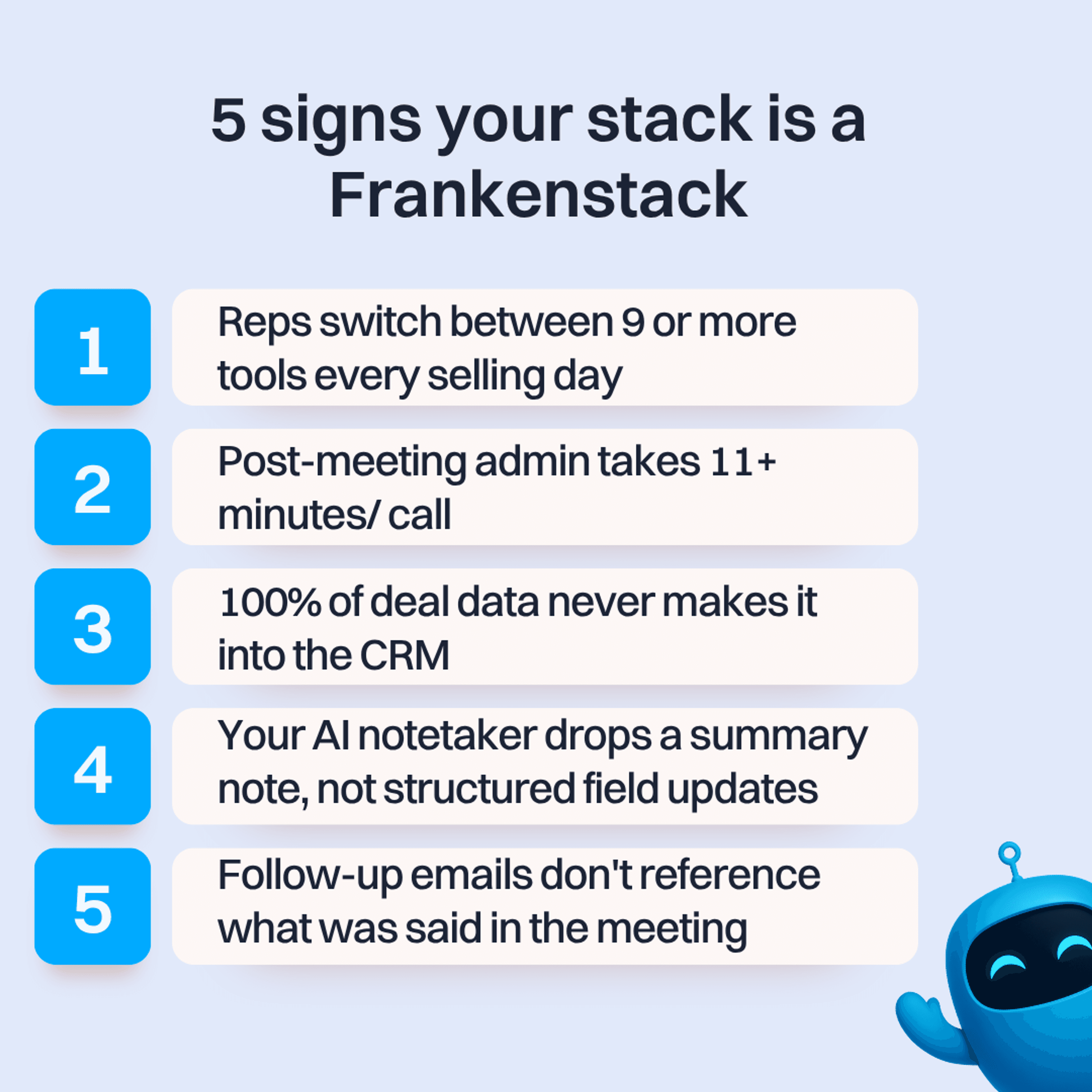
He came back to me a week later. Nine. Nine tools. Salesforce. Gong. Calendly. Outreach. LinkedIn. Slack. Gmail. Zoom. A standalone quote tool I'd never heard of.
And he was genuinely surprised his reps weren't logging religiously.
Here's the thing nobody wants to say out loud. If you're asking a human to copy information manually between nine products, forty times a day, and you're surprised when the data is bad, the problem isn't the human. The problem is the architecture you've asked them to operate inside.
That's the whole argument. The rest of this piece is the evidence.
The Numbers Are Worse Than You Think
Before we get into what's actually broken, let me lay out the math. It's not what you think.
Time Spent Selling vs Admin
Salesforce's State of Sales report finds that reps spend only 28 to 30 percent of their week actually selling. Spiich.ai frames the same data as "29 percent selling, 71 percent admin."
CRM Data Quality Reality
The CRM layer is where the problem concentrates.
- 79 percent of opportunity data that reps collect never makes it into the CRM at all (ESNA research, cited in Nutshell's analysis)
- 37 percent of sales reps admit to fabricating CRM data to satisfy validation requirements (via Soda's research roundup)
- Only 2 percent of sales teams trust their CRM data above 90 percent accuracy (DevRev analysis of 2024 State of Sales)
Two percent. Ninety-eight out of a hundred sales leaders sit on a data source they do not actually believe. Then they make forecasting decisions on top of it. DevRev's analysis pegs the cost of manual CRM entry at roughly $214,500 per year for a ten-person team. Default.com's Frankenstack analysis adds that 67 percent of reps missed quota last year under tool sprawl, and 40 percent of seller productivity is lost to context switching.
Every "Fix" You've Tried Has Failed for the Same Reason
If you've been in a RevOps or sales leadership seat for more than two years, you've tried everything. Let me walk through what I see, and why none of it holds.
Training Doesn't Fix It
Sales kickoff sessions on CRM hygiene. Lunch and learns. "Here's how to log a proper next step." DevRev's analysis calls this out directly. Training doesn't fix a structural problem. Reps know how to log a deal. That's not the issue.
Gamification Doesn't Fix It
Leaderboards for CRM hygiene. Little emojis in Slack when someone fills in MEDDPICC. The reps who were going to log properly kept logging properly. The rest figured out how to game the leaderboard.
Required Fields Make It Worse
More asterisks, more dropdowns. Go read the Stacksync analysis of HubSpot-Salesforce sync problems or any G2 thread on CRM adoption. Reps type "TBD" or "will update" into required fields because they have a call in four minutes. The data you forced them to enter is worse than no data, because now it looks real.
Vendor Automation Doesn't Fix It Either
Einstein Activity Capture. Gong-to-Salesforce sync. Bolt-on notetakers that promise to update the CRM. The Momentum teardown of AI notetakers showed most tools drop a long summary into a Salesforce Note or Task, which is not the same thing as updating a structured field. Vinton's evaluation of 14 AI notetakers found some didn't sync to Salesforce at all despite claiming integration, and one required daily reauthorization of the connection.
Management Pressure Doesn't Fix It
One-on-ones that turn into CRM audits. A directive from the CRO that "next week, every deal gets clean notes."
Two weeks later, the reps who responded to pressure are exhausted, the reps who didn't are doing what they always did, and the forecast is still fiction.
None of these work because none of them touch the actual thing that's broken.
The Real Problem Is the Shape of the Work, Not the Shape of the Rep
What the Industry Leaders Are Saying
Jacco van der Kooij, founder of Winning by Design, frames this cleanly in his Revenue Architecture work. His core point: a CRM set up strictly to capture management metrics fails its primary purpose, which is to help the rep drive impact with the buyer. If the tool exists to feed a dashboard, the rep treats it like a tax. If the tool exists to help them close the next deal, they use it.
Jon Miller, the co-founder of Marketo, went further on the MarketingOps podcast. He called the systems he helped invent "rule-based, email-centric, lead-centric systems that struggle with buying groups, behavioral signals, and cross-channel orchestration." And in his chiefmartec 2026 predictions he put it plainly: "Our addiction to MQLs has led us astray."
The guy who invented the MQL is telling the category the tooling is broken. Most teams are still running the 2010 playbook.
The Community Has Been Saying This for Years
On the operator side, a Salesforce practitioner summed it up for me once. "Reps end up spending an hour a day manually entering things because the system can't trust the data enough to trigger anything properly."
That's the full loop in one sentence. The data is bad, so the automation doesn't fire, so the rep has to do the work by hand, which makes the data worse.
The HubSpot Community has a standing thread where users troubleshoot workflows that "fail despite previous success." Another Community thread has marketers trying to reconcile contacts that jumped from Lead to Customer without ever touching MQL, because the actual buying behavior didn't follow the stage model.
The RevGenius community has RevOps leaders trading tricks for getting reps to update Salesforce. These are smart people, paid to make this work, and they're still trading tricks like it's 2014. The tricks don't stick because the tricks don't address the architecture.
What Your Rep's Day Actually Looks Like
Let me walk you through an hour in the life of one of your AEs. I think this is where the conversation should start.
She has a demo at 10:00.
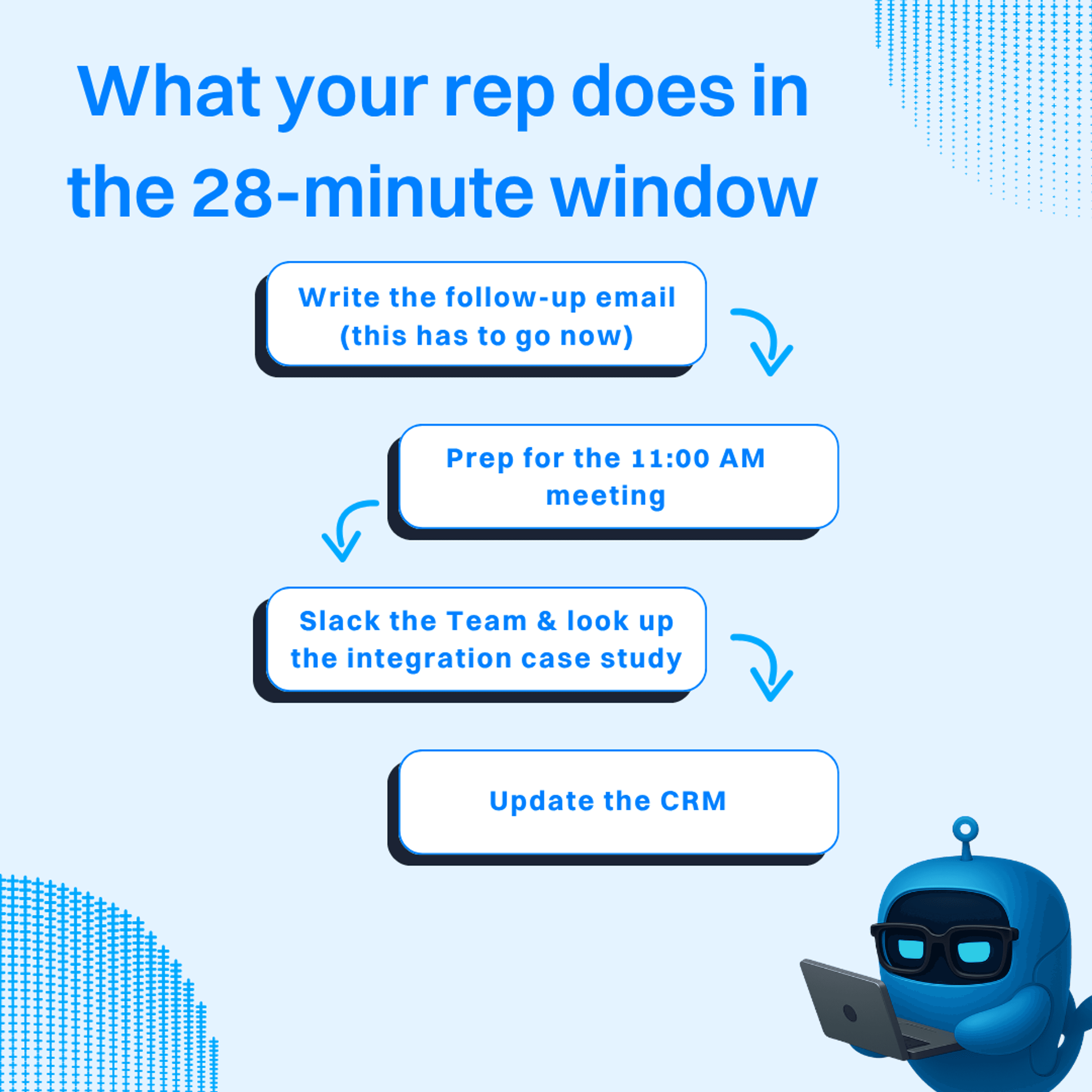
Demo happens, 30 minutes. Good call. The prospect had questions about pricing and about a specific integration. She hangs up. It's 10:32.
She has another call at 11:00.
What the CRM Wants From Her in 28 Minutes
- Meeting disposition
- Next steps with a specific date
- Stage change if it applies
- MEDDPICC fields updated based on what the prospect said
- A task to send a follow-up email with the integration info
- A task to loop in solutions engineering
- Meeting attendees added to the contact record
- A note on the deal with a summary of what was discussed
What She Also Needs to Do in 28 Minutes
- Write the actual follow-up email
- Look up the integration case study
- Slack the AE
- Check if her 11:00 is still on
- Refill her coffee
She picks the two things that have to happen. The follow-up email and the meeting prep. Everything else gets a one-line CRM note. "Good call, will follow up Friday." or maybe a LLM-generated meeting summary.
That's the whole entry.
Two Weeks Later
Someone else looks at that deal. Maybe the sales manager in a pipeline review. Maybe a BDR trying to loop back in. They see "Good call, will follow up Friday." They have no idea what was actually said. The rep who ran the call has moved on to the next fire and can't remember the details without relistening to a 30-minute recording nobody has time to relisten to.
The deal goes quiet. Three weeks later it gets marked "Stalled."
The post-meeting window is where deals leak. Mixmax's research on stalled deals confirms late-stage follow-up inconsistency is a leading cause of mid-to-late-stage stalls. Forrester's State of Business Buying 2024 puts 86 percent of B2B purchases in a stalled state at some point during the buying process.
The number isn't small. It's the average.
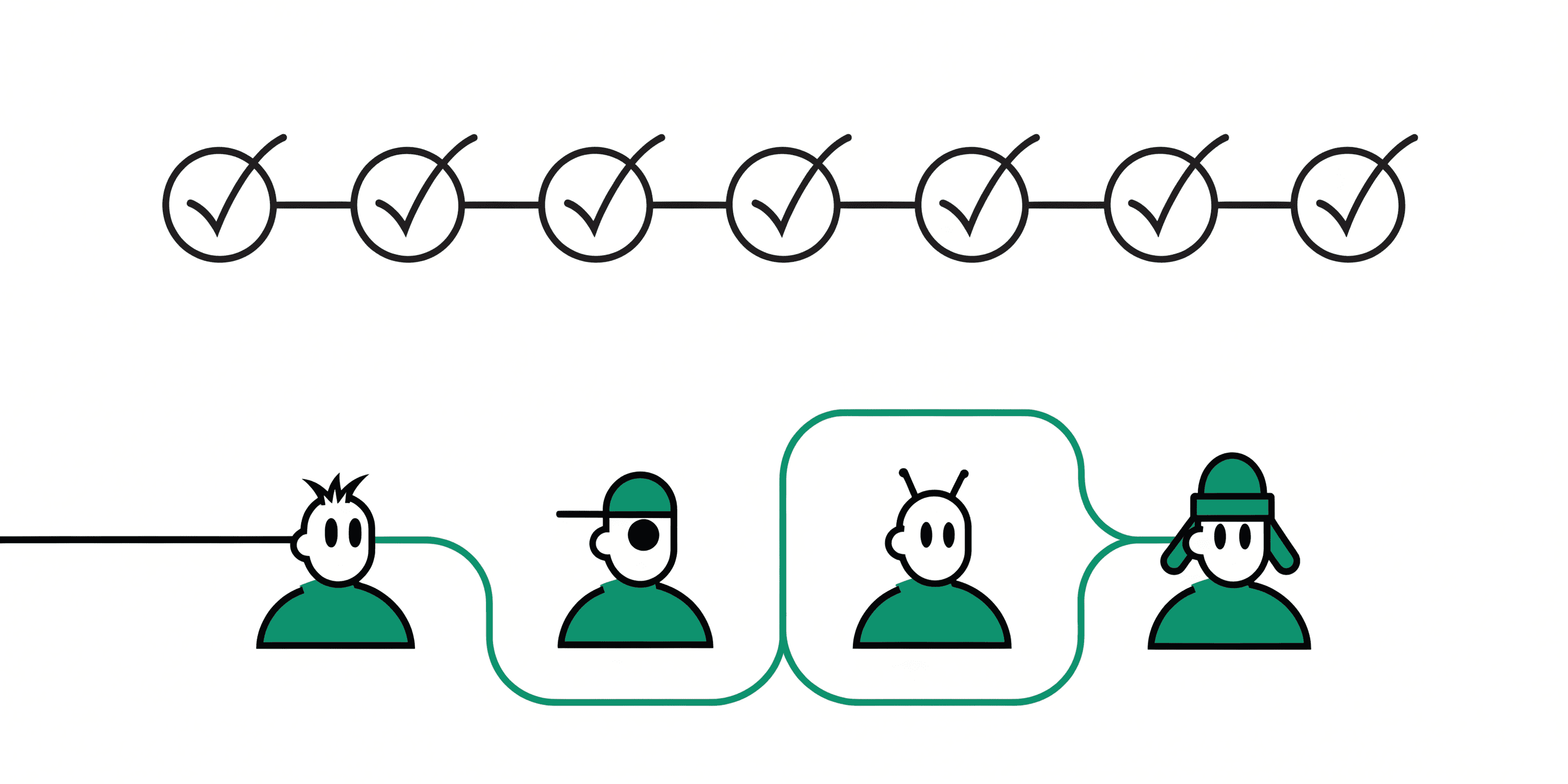
This isn't a moral failing of the rep. The system asked her to be a human integration layer between Zoom, Salesforce, Gong, Outreach, LinkedIn, and Slack, in 28 minutes, while also selling. You'd have picked the follow-up email too.
The System Problem (And It's Killing Your Pipeline)
The industry has started calling this the Frankenstack.
Default.com has a strong piece on how it kills pipeline. The term is everywhere because the pattern is everywhere.
The standard RevOps response is "consolidate." Which sounds fine until you try to do it. Most suggested consolidations just move the stitching from one seam to another.
You replace Calendly with Chili Piper. Your CRM still doesn't know what was said in the meeting. You replace Gong with Fireflies. The transcript is now in a different tool that also doesn't update Salesforce fields.
The Avoma vs Fireflies teardown, Fathom alternatives roundups, and Granola's CS-team guide all describe the same pattern. Each tool in the stack does its one job well. The connective tissue is what's missing. And the connective tissue is where your deal is dying.
You don't need a better notetaker. You don't need a better scheduling link. You don't need a better journey builder. You need these three things to share the same data, the same profile, the same signals, and trigger each other automatically.
Every attempt to solve CRM adoption that doesn't touch the architecture is rearranging chairs.
The Loom That Changed My Mind
One of our early customers, a growth lead at a mid-market B2B SaaS, sent me a Loom unprompted. She recorded herself walking through her team's post-meeting workflow.
Rep finishes call. Copies transcript from Gong. Pastes it into ChatGPT. Writes the summary. Goes to Salesforce. Manually updates six fields. Goes to HubSpot. Updates the contact. Opens Gmail. Writes the follow-up from scratch.
She timed it. Eleven minutes per meeting.
Her team ran 15 meetings a week each. One hundred and sixty-five minutes per rep per week on post-meeting admin. For a ten-person team, more than 27 hours a week. More than three full working days, every week, spent translating reality into CRM fields.
She wasn't asking me for a feature. She was showing me a disaster. That video is basically why we built what we built.
The Architectural Fix
The argument is one sentence. The rep should not be the integration layer. The system should.
What that means in practice is three things working on the same profile.
The Meeting Should Feed Everything
The notetaker shouldn't stop at a transcript. It should extract decisions, objections, action items, timelines, and the names of other stakeholders. It should update the CRM deal fields before the rep closes the tab. It should draft a follow-up email from what was actually said, not from a template.
The rep reviews, edits, sends. She doesn't open four other tools to make the meeting count.
Scheduling Should Carry Context
When a prospect books a meeting, the scheduling tool should pull up the deal stage, the last conversation summary, the content they've consumed, and the account activity, and land it all in the rep's calendar invite before the meeting happens.
The rep walks in prepped without digging through tabs.
The I hate Calendly Hacker News thread, the Is Calendly Rude? thread, and the I killed my Calendly link thread each have hundreds of comments describing the same gap. Scheduling happens in a vacuum. It shouldn't.
The Journey Should React to What Actually Happened
If the prospect raised a pricing objection in the meeting, the follow-up sequence sends a pricing-focused case study, not the next template on the timer.
If they asked about implementation, the sequence sends a technical walkthrough.
If the deal stage changed, the journey adapts.
If the prospect goes quiet, the follow-up fires when the signal says to (a pricing page visit, a LinkedIn engagement), not when the calendar says to.
The Common Thread Is the Data Layer
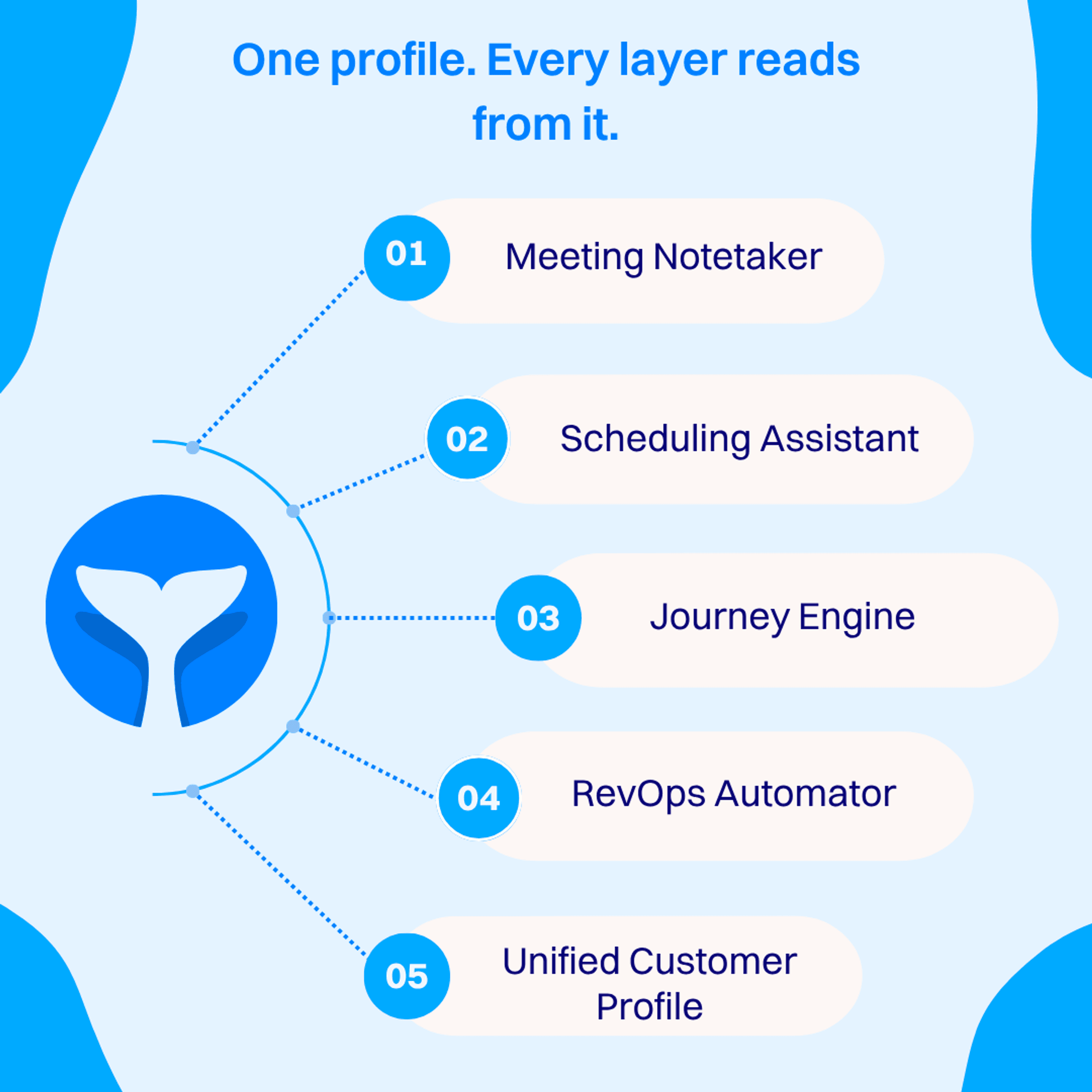
One profile, updating in real time, shared by the notetaker, the scheduler, and the journey engine. The rep stops being middleware because the system is finally a system.
Why Most Tools Can't Do This Natively (And Why Intempt Can)
The reason this architecture isn't the default is a story of how the modern sales stack got built.
Every category added a layer. Campaign tool. Journey builder. Lead scoring. CRM. Conversation intelligence. Sales engagement. Scheduling. Notetaker. AI agent. Each one solved a real problem. None solved the integration problem, because the integration problem is always somebody else's job.
The Momentum buyer's guide makes this explicit. Most AI notetakers are recorders with a summary layer, not actors. AskElephant's analysis of AI tools that log call notes to CRM and their guide to tools that auto-update HubSpot show the same pattern. Tools that claim CRM integration usually mean they log a transcript or a task. Not that they update structured fields. Not that they take action on the data afterward.
Which means the rep is still middleware. Just between slightly fewer tools.
What We Built Differently at Intempt
Intempt isn't a campaign tool. It isn't an email sender. It isn't another notetaker hoping Zapier holds the stack together.
At the core, Intempt is an identity resolution and behavioral data platform. Every event, every action, every touchpoint, every meeting utterance, every scheduling signal, every email click, every product event, collapses into a single customer profile in real time.
Every layer of the product sits on top of that profile as a view, not as a separate database:
- The CRM and pipeline is a live view of the profile, not a data silo
- The Account Executive reads full context off the profile before the meeting starts, writes structured data back to it in real time, and updates the deal without waiting for the rep
- The Lifecycle Marketer branches off it the moment the customer acts
- Workflows trigger on live signals from the same profile
When a prospect books a meeting, the journey knows. When a meeting happens, the CRM updates from what was said. When a deal stage changes, the next touch adapts automatically. The rep reviews and approves. She doesn't type. She doesn't copy-paste. She doesn't sit between nine tools trying to hold the pipeline together.
Why This Matters More Than a Feature Comparison
You could swap Gong for Fireflies, Calendly for Chili Piper, Outreach for Salesloft. The Frankenstack stays a Frankenstack. The tools are different, the architecture is the same.
Intempt solves the category, not a feature. That's the whole point.
What This Looks Like on Intempt
Picture the same AE from earlier. 10:00 demo. Same prospect, same pricing question, same integration question.
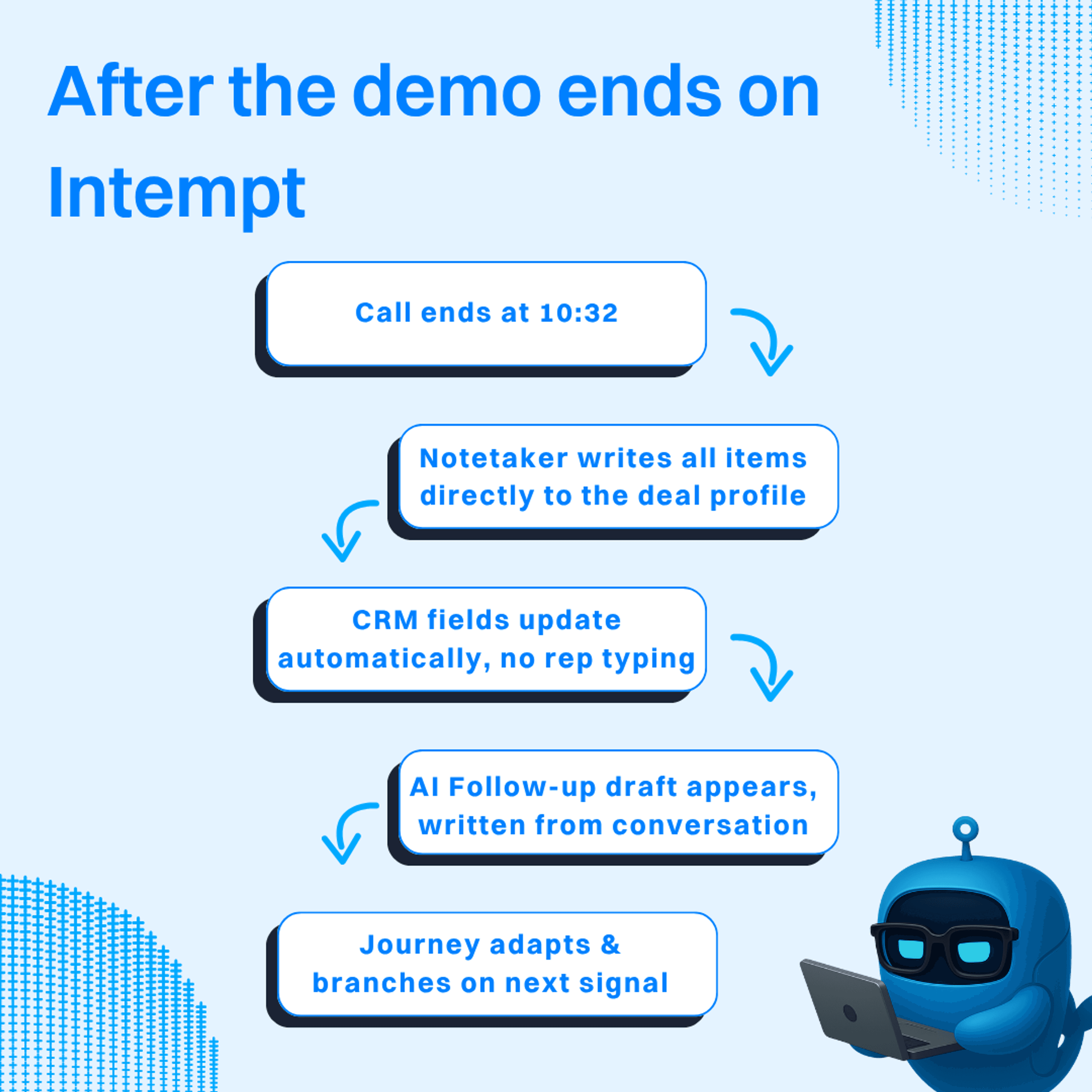
At 10:32, she closes Zoom. Here's what Intempt has already done in the background.
The Meeting Is Already on the Profile
The Account Executive joined the call, transcribed with speaker labels, and extracted the decisions, objections, action items, and timeline the prospect laid out. It knows the prospect asked about pricing and a specific integration. That data isn't trapped in a Gong tab she'll never reopen. It's already written to the deal record on the unified customer profile.
The CRM Is Already Updated
The Account Executive fills the deal record with the meeting summary, updates MEDDPICC fields based on what the prospect actually said, moves the deal stage if the conversation warranted it, and drops the follow-up task on her list.
She doesn't touch a field. The pipeline view she opens later is already clean because the data never required manual entry to begin with.
The Follow-Up Is Already Drafted
A draft email referencing the exact integration the prospect asked about is waiting for her. Not a template. A real draft pulled from the actual conversation, drafted by the assistant layer that reads from the same profile as the notetaker.
She reads, tweaks two sentences, and sends.
The Journey Is Already Adapting
Intempt Journeys sit on the same profile as the meeting, the CRM, and the follow-up. The moment the meeting ends with a pricing objection surfaced, the nurture track branches into pricing-focused content. If the deal stage changed, the cadence adapts. If the prospect goes quiet in two weeks, the next touch fires on a real signal (a pricing page visit, a LinkedIn engagement), not on a timer.
This is what Intempt's lifecycle orchestration actually means in practice. Not welcome-on-day-one, nurture-on-day-three, timer-based sequences. Journeys that react to what the customer did last.
And Her 11:00 Is Already Prepped
The Account Executive that booked her next meeting pulled the account's recent activity, deal stage, and last conversation summary into the calendar invite before she walks in. She doesn't open four tabs to prep. The context comes to her.
Why the Loop Actually Closes
Every other sales stack treats the meeting, the CRM, the scheduling, and the journey as separate systems, held together with Zapier and rep willpower. Intempt was built the other way around.
Every layer sits on top of a single behavioral profile that updates in real time. The notetaker and the journey read from the same place. The CRM isn't a separate database, it's a view on top of the profile that already exists. Workflows trigger on live signals, not on batched imports.
That's why Intempt closes what the Frankenstack leaks.
The Math on Reclaimed Time
The whole post-meeting workflow that used to take eleven minutes now takes two.
- Over a week, she gets about two hours back.
- Over a year, more than a hundred hours per rep.
- For a ten-person team, more than one thousand hours of selling time reclaimed.
On top of cleaner pipeline data and follow-ups that actually reference the conversation.
The accountability conversation goes away because the accountability problem goes away.
If You're a RevOps Leader Reading This
You already know something is wrong.
You're running pipeline reviews on data you don't trust. You're making forecast calls with a 2 percent confidence floor. You're watching your reps miss quota not for lack of effort, but because the system is eating their day.
Here's the honest part. The reason most leaders won't admit the stack is broken is because they bought the stack. They defended the budget. They hired the people who implemented it. Admitting the architecture is the problem means admitting the last three years of tooling decisions didn't land.
That's a hard conversation. But it's the one that actually leads somewhere.
Your Two Paths Forward
You can keep adding tools to enforce behavior. More tracking. More reminders. More dashboards. More Zapier. The reps will keep gaming it because they're smart and they want to sell. The Frankenstack will keep leaking at every seam.
Or you can consolidate onto a single behavioral profile that every layer reads from: meetings, scheduling, CRM and pipeline, journeys, workflows. Let the system do the integration, so the reps can do the selling.
That's what Intempt is. One platform. One profile. One place where the meeting, the CRM, the follow-up, and the journey all actually happen.
The accountability isn't the problem. It's never been the problem.
The architecture is. And there's a fix that isn't "try harder."
How to Start
Step 1: This Week, Run This Audit
Pick any five deals that closed last quarter, won or lost.
Pull the CRM activity log on each one. Count the number of meetings, the number of emails, the number of field updates. Compare that to what the reps actually know about those deals.
The gap between those two is your integration tax. That's the number you're paying every quarter for the Frankenstack.
Step 2: Pick One Stalled Deal
Ask the rep to walk you through what happened after the last meeting. Time how long it took them to reconstruct the context.
That's your post-meeting leak, happening in slow motion. Every team has one. Most have dozens.
Step 3: See It Closed on Intempt
Book a demo and we'll walk you through the exact workflow your reps are losing time on, running on Intempt instead.
You'll see:
- The Account Executive pulls context into a booking before the rep sees it and populates the pipeline view from the conversation itself
- The Lifecycle Marketer branch on a live behavioral signal, not a timer
- The Data Hub unify every event, email click, meeting utterance, and deal stage into one profile
Same workflow, shared profile, zero rep typing.
Or start a free Intempt account and poke around the product directly. The integrations page covers the connections to your existing stack if you want to evaluate side by side before switching.
A Closing Thought From Me
If any part of this piece felt like I was describing your week, that's because I probably was. I've watched this exact movie run at 40-plus companies now. Same scenes, different reps.
The fix isn't harder accountability. It's a system that stops asking your reps to be middleware. That's what we built Intempt to be.
Frequently asked questions.Answered.
- The short answer: because the system is asking them to act as a human integration layer between too many tools, in too little time, while also selling. Most CRMs were designed to feed management dashboards, not to help reps sell. When the tool exists to extract data rather than deliver value, reps deprioritize it. Research shows 79 percent of opportunity data reps collect never makes it into the CRM, and 37 percent of reps admit to fabricating data to satisfy validation requirements. The structural fix is to take the CRM-update burden off the rep entirely. Intempt's Account Executive writes structured field updates from the meeting itself, so the rep never types. The CRM record merge suggestions workflow is the same logic applied to the duplicate-record side of the same problem.